

Optimize Your Unit Load Through Package Integrity Testing
Understanding System Performance Under Real Distribution Hazards
Learn how package integrity testing and packaging science help identify system-level risks improve unit load performance and validate packaging design under real distribution conditions.
February 25, 2026
8 Minute Read
Table of Contents

Josh Stipanovich
Josh serves as Communications Manager at Millwood, overseeing internal and external communications to ensure the company’s mission and message are delivered clearly and consistently. He leads initiatives ranging from company-wide communications and website content to PR, trade show promotions, and sales support materials. Since joining Millwood in 2014, he has played a key role in major projects including the company rebrand, website redevelopment, and HubSpot launch.
Stay Up To Date
Click the button below to recieve a collection of the latest case studies, articles and resources in Millwood’s newsletter in your inbox each month.
“It’s not just the pallet. It’s the stretch wrap, the corner boards and the components that go along with it.”
Ralph Rupert
Manager of Unit Load Technology
Millwood, Inc.
“Optimizing performance requires understanding how the complete system behaves as it moves through storage, handling and transportation.”
Table of Contents
Why Unit Load Failures Still Happen
When products are damaged in transit, the cause is rarely obvious. Pallets are blamed. Packaging is reinforced. Changes are made in isolation. Yet the same issues often continue to resurface across facilities and distribution environments
The reason issues recur is that most failures are not caused by a single component. They occur when packaging, pallets and material handling forces are not designed to work together under real world conditions. Compression, vibration and impact all play a part, often revealing weaknesses that are missed when the load is evaluated only while at rest rather than under distribution conditions.
Optimizing performance requires more than making individual parts stronger. It requires understanding how the complete system behaves as it moves through storage, handling and transportation. Package integrity testing provides that understanding by replacing assumption with observation and data.
Package integrity testing is one component of Millwood’s broader Packaging Science approach. While Packaging Science guides how packaging and load carrying systems are designed based on real world application requirements, package integrity testing is used to verify how those systems perform under simulated distribution hazards.
Together, they provide a data driven framework for understanding, designing and validating packaging systems with confidence.
At Millwood, this approach helps identify where risk exists, why it occurs and how systems can be improved with clarity before product enters distribution.
What Package Integrity Testing Means at Millwood
Package integrity testing evaluates how a packaging or load carrying system performs as it moves through real distribution conditions. Rather than focusing on individual components in isolation, it examines how packaging, pallets and handling forces interact as a connected system.
At Millwood, package integrity testing includes evaluations customers may already recognize, such as compression testing, vibration testing and drop or impact testing. These methods simulate common hazards encountered during storage, handling and transportation. What differentiates the approach is not the testing itself, but how results are interpreted and applied.
Compression testing evaluates how a system responds to vertical forces such as stacking and top load pressure. Vibration testing simulates the constant motion experienced during transportation. Drop and impact testing replicate handling events that can occur during loading, unloading or forklift interaction. Each evaluation reveals how stress moves through the system, not just where a single component shows visible failure.
By viewing these results together, package integrity testing provides insight into how a system behaves under combined forces. This perspective allows performance risks to be identified earlier and design decisions to be made with greater confidence.
The Unit Load as a System
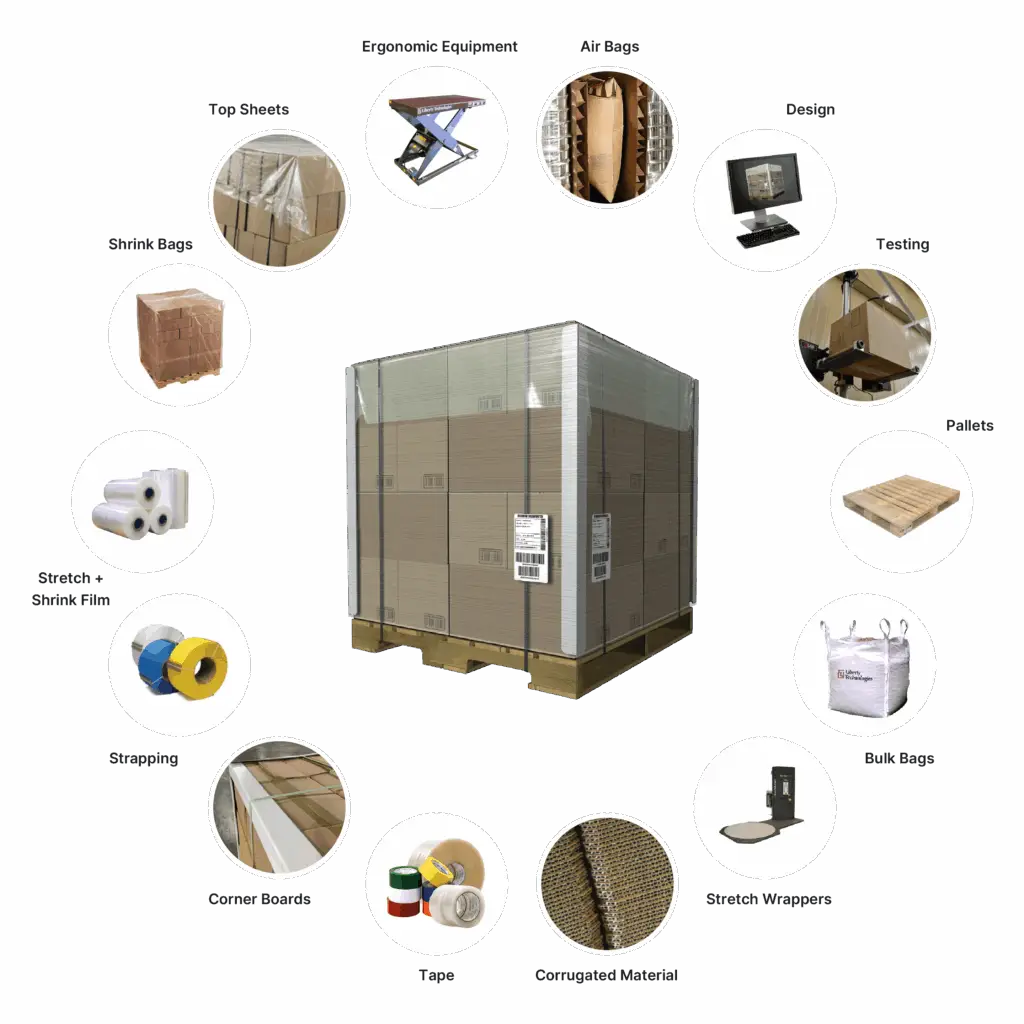
A unit load is more than a pallet with product stacked on top. It is a system made up of packaging materials with a pallet design made for the specific material handling and distribution environment. Each element influences how the others perform once the system is exposed to real world forces.
Ralph Rupert is Manager of Unit Load Technology at Millwood. He previously directed the Pallet and Container Research Lab at Virginia Tech for over 10 years and brings decades of experience in packaging, pallet design, and applied packaging testing.
“It’s not just the pallet. It’s the stretch wrap, the corner boards and the other components that go along with it,” Rupert said.
When these components are treated as separate pieces, performance issues can emerge even when individual parts appear sufficient. Packaging that performs well in a static environment may behave very differently once paired with a specific pallet design and exposed to compression, vibration and handling forces.
Packaging Science focuses on understanding these interactions. Rather than asking whether a pallet or packaging material is strong enough by itself, the focus shifts to whether the entire system is designed to work together efficiently. This system level view supports more reliable performance without relying on excess material or unnecessary reinforcement.
“It’s not just the pallet. It’s the stretch wrap, the corner boards and the components that go along with it.”
Ralph Rupert
Manager of Unit Load Technology
Millwood, Inc.
Inside the Millwood Lab: From Testing to Understanding
The Millwood Lab was developed to support a deeper understanding of system performance. Located in Millwood’s Vienna, Ohio facility, it is an ISTA certified testing and design laboratory built to simulate the hazards products encounter as they move through distribution.
ISTA, the International Safe Transit Association, develops testing protocols designed to replicate transportation and handling conditions. These protocols form the foundation for evaluating compression, vibration and impact forces in a controlled environment. At the Millwood Lab, those protocols are applied to complete systems rather than individual components alone.
While the Millwood Lab performs industry recognized testing, its purpose extends beyond producing pass or fail results. The lab operates with a forensics mindset, focusing on understanding why a system behaves the way it does under stress. Test results are treated as insight that guides better decisions rather than simply an endpoint.
By combining real world simulation with engineering analysis, the Millwood Lab helps translate observed behavior into practical understanding that informs design and verification to give customers peace of mind and confidence in the Millwood design.
Key Hazards Evaluated Through Package Integrity Testing
Package integrity testing is designed to simulate the hazards a system encounters throughout storage, handling and transportation. At the Millwood Lab, these hazards are evaluated to understand how the complete system responds under stress.
Compression Testing
Compression testing measures how a system performs under vertical loads, such as stacking during storage or pressure encountered in transit. These forces influence both the load-bearing structure and the packaging materials.
The test shows how weight is transferred through the system and where stress concentrates. This information helps determine whether material strength is supporting functional performance or if excess material exists without adding real value.
Vibration Testing
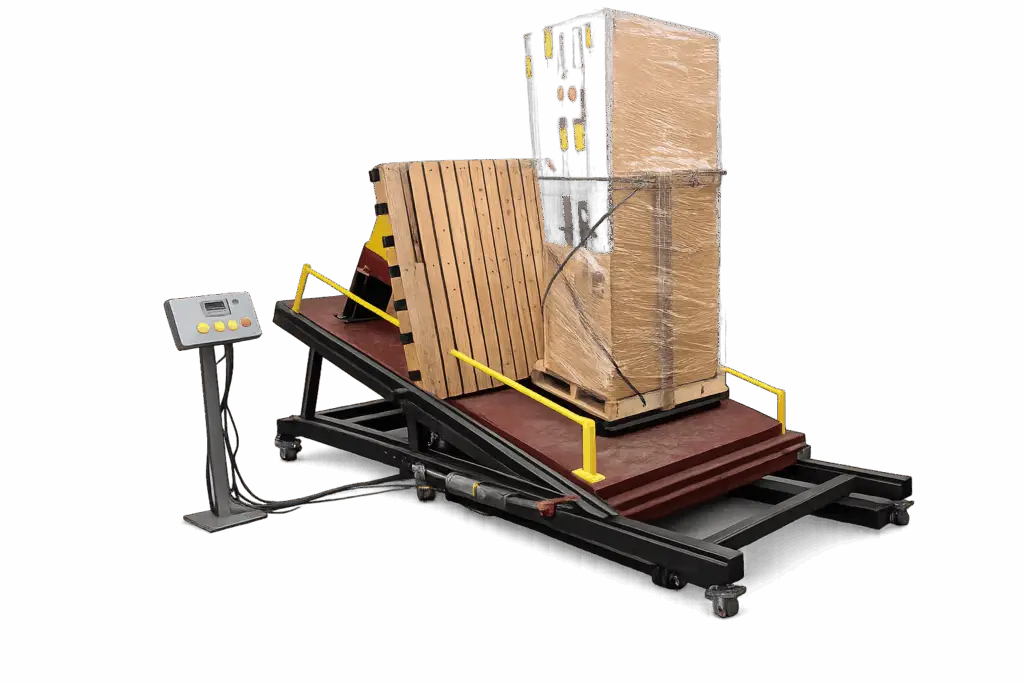
Vibration testing simulates the constant motion experienced as products move through transportation networks. Over time, even small movements can lead to shifting, fatigue or instability.
By replicating these conditions in a controlled environment, vibration testing reveals how components such as stretch film, corner protectors and pallets interact under continuous motion.
Compression Testing
Compression testing measures how a system performs under vertical loads, such as stacking during storage or pressure encountered in transit. These forces influence both the load-bearing structure and the packaging materials.
The test shows how weight is transferred through the system and where stress concentrates. This information helps determine whether material strength is supporting functional performance or if excess material exists without adding real value.
Use Case: Identifying Hidden Load Instability Through Package Integrity Testing
In one evaluation involving long-distance shipments of thin aluminum rolls, a manufacturer experienced recurring product damage despite pallets and packaging that appeared sufficient during initial review. The system performed acceptably while stationary, yet instability surfaced in transit.
Package integrity testing at the Millwood Lab revealed that the issue was not pallet strength, but how the load was secured. Testing showed that the stretch wrap pattern concentrated containment at the top and bottom of the load, leaving the middle layers insufficiently restrained.
By observing how forces moved through the system under vibration and compression, our packaging specialists identified uneven containment as the root cause of instability. Rather than increasing pallet strength or changing materials, the solution involved adjusting the wrap pattern to provide more consistent coverage across the full height of the load.
This adjustment significantly improved stability during transit and reduced product damage. More importantly, it demonstrated how package integrity testing can reveal system behavior that is not visible through visual inspection or specification review alone.

Turning Test Data Into Better Design Decisions
Package integrity testing provides valuable insight, but test results alone do not solve distribution challenges. The value comes from understanding what the data reveals about system behavior and applying that understanding to design decisions.
As Rupert notes, “It’s not just the lab testing. It’s the knowledge that goes along with what needs to be tested, the interpretation of those tests and how to solve the issues.”
At Millwood, Packaging Science informs system design from the beginning. Engineering expertise, experience and design software are used to evaluate application requirements, distribution conditions and performance goals before physical testing begins. Testing is then used to verify assumptions, confirm performance and refine designs when needed.
This forensics driven approach helps ensure decisions are guided by data rather than assumption and supports confident optimization without unnecessary complexity.
A Service Designed to Educate and Support
The Millwood Lab was developed as a resource for customers seeking a deeper understanding of system performance. While testing capabilities are a critical component, the broader goal is education, collaboration and informed decision making.
Package integrity testing helps teams see how their systems behave under simulated conditions and why specific outcomes occur. This understanding supports clearer communication and stronger alignment across engineering, operations and procurement teams.
Beyond individual evaluations, the Millwood Lab reflects a commitment to advancing best practices across the industry by applying Packaging Science and focusing on long-term performance.
“Optimizing performance requires understanding how the complete system behaves as it moves through storage, handling and transportation.”
Optimizing Performance Starts With Understanding
Reliable performance is achieved when packaging, pallets and handling forces are evaluated together as a system and informed by real-world data.
Package integrity testing provides the insight needed to understand how systems behave under stress. When combined with Packaging Science and engineering expertise, that insight supports solutions that are designed with intention and verified with confidence.
At Millwood, the goal is not simply to test, but to understand, design and validate systems that perform reliably from origin to destination.
Share:

HAVE QUESTIONS ABOUT YOUR PACKAGING SYSTEM?
Our packaging specialists work with customers to understand how packaging, pallets and handling forces interact in real world distribution. Whether you are troubleshooting an issue or evaluating performance before product enters the field, we are here to help you think through the right solution.
Related Articles



Millwood’s National Accounts Sourcing Manager Chad McConnell was named to the board of the Western Pallet Association (WPA), signifying Millwood’s active leadership and influence in advancing the pallet industry’s future.
Josh Stipanovich
Josh serves as Communications Manager at Millwood, overseeing internal and external communications to ensure the company’s mission and message are delivered clearly and consistently. He leads initiatives ranging from company-wide communications and website content to PR, trade show promotions, and sales support materials. Since joining Millwood in 2014, he has played a key role in major projects including the company rebrand, website redevelopment, and HubSpot launch.
Stay Up To Date
Click the button below to recieve a collection of the latest case studies, articles and resources in Millwood’s newsletter in your inbox each month.