

Pallet Technology in 2026: A Packaging Science Approach
Discover how trends in palletizing, pallet tracking and pallet technology can support long-term system performance across the supply chain.
Refreshed April 9, 2026
7 Minute Read
Table of Contents

Josh Stipanovich
Josh serves as Communications Manager at Millwood, overseeing internal and external communications to ensure the company’s mission and message are delivered clearly and consistently. He leads initiatives ranging from company-wide communications and website content to PR, trade show promotions, and sales support materials. Since joining Millwood in 2014, he has played a key role in major projects including the company rebrand, website redevelopment, and HubSpot launch.
Stay Up To Date
Click the button below to recieve a collection of the latest case studies, articles and resources in Millwood’s newsletter in your inbox each month.
“It’s not just the pallet. It’s the stretch wrap, the corner boards and the components that go along with it.”
Ralph Rupert
Manager of Unit Load Technology
Millwood, Inc.
“Optimizing performance requires understanding how the complete system behaves as it moves through storage, handling and transportation.”
Table of Contents
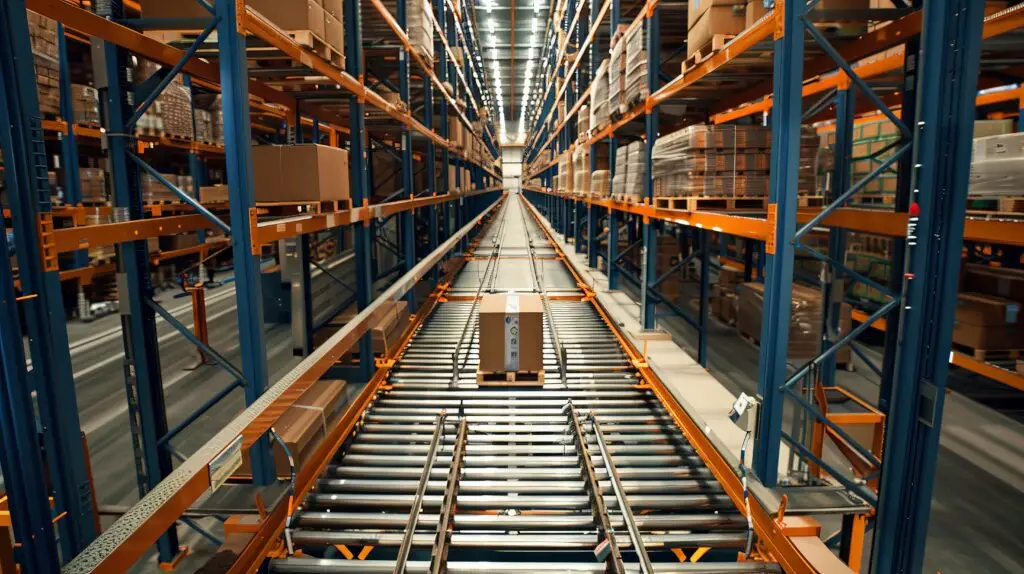
Pallet technology supports consistent performance across storage, handling, and distribution environments.
Pallet technology is no longer about speed alone. It supports system integrity, data visibility and operational resilience, providing a framework that supports every component of a unit load so they perform together, not in isolation.
The most significant shift in how leading operations think about pallets is this: a pallet is not a commodity decision. It is a packaging science question. How a pallet is designed, selected, wrapped, conveyed, tracked and reused all affect each other. Getting one element right while ignoring the others is how operations end up with workarounds that quietly become expensive habits.
Navigating the current trends in palletizing technology can seem complex, but the underlying principle is straightforward: evaluate the full system, make decisions based on evidence and build a supply chain that performs reliably at scale. At Millwood, that approach has remained effective over multiple decades of serving customers across many industries.
Highlighting real-world pallet technology applications, this article walks through the latest trends in palletizing technology – areas where targeted investment can deliver the greatest operational return – and explains how packaging science ties these applications together into a coherent, scalable strategy.
Why Pallet Technology Is a Packaging Science Question
A pallet does not operate on its own. It is one part of a unit load system that includes the product it supports, how the load is built and secured, the stretch wrap and protective components around it, the forklifts and conveyors that move it and the warehouses, trailers and handling conditions it encounters throughout its journey.
When these elements are chosen independently – a pallet from one supplier, wrap from another, handling equipment specified without reference to load design – problems tend to appear downstream. Loads shift in transit. Pallets that look appropriate at first struggle after repeated handling. Extra wrap or labor gets added to compensate. Over time, those workarounds become routine without solving the underlying problem.
Packaging science addresses this by evaluating the full unit load as a system. Rather than asking “which pallet is strongest,” it asks: “which combination of pallet, load securement, handling and process reliably delivers the right performance for this specific application without excess cost, material or complexity?”
This is the systemic lens through which Millwood approaches the different expressions of pallet technology described in this article. The Millwood Lab provides an ISTA-certified testing environment that evaluates unit loads under real-world conditions – not assumptions – and the Millwood SURE framework (detailed at the end of this article) provides a process for applying those insights consistently across your operation.
Load Stability and Unit Load Performance: Stretch and Shrink Wrap Systems
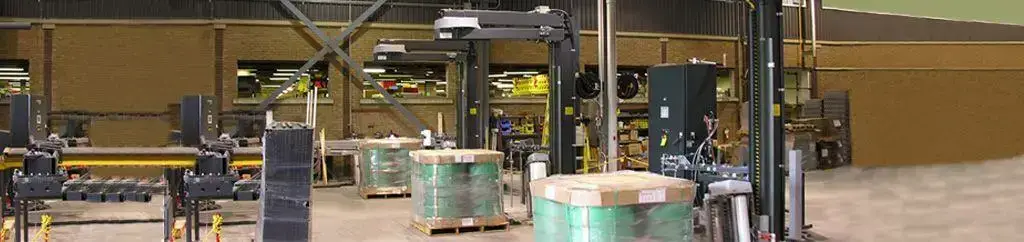
Load securement directly impacts stability, damage reduction, and overall unit load performance.
Stretch wrap is often treated as an afterthought: the final step on a packaging checklist. From a packaging science perspective, however, it is a load securement decision that affects everything downstream: freight efficiency, damage rates, storage stability and labor throughput.
A well-specified stretch wrap system coheres a dependable unit load that precisely wraps your unit load to resist shifting, tipping and collapse during transportation, internal handling and storage. This directly reduces damage claims, rework and product loss. It also enables tighter, higher stacking, which means better use of trailer space, warehouse storage and retail floor capacity, fewer shipments and lower freight costs.
The system-level point is this: the same pallet can perform very differently depending on how it is wrapped. Over-wrapping wastes material and time. Under-wrapping transfers risk to the load. Right-fit wrapping – matched to the pallet, the product and the handling environment – is where performance and efficiency meet.
Millwood offers three types of stretch wrapping systems:
- Turntable systems rotate the pallet to deliver consistent, controlled load containment; these systems are available in both automatic and semiautomatic configurations.
- Overhead systems use a rotary arm or rotary ring to wrap unit loads from above, and are well suited to heavier or less stable loads.
- Robotic systems move around the pallet, providing flexible wrapping where fixed equipment is not practical.
For applications requiring outdoor storage or additional environmental protection, shrink wrap systems provide a waterproof, UV-resistant, five-sided seal that forms tightly around irregular shapes and delivers superior load-to-pallet integrity.
Automated and semi-automated wrap systems also reduce manual handling, which lowers injury risk and maintains throughput consistency – a benefit that connects directly to the labor and ergonomics discussion below.
“It’s not just the pallet. It’s the stretch wrap, the corner boards and the components that go along with it.”
Ralph Rupert
Manager of Unit Load Technology
Millwood, Inc.
Palletizing Technology and Conveying: System Integration Over Individual Components
One of the most impactful trends in palletizing technology is the shift from thinking about individual machines to thinking about integrated systems. A palletizer that is not matched to the downstream stretch wrap system and conveyor creates bottlenecks that no single equipment upgrade can fix. The gains from palletizing automation are only fully realized when the full line – palletizing, wrapping, conveying and shipping – is designed as an integrated process.
Millwood operates as a system integrator in this space. Rather than specifying components independently, we bring palletizers, stretch wrappers and conveying systems together into a centralized design. This reduces bottlenecks, minimizes manual intervention between process stages and empowers our customers to scale without adding complexity.
Pallet conveyor systems play a key role in connecting receiving, palletizing, wrapping and shipping into a cohesive flow. When properly integrated, these systems improve product movement and create consistent, predictable throughput – which is increasingly important as US labor availability tightens and demand for operational reliability grows.
Millwood supports new installations and system upgrades alongside ongoing service, maintenance and access to standard conveyor components. With in-house engineering capabilities, a strong supplier network and over 40 years of industry experience, we design and support palletizing technology solutions that keep operations competitive as demands increase.
Ergonomics as Operational Technology
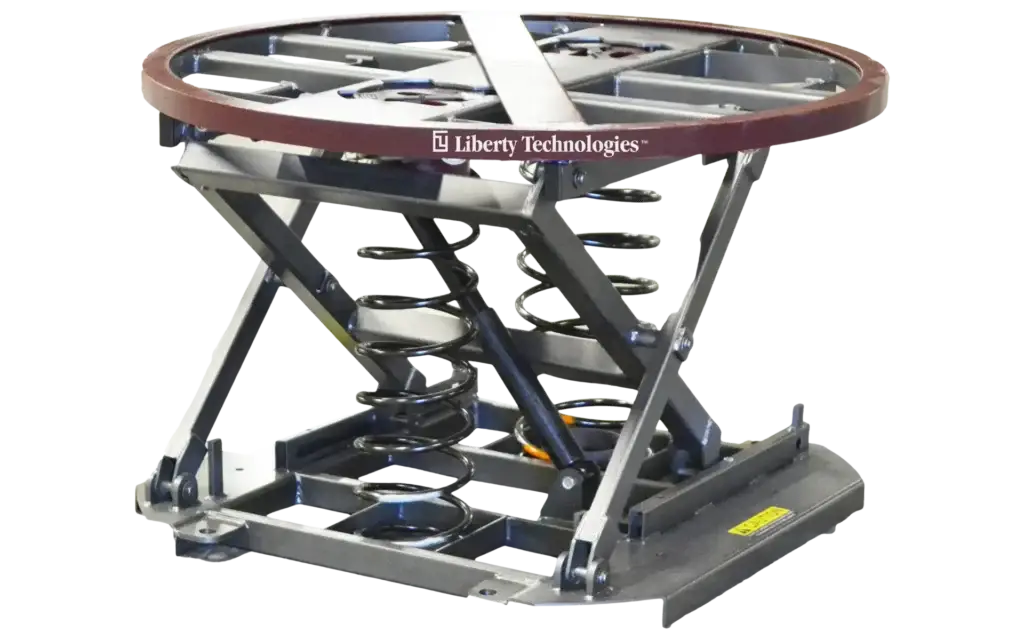
Ergonomic systems reduce physical strain while improving consistency and throughput in load handling.
Ergonomic load handling equipment is often categorized as a safety initiative. In operational terms, it is also a system performance variable. How employees interact with loads affects load integrity, damage rates, throughput consistency and, increasingly, the ability to staff and maintain operations at all.
High levels of manual handling limit who can perform the work and increase downtime when roles cannot be filled. This is not purely a staffing issue: it is a design issue. When the physical demands of a process exceed what a broad labor pool can sustain, the operation becomes fragile regardless of how well everything else is managed.
Ergonomic and unit load systems reduce those physical demands, expanding the available labor pool and helping facilities maintain throughput during labor shortages. Fewer injuries also mean less process disruption, lower incident-related costs and more consistent performance over time.
Millwood supplies ergonomic load handling equipment – including the Liberty Lifter, Liberty Loader and Liberty Inverter – as part of a unit load system rather than as standalone additions. Pallet technology in this context supports Team Members rather than replacing them: it shifts the burden of heavy and repetitive lifting to equipment, freeing workers to concentrate on oversight, quality and value-added activities.
Sustainability as a System Outcome
In a packaging science approach, sustainability is not a separate initiative. It is the natural result of designing an efficient system. When pallet design is matched to actual load requirements, the right amount of material is used, damage is reduced, pallet life is extended and reuse and recycling outcomes improve automatically.
Millwood operates circular pallet systems that put this into practice. Used pallets are recovered and inspected: those that meet performance standards return to service, damaged pallets are repaired, and unusable material is repurposed into mulch for our CORE-branded filter socks, biofuel or other secondary outputs. This reduces raw material demand while maintaining consistent pallet availability.
Combo pallets further increase material efficiency by combining new lumber with recovered pallets to restore structural performance. All combo pallets are verified against standardized GMA grading: Grade 1A (lightly used, no repairs), Grade 1 (clean, minor repairs) and Grade 2 (fully functional after more extensive repair). Standardized grading supports load planning, automation compatibility and cost control.
Millwood has also invested in tree planting through the Arbor Day Foundation, ensuring healthy forests and responsible lumber use as a complement to the circular systems described above.
Pallet Tracking Technology, Smart Pallets and AI
Tracking technology provides the data needed to manage pallet programs with greater accuracy and control.
The final piece of the system is visibility. Pallet tracking technology like Millwood’s proprietary PalletView™ software turns physical movement into usable operational data – and data is what makes it possible to manage, improve and scale a pallet program with confidence rather than guesswork.
Millwood’s Smart Pallets are equipped with GPS tracking that provides real-time location data, movement history and status information across the supply chain. This improves inventory accuracy, reduces pallet loss and enables better supply balancing across facilities. Movement history supports planning by identifying dwell time, congestion points and inefficiencies that would otherwise remain invisible.
As pallet tracking technology connects to warehouse and transportation workflows, the value compounds. Condition monitoring can identify changes in pallet structure early, reducing the risk of load failure and downstream damage claims. These insights support proactive maintenance and more reliable pallet performance without adding redundant manual inspection steps.
AI extends this application further. Integrated with pallet scanning, AI can detect changes in shape, weight distribution or structural integrity that would be invisible to the human eye, flagging issues before they become damage claims or customer complaints. More broadly, AI supports decision-making across inventory management, demand planning and operational efficiency, not by replacing the people making those decisions, but by giving them better information, faster.
Companies that adopt connected pallet systems and stay ahead of trends in palletizing technology are better positioned to respond to supply chain demands, improve performance and manage assets with greater confidence. Pallet tracking technology, in particular, closes the loop: it generates the performance evidence that makes continuous improvement possible, turning a pallet program from a recurring cost into a managed, optimizable asset.
Putting It All Together: The Millwood SURE Framework
Every example of pallet technology described in this article – stretch and shrink wrapping, palletizing automation, conveying systems, ergonomic equipment, circular sustainability programs, pallet tracking technology and AI – delivers its full value when it is part of an integrated system, evaluated against real operating conditions and deployed through a process built to scale.
That is the premise behind Millwood SURE. Built on the same packaging science principles described throughout this article, SURE is Millwood’s proven, repeatable approach for moving customers from fragmented pallet decisions to a supply chain that performs reliably and continues to perform as your operations grow.
SURE stands for:
- Study. We work with you to assess your operations, product flow, challenges and goals, building a comprehensive picture before any solution is proposed.
- Understand. We engineer solutions built around your exact requirements, supported by data from the Millwood Lab and real-world performance insights.
- Review. Designs are tested and validated under conditions that reflect real handling environments, ensuring reliability and consistency before broader deployment.
- Expand. Verified solutions are scaled with confidence across locations, volumes and programs – creating long-term, measurable value.
With over 40 Millwood-operated facilities, 250+ strategic partner locations and more than 2,000 Team Members across North America, we have the capability and reach to design, test and deliver solutions that can be replicated across your network. The result is a supply chain built on evidence rather than assumption: less complexity, more consistency and a pallet program that will support your organization for years to come.
“The gains from palletizing automation are only fully realized when the full line – palletizing, wrapping, conveying and shipping – is designed as an integrated process.”
Share:

Evaluating Your Unit Load Performance?
Millwood’s Packaging Science team works with you to understand how pallets, load securement, handling systems and real-world conditions interact across your operation. Whether you’re addressing a specific issue or looking to improve performance at scale, we can help you evaluate your full unit load and identify data-driven opportunities for improvement.
Related Articles


Josh Stipanovich
Josh serves as Communications Manager at Millwood, overseeing internal and external communications to ensure the company’s mission and message are delivered clearly and consistently. He leads initiatives ranging from company-wide communications and website content to PR, trade show promotions, and sales support materials. Since joining Millwood in 2014, he has played a key role in major projects including the company rebrand, website redevelopment, and HubSpot launch.
Stay Up To Date
Click the button below to recieve a collection of the latest case studies, articles and resources in Millwood’s newsletter in your inbox each month.