

Wood Waste Recycling
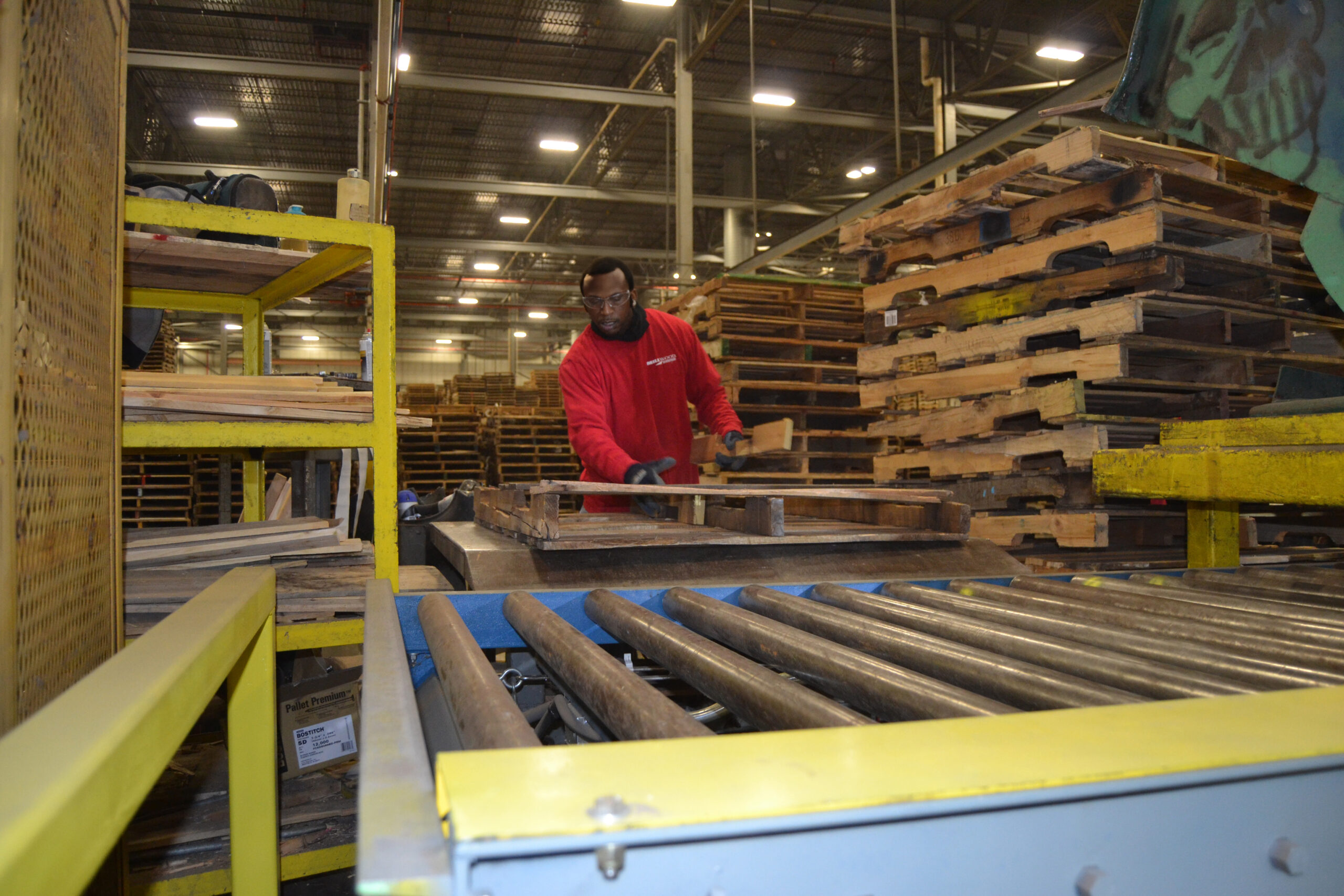
Wood Waste Recycling Solutions for a Sustainable Future
Millwood provides innovative wood waste recycling programs that reduce landfill impact, extend the life of pallets and create valuable byproducts. Our commitment to sustainability ensures that every piece of waste wood is repurposed responsibly into products like animal bedding, biofuel and wood composites. By partnering with us, businesses gain access to dependable wood waste recycling solutions that minimize waste and maximize value.
Responsible Recycling Practices
When pallets or lumber reach the end of their lifecycle, we recycle every component. Wood materials are transformed into sustainable alternatives such as pressed wood pallets, landscape products and biofuels.
Zero Landfill Commitment
Our goal is to operate waste wood recycling facilities that generate no landfill contributions. With more than four decades of expertise in renewable wood products, Millwood has been sustainable by design since day one.
Packaging Challenges? No Problem.
- Under-engineering that leads to load failure and product damage
- Safety risks that create downtime and high employee turnover
Instead, we deliver a just-right service solution—grounded in packaging science and supported by heat treatment, returnable packaging management, sustainability programs and recycling services—balanced for performance, cost and ease of operation.
Why Choose Millwood as Your Solution Provider?
-
Customer Centric Approach: We collaborate closely with customers, providing personal service and responsive support to meet your unique needs.
-
Industry Expertise Since 1985: With over four decades of experience, Millwood understands the complexities of pallet design and supply chain logistics.
- Innovative Design & Testing: Our in house ISTA certified lab and Pallet Design System (PDS) enable tailored, optimized pallet solutions.
- Manufacturing Experts: From sawmilling, resawing, assembly, heat treating and mold prevention, we have the experience and knowledge to serve you.
-
Sustainability Commitment: We are committed to efficiency without compromising our environment.
Frequently Asked Questions
What is wood waste recycling and why is it important?
Wood waste recycling transforms discarded pallets and packaging into reusable materials, reducing landfill waste and promoting sustainability. It saves money, conserves resources and supports environmental goals for businesses.
Wood waste recycling solutions include collecting used pallets, crates and industrial packaging, breaking them down and repurposing the wood into recycled fiber products. This reduces the reliance on virgin lumber, keeps waste out of landfills and lowers overall disposal costs. For businesses, it aligns with growing ESG requirements while providing practical supply chain benefits. Recycling pallets also supports a circular economy model, where materials are continuously reused rather than discarded, strengthening sustainability practices and reputation.
What are the benefits of wood waste recycling for businesses?
Businesses benefit from wood waste recycling by lowering disposal costs, improving ESG compliance and demonstrating sustainability leadership in their industry.
Waste wood recycling helps companies cut landfill disposal fees, reduce environmental footprints and meet customer sustainability expectations. It provides a cost-effective alternative to buying new pallets while extending material lifecycles. Many industries now consider sustainability performance in procurement decisions, so companies with recycling programs gain a competitive edge. Additionally, waste wood recycling reduces risks of regulatory penalties and supports internal green scorecards. Overall, wood waste recycling is both a financial and reputational advantage.
Can wood waste recycling lower supply chain costs?
Yes, wood waste recycling can reduce costs by minimizing disposal fees, lowering pallet purchase expenses and improving resource efficiency.
By repairing, reconditioning and recycling pallets, companies cut the need for frequent replacements, saving on procurement. Recycling also reduces landfill fees and transportation costs tied to waste disposal. Over time, these savings compound, making recycling a cost-effective solution for businesses that rely heavily on pallets and wood packaging. Additionally, companies that participate in recycling programs often gain access to more stable pallet supplies during shortages, further protecting bottom lines.
How does pallet recycling support the circular economy?
Pallet recycling extends the lifecycle of wood products, keeping materials in use longer and reducing environmental impact. It is a practical way to implement circular economy principles.
Instead of discarding broken or old pallets, recycling programs recover and recondition them for continued use. Damaged pallets can be disassembled, with usable wood reclaimed for repairs or repurposed into recycled fiber. This closed-loop process not only reduces waste but also decreases demand for fresh lumber. Businesses that adopt pallet recycling demonstrate environmental responsibility, enhance efficiency and create positive brand recognition. By supporting a circular economy, companies achieve both sustainability goals and operational cost savings.
Which industries benefit most from wood waste recycling?
Industries that use pallets and wood packaging heavily—such as retail, manufacturing, food and beverage and logistics—gain the most from wood waste recycling programs.
Large-scale shippers, distributors and manufacturers generate significant volumes of pallet waste. Instead of paying high disposal fees, these companies can save costs by recycling pallets into reusable wood fiber or repaired units. Food and beverage companies can enhance sustainability credentials through recycled packaging, while retail and e-commerce players improve efficiency in supply chains. Logistics and warehousing operations also benefit from streamlined pallet management and reduced waste. Essentially, any business handling large volumes of wood packaging can unlock value through recycling.