
Custom Pallet Design: Optimize Your Supply Chain in 2026
Refreshed April 23, 2026
4 Minute Read
Table of Contents

Josh Stipanovich
Josh serves as Communications Manager at Millwood, overseeing internal and external communications to ensure the company’s mission and message are delivered clearly and consistently. He leads initiatives ranging from company-wide communications and website content to PR, trade show promotions, and sales support materials. Since joining Millwood in 2014, he has played a key role in major projects including the company rebrand, website redevelopment, and HubSpot launch.
Stay Up To Date
Click the button below to recieve a collection of the latest case studies, articles and resources in Millwood’s newsletter in your inbox each month.
“A properly designed custom pallet ensures compatibility with equipment, helping reduce downtime and maintain smooth operations.”
“Looking at pallet design as part of your overall operation can help identify inefficiencies and dependencies that may not be obvious when evaluating pallets on their own.”
Table of Contents
In today’s fast-moving supply chains, efficiency is critical. Every part of your operation, from packaging to transportation, plays a role in overall performance. One easily overlooked component of that chain is the pallet.
Many companies rely on a 48”x40” pallet, but those don’t always fit the unique needs of their products or processes. When pallets aren’t properly matched to an application, it can lead to wasted space, product damage and higher costs. These issues often go unnoticed at first but have a significant impact on your bottom line over time.
That’s where custom pallet design can make a difference – especially when those pallets are engineered to fit your application and operation instead of forcing it to adapt to an unfit pallet. Millwood‘s decades-long track record supporting companies across North America with custom pallet solutions has generated the real-world insights we will explore below.
What Is Custom Pallet Design?
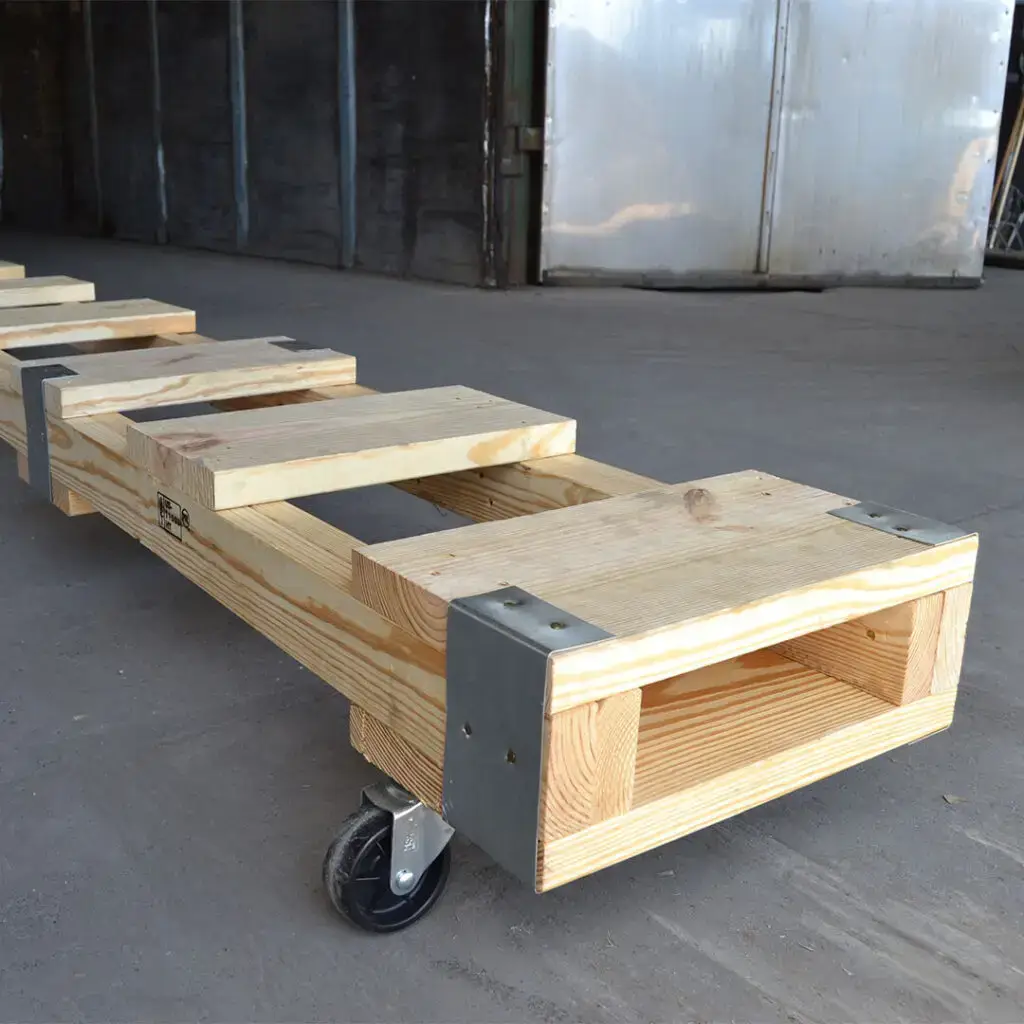
Custom pallet design involves creating a pallet that is specifically engineered for your product, handling methods and shipping requirements.
Instead of using a one-size-fits-all solution, custom pallets are designed, tested and built to support your exact load. This means factoring in considerations such as:
- Product dimensions and weight,
- Load distribution,
- Handling equipment,
- Storage conditions, and
- Shipping environment.
Each of these variables plays a role in how a pallet performs throughout its lifecycle. A properly engineered design helps ensure that the pallet not only supports the product but also functions efficiently within your wider operation.
When working with customers, Millwood’s consistent aim is to design pallets that improve performance while reducing unnecessary material cost and supporting the overall supply chain system.
When Does a Custom Pallet Make Sense?
Not every application requires a custom solution, but there are many situations where custom pallet design provides clear benefits. Often, these opportunities become more apparent as operations scale or become more complex.
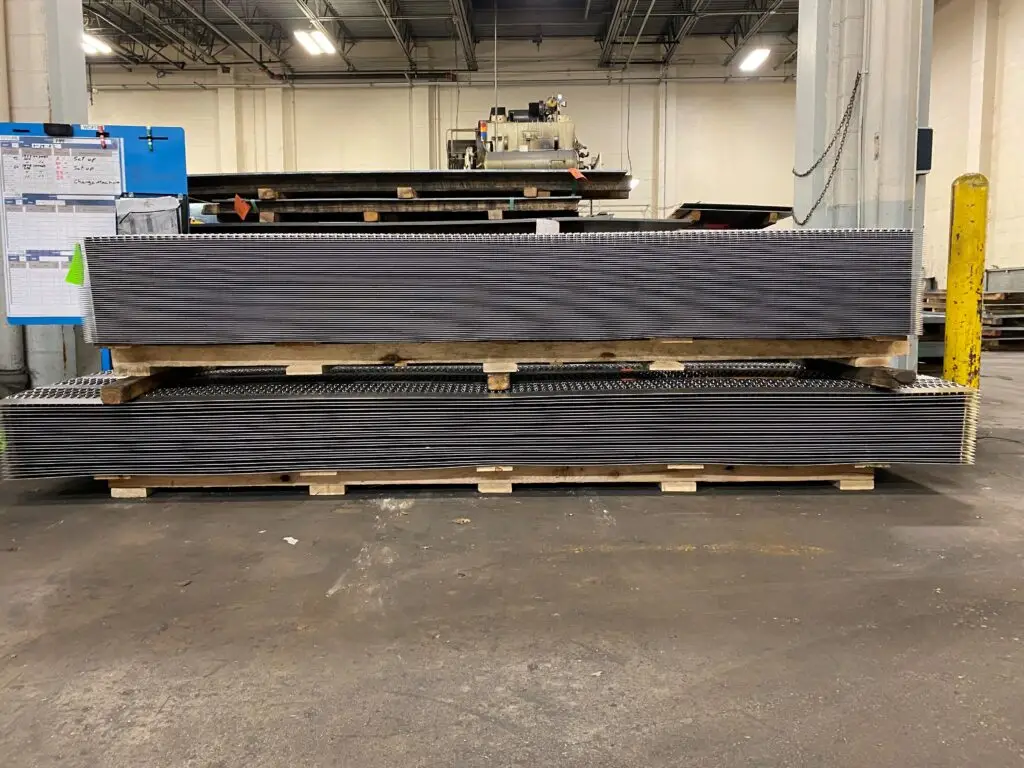
Irregular-sized Products
Products that don’t fit typical pallet sizes can be difficult to stabilize and transport. This often results in inefficient loading, shifting during transit and increased risk of damage.
Custom wood pallets can be designed to properly support these products, improving safety and handling efficiency. By matching the pallet to the product dimensions, companies can also reduce the need for excess packaging materials used to compensate for poor fit.
Automation and Material Handling Systems
Facilities that use conveyors, robotics, end-of-line packaging systems or automated storage systems require consistent pallet performance. Even small inconsistencies in pallet size or structure can lead to large-scale disruptions.
A properly designed custom pallet ensures compatibility with equipment, helping reduce downtime and maintain smooth operations. Consistency in pallet design is especially important in high-throughput environments where reliability is critical.
Product Protection
If products are frequently damaged during shipping, pallet design may be part of the issue. When loads are not properly supported, stress points can develop, increasing the likelihood of damage.
Through custom pallet design, pallets can be engineered to better distribute weight and support the load, reducing stress on packaging and improving overall product protection. This can lead to fewer claims, less waste and improved customer satisfaction.
Improved Space Utilization
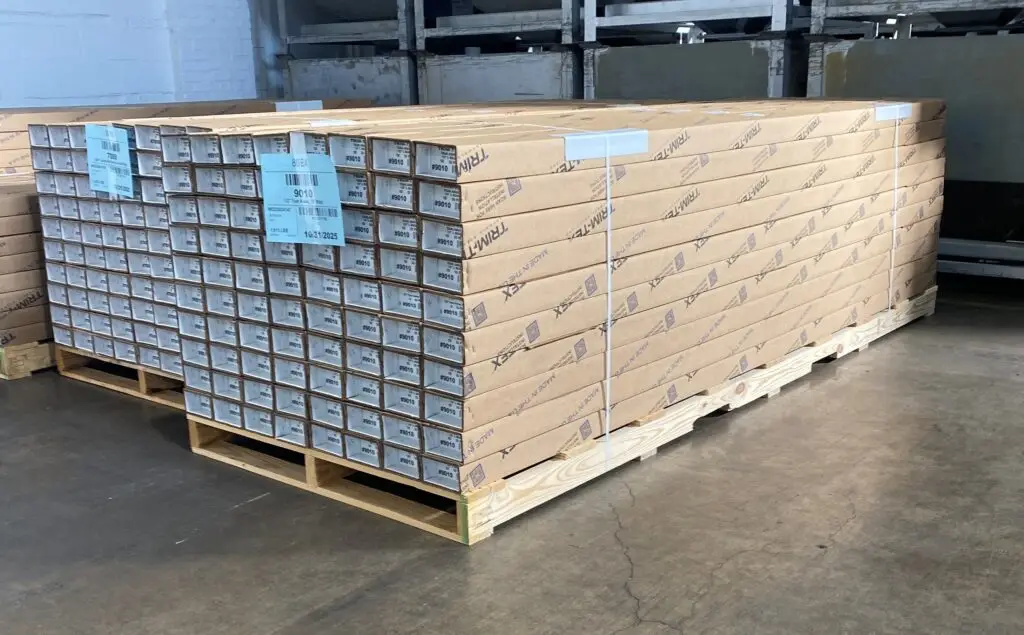
Using pallets that don’t align with your product size can lead to wasted space in trailers and warehouses. Over time, this inefficiency increases transportation costs and limits storage capacity.
Customized pallets allow for better load configuration, helping maximize available space and reduce transportation costs. Improved cube utilization can make a meaningful difference, especially for companies shipping large volumes.
Compliance Requirements
Certain industries and export shipments require specific pallet treatments or designs, such as heat treatment or specialized materials.
With custom pallets, these requirements can be built into the pallet from the beginning, helping to ensure compliance without added steps later. This simplifies the shipping process and reduces the risk of delays or rejected shipments at mission-critical junctures.
Sustainability and Waste Management
Custom pallet design can support sustainability consideration by reducing material waste, improving durability and enabling reuse or recycling programs. Engineered pallets use only the material required for performance, helping lower costs while minimizing environmental impact.
In a recent case study, Millwood helped an aerospace manufacturer redesign its steel-reinforced pallets to improve durability while implementing a repair-and-return program to recover and reuse them.
By addressing key failure points through engineered design and extending pallet life through refurbishment, the company repaired over 3,400 pallets, generated more than $1 million in savings and significantly reduced waste and disposal costs.
“While the concept of GMA pallet size still carries name recognition, the quality behind that label can vary significantly from supplier to supplier.”
5 Benefits of Custom Pallet Design Across Your Supply Chain
A well-executed custom pallet design can provide several advantages across your supply chain:
- Better product protection;
- Improved handling efficiency;
- More reliable performance;
- Reduced material waste; and
- Lower overall transportation costs.
These benefits often extend beyond a single facility – especially important to note for companies operating across multiple locations, where consistent pallet performance and smooth system interaction is critical.
Standardizing pallet performance across locations can help streamline operations, reduce variability and improve coordination between facilities. By selecting the right pallet for your application, you can improve both operational efficiency and cost control while supporting long-term scalability.
Custom Pallets as Part of a Larger Strategy
While pallets may seem like a small part of the supply chain, they can have a significant impact on overall performance. When viewed as part of a unit load system, pallet design becomes an opportunity for improvement rather than just a purchasing decision.
At Millwood, custom pallets are designed with the full unit load in mind. This includes not only the pallet itself, but also how it interacts with packaging, handling equipment, and transportation.
Looking at pallet design as part of your overall operation can help identify inefficiencies and dependencies that may not be obvious when evaluating pallets on their own. It also helps ensure that improvements made in one area do not create new challenges in another.
For a real-world example of how custom pallet design can improve performance, consider how Millwood helped a plastics manufacturer reduce costs and improve efficiency with custom pallet design in this case study.
This case-by-case approach can help to ensure that your pallet solution supports broader supply chain goals and adapts as your operation evolves.
Is It Time to Evaluate Your Pallet Design?
If your operation is using standard pallets, you may want to evaluate whether they are the right fit. Many companies continue using existing pallet designs simply because they have always worked, not because they are optimized.
A review of your current pallet program can help identify opportunities to improve performance, reduce costs, and better align your supply chain with your business goals. Even small improvements in pallet design can lead to meaningful gains in efficiency, cost savings, and product protection. Over time, these improvements can have a measurable impact on overall supply chain performance.
Get started by exploring Millwood’s custom pallet design solutions today.
“Because the term ‘GMA pallet’ no longer guarantees consistency, Millwood has established a grading system that does. Each pallet is inspected, measured and verified – not assumed.”
Share:

Ready to Strengthen Your Supply Chain?
Standard pallets are rarely appropriate for unique applications. Without a design tailored to your product and process, inefficiencies can go unnoticed. Millwood replaces one-size-fits-all approaches with custom-engineered solutions, using data-driven design to improve load stability, reduce costs and deliver reliable performance across your supply chain.
Related Articles


Josh Stipanovich
Josh serves as Communications Manager at Millwood, overseeing internal and external communications to ensure the company’s mission and message are delivered clearly and consistently. He leads initiatives ranging from company-wide communications and website content to PR, trade show promotions, and sales support materials. Since joining Millwood in 2014, he has played a key role in major projects including the company rebrand, website redevelopment, and HubSpot launch.
Stay Up To Date
Click the button below to recieve a collection of the latest case studies, articles and resources in Millwood’s newsletter in your inbox each month.