
3 Ways Procurement Cost Savings Can Better Your Business
How strategic sourcing empowers procurement cost savings opportunities through reduced costs, increased buying power and stronger partnerships.
May 12, 2026
7 Minute Read
Table of Contents

Josh Stipanovich
Josh serves as Communications Manager at Millwood, overseeing internal and external communications to ensure the company’s mission and message are delivered clearly and consistently. He leads initiatives ranging from company-wide communications and website content to PR, trade show promotions, and sales support materials. Since joining Millwood in 2014, he has played a key role in major projects including the company rebrand, website redevelopment, and HubSpot launch.
Stay Up To Date
Click the button below to recieve a collection of the latest case studies, articles and resources in Millwood’s newsletter in your inbox each month.
“One of the clearest ways to save money is to cut waste. When companies use too many suppliers, they can end up paying for the same things multiple times. This creates redundant costs, additional shipping fees and piles of unnecessary paperwork.”
“When companies commit to fewer vendors, those vendors are more willing to offer rebates, discounts and special pricing – especially if they want to become long-term growth partners.”
Table of Contents

Strategic sourcing and vendor consolidation help businesses reduce procurement costs through streamlined bulk shipments and supply chain efficiency.
Every company, big or small, wants to save money while getting the best products and services. That’s where procurement cost savings through vendor consolidation – otherwise known as strategic sourcing – come into play. Leveraging strategic sourcing enables you to cut costs, simplify your operations and build stronger relationships with suppliers.
In simple terms:
- Strategic Sourcing means making smart, long-term decisions about which suppliers to use.
- Vendor Consolidation, which is another form of strategic sourcing, means working with fewer suppliers instead of spreading purchases across many vendors.
- Smart strategic sourcing and vendor consolidation create procurement cost savings: real money a company can save by improving how it buys goods and services.
This article will explore the three primary ways your company could achieve procurement cost savings with strategic sourcing:
- Eliminating redundant costs, freight inefficiencies and administrative overhead.
- Increasing buying power and negotiating better pricing through economies of scale.
- Unlocking discounts and rebates by building strong, mutually beneficial relationships with vendors.
We’ll also share real examples of companies that have saved millions of dollars by following these strategies – drawing stories from both customers we have worked with and experts across industries.
Benefit #1: Eliminating Redundant Costs, Freight Inefficiencies and Administrative Overhead
One of the clearest ways to save money is to cut waste. When companies use too many suppliers, they can end up paying for the same things multiple times. This creates redundant costs, additional shipping fees and piles of unnecessary paperwork.
A. Redundant Costs
Imagine you buy load handling supplies from five different vendors. Each vendor might offer a selection of pallets, shrink/stretch wrap, palletizing equipment and corrugated products. Instead of focusing your orders with one vendor, you’re spreading out your purchases, which requires time, energy and the increased likelihood of purchasing duplicate supplies.
In the long-run, that means paying higher prices, because a) it can be hard to ensure procurement stays strategic when there are so many moving parts, and b) none of your vendors are getting enough of your business to offer bulk discounts.
Yes, you read that correctly. Working with multiple vendors in a pick-and-choose system can actively increase your costs.
On the flipside, working with a single source provider for all of your supplies can create a win-win for everyone involved. That’s because consolidating vendors and working with a proven provider like Millwood can generate strategic asset visibility (decreasing the likelihood of redundant purchases), as well as better pricing overall (explained in greater depth under Benefit #2, later in this article).
B. Freight Inefficiencies
Freight costs are another big source of waste for businesses across industries. If you’re ordering small shipments from many vendors, you’re paying more in shipping than if you combined those orders. More trucks, more boxes and more fuel means higher expenses.
Imagine receiving all of your orders in one shipment. You get full truckloads instead of less than truckloads (LTL), and that alone can save 15–20% on overall transportation costs. Choosing a vendor with a great track record can better your business simply by completing product delivery in the timeframe promised.
Consider this example of trustworthy freight efficiency in action: Millwood has worked with a Fortune 500 manufacturing company since the 1980s. Today, we supply their network with over 3 million pallets annually, delivering them on time, 99.9% of the time. That’s the kind of large-scale operational efficiency that’s possible with strategic sourcing – and it’s the reason we won their 2025 ‘Supplier of the Year’ award.
Another great example is AGCO, a global agricultural equipment manufacturer. They consolidated their inbound logistics in Europe by introducing a transport management system. The result? Freight costs dropped by 18% and overall inbound logistics costs fell by 28%. They also lowered their inventory by 25%, which saved them even more on warehouse space and holding costs.
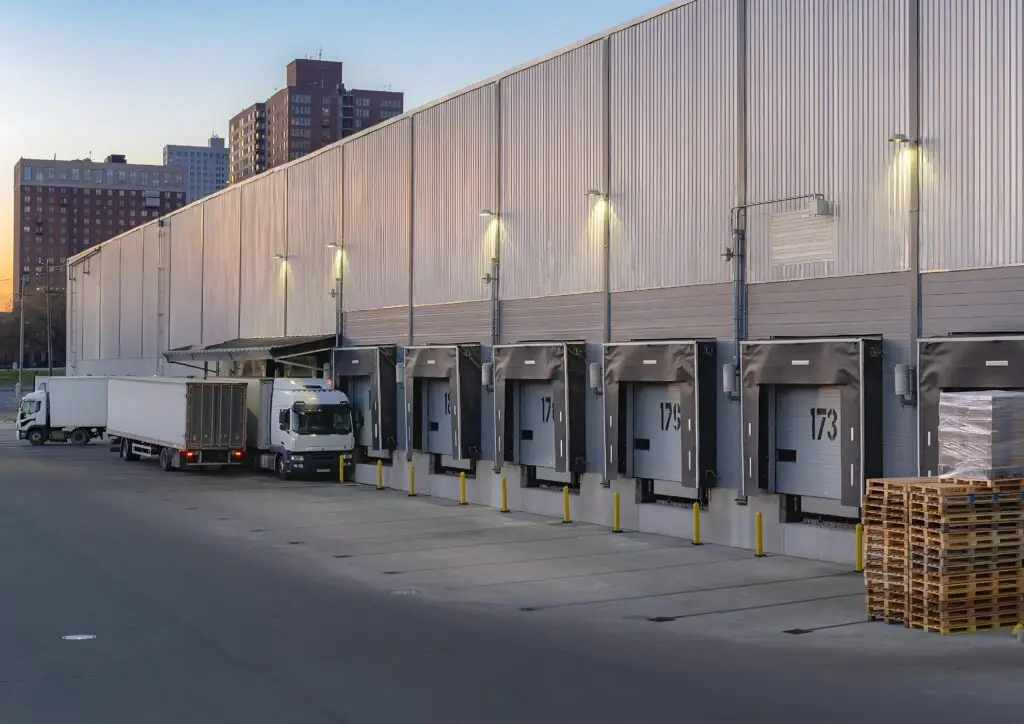
Strategic sourcing and freight consolidation help reduce transportation costs by shifting from multiple small shipments to more efficient full truckload deliveries.
C. Administrative Overhead
Managing too many suppliers can also create headaches for staff. Purchase orders, invoices and vendor contracts need to be tracked when a company uses dozens – or even hundreds – of vendors. This “administrative overhead” costs time and money.
Fewer vendors mean fewer contracts, fewer invoices and less time wasted on chasing paperwork. This frees up staff to focus on higher-value work, like improving customer service or negotiating better deals.
As one corrugate industry leader confirms:
“By consolidating vendors, companies benefit from lower product and freight costs, streamlined procurement and reduced administrative overhead.”
Benefit #2: Increased Buying Power and Better Pricing through Economies of Scale
The second major benefit is buying power. When companies consolidate vendors, they place larger orders with fewer suppliers. As we alluded to earlier in our discussion on redundant costs, this leads to economies of scale – the more you buy, the cheaper each unit becomes.
A. Economies of Scale in Action
It’s a simple idea, but it bears repeating: when companies commit to larger orders with one supplier, that supplier’s costs go down. They can then make bigger production runs, plan their logistics more efficiently and pass those savings back to the buyer – you!
B. Stronger Negotiation Leverage
With vendor consolidation, buyers gain more leverage in negotiations. Instead of spreading $1 million in purchases across ten vendors, imagine offering that full amount to just two or three. In theory, those vendors will compete harder for your business, which often means better pricing, better contract terms and better service.
Consider the example of a mid-sized company that consolidated its IT software and licensing purchases into a single vendor strategy. By centralizing vendor relationships across all departments in their business, they saved $2 million and boosted efficiency by 30%.
C. Expert Insights
Experts at LSI, a development consultancy that has helped clients secure billions of dollars in public sector, commercial and government contracts, observe that:
“Supplier consolidation allows businesses to leverage economies of scale, gain access to volume-based discounts and reduce per-unit costs.”
In other words, this isn’t just theory – it’s proven across industries and sectors. Larger orders with fewer suppliers translate into real money saved.
“One of the clearest ways to save money is to cut waste. When companies use too many suppliers, they can end up paying for the same things multiple times. This creates redundant costs, additional shipping fees and piles of unnecessary paperwork.”
Benefit #3: Discounts and Rebates through Strong Vendor Relationships
The third benefit goes beyond purely transactional costs and contracts. It’s about building stronger partnerships. When companies commit to fewer vendors, those vendors are more willing to offer rebates, discounts and special pricing – especially if they want to become long-term growth partners.
A. Discount and Volume Rebates
Many suppliers reward customers who buy more or stay loyal. These rewards often take the form of volume rebates – money back at the end of the year if a certain purchasing level is met. Others may offer discounts for early payments or exclusive contracts.
For instance, we have had the privilege of partnering with a large building materials company for several decades. Over time, we have been able to build a strong relationship, in which we have offered increasingly favorable pricing and payment terms – terms made possible by the fact that we are their long-term, single-source provider.
We did not just stop with their core business, either. After they acquired a brand-name daughter company in their industry, we extended the same discount to them, vastly improving on the terms this company had with its previous suppliers. This opened up considerable cash flow for our original customer. That’s the kind of vendor consolidation advantage we hope to share with every member of the Millwood family.
Stepping outside of Millwood, another example would be a large retail group that cut its vendor base by 50% and was able to negotiate much stronger terms with the vendors that remained. Within a year, they gained 20% in procurement cost savings, with overall profits rising by 25%.

Procurement teams use strategic sourcing and supplier analysis to reduce costs, streamline vendor management and improve operational efficiency.
B. Building Mutually Beneficial Relationships
When a vendor becomes a long-term partner, the relationship becomes about more than price. Vendors are more likely to share innovations, improve service and even collaborate on solving problems.
As one sourcing expert explains:
“Vendor consolidation is not just about reducing the supplier base – it’s about developing closer, more strategic relationships with the retained vendors. Procurement should engage consolidated vendors as partners and work together on ongoing performance improvements, cost reductions and innovations.”
This creates a win-win situation: the buyer saves money, and the supplier gains steady, predictable business through a trusted relationship.
At Millwood, we aim to go one step further. We work with you to create mutually beneficial relationships and solutions for companies throughout every part of your supply chain. That means any companies you partner with to get your products manufactured, distributed or displayed.
Take the example of a large door manufacturer we have the privilege of serving. Before we started working together, they were shipping components from Canada to Alabama, where the doors were finished. The company in Alabama was then throwing pallets away, incurring costly disposal fees. This forced the company in Canada to purchase new pallets for each shipment.
Millwood worked with both companies to establish a pallet retrieval plan. This arrangement allowed the company in Canada to receive and reuse their original pallets, saving them $26,000 annually. Moreover, participating in the pallet retrieval program allowed the Alabama-based company to lower their disposal costs, return approximately 9,500 boards per month and eliminate 18 tons of wood waste annually from local landfills – a procurement cost savings win for everyone involved.
Procurement Cost Savings Case Studies in Action
Let’s recap with the real-world success stories we have mentioned throughout this article, plus a bonus example to drive our main point home (that strategic sourcing unlocks procurement cost savings):
- AGCO – Saved 18% on freight and 28% on inbound logistics by consolidating carriers and optimizing transportation.
- IT Assets Example – Saved $2 million and gained 30% efficiency by centralizing software and licensing procurement.
- Large Retail Group – Achieved procurement cost savings of 20% and raised profits 25% by cutting their vendor count in half.
- Large Door Manufacturer: Millwood assisted in creating a mutually beneficial relationship between one company in Canada and another in Alabama through a pallet retrieval program, which lowered the cost of pallet procurement (Canada), disposal costs and landfill waste (Alabama).
- Multinational Manufacturer – Cut logistics costs 15% and realized more than $300 million in supply chain savings by streamlining contracts and gaining visibility across land, air and sea transport.
These numbers prove that procurement cost savings through vendor consolidation and strategic sourcing are not just possible – they’re happening every day in companies around the world.
Partner with Millwood to Achieve Procurement Cost Savings through Vendor Consolidation
Interested in learning more on how Millwood can partner with you in strategic sourcing? Contact us today at 877-891-9663 to speak with a Millwood Team Member.
Remember, procurement cost savings are about more than cutting prices. By leveraging strategic sourcing and vendor consolidation, your business could:
- Eliminate waste by reducing redundant costs, freight inefficiencies and administrative overhead.
- Gain buying power and negotiate better deals through economies of scale.
- Build stronger partnerships that lead to rebates, discounts and long-term mutual benefits.
The result is a leaner, more efficient and more profitable organization. In the final analysis of yet another industry guide:
“Vendor consolidation is a procurement approach where businesses reduce supplier count by retaining high-performing, strategically aligned partners. This eliminates redundant or underperforming vendors, streamlining operations, mitigating risks and achieving cost efficiencies through volume leverage.”
For businesses looking to stay competitive, the message is clear: fewer vendors, smarter sourcing and stronger relationships equal lasting procurement cost savings and success.
“When companies commit to fewer vendors, those vendors are more willing to offer rebates, discounts and special pricing – especially if they want to become long-term growth partners.”
Share:

READY TO STREAMLINE YOUR SUPPLY CHAIN?
Millwood is more than a supplier — we provide integrated packaging and supply chain solutions that help businesses reduce waste, improve freight efficiency and simplify vendor management. From pallets and crates to packaging materials and logistics support, Millwood helps create lasting operational savings through one strategic partnership.
Related Articles



Josh Stipanovich
Josh serves as Communications Manager at Millwood, overseeing internal and external communications to ensure the company’s mission and message are delivered clearly and consistently. He leads initiatives ranging from company-wide communications and website content to PR, trade show promotions, and sales support materials. Since joining Millwood in 2014, he has played a key role in major projects including the company rebrand, website redevelopment, and HubSpot launch.
Stay Up To Date
Click the button below to recieve a collection of the latest case studies, articles and resources in Millwood’s newsletter in your inbox each month.