The Millwood Sustainability Report 2026 gives customers a practical look at how Millwood is improving the systems that support responsible sourcing, pallet recovery, Team Member development and environmental stewardship.
For procurement, operations and supply chain leaders, those improvements matter because sustainability is no longer separate from day-to-day business decisions. Sustainability affects supplier expectations, material recovery, reporting requirements, operational risk and long-term value across the supply chain.
Millwood’s progress can be viewed through the ESG indexing framework:
Environmental: How resources are managed, reused, recovered and measured.
Social: How Team Members are trained, supported and protected.
Governance: How accountability, ethics and responsible sourcing are strengthened.
Within those three categories, four areas stand out from this year’s report as especially meaningful:
- Strengthening accountability across the supply chain
- Investing in standards, safety and Team Member development
- Creating a clearer picture of environmental impact
- Extending the life of valuable resources
Together, these areas show how Millwood approaches sustainability as an operational discipline rather than a siloed initiative.
Quick Summary
The Millwood Sustainability Report 2026 highlights several measurable areas of progress:
- Supplier Code of Conduct participation increased from 42% to 59%
- Compliance training expanded from 154 hours to more than 1,337 hours
- Millwood established its first complete Scope 1, Scope 2 and Scope 3 carbon baseline
- EcoVadis sustainability performance improved by 24%
- Nearly 67 million pallets were recycled annually
- Approximately 53 million pounds of material were diverted from landfills through CORE initiatives
- More than 43% of Millwood’s electric forklift conversion goal has been completed
- More than 7.5 billion pounds of material have been recovered through recycling and CORE programs across 2024 and 2025
The report points to a central theme: sustainability becomes more meaningful when it is measured, connected to operations and supported by systems that document quantifiable improvement over time.
What Is ESG Reporting?
ESG reporting is the process of measuring and communicating an organization’s Environmental, Social and Governance performance.
- Environmental factors include emissions, resource use, recycling, waste reduction and environmental stewardship.
- Social factors include Team Member safety, training, development and community impact.
- Governance factors include ethics, compliance, responsible sourcing, transparency and accountability.
These factors come together to provide a clearer picture of how an organization manages risk, supports long-term performance and creates value for customers, Team Members and the broader supply chain.
For Millwood, this becomes very practical very quickly, impacting every part of the company.
Four Areas of Meaningful Progress in the Millwood Sustainability Report 2026
At Millwood, we believe ESG improvement measures need to work together to truly make a difference.
For instance, a company may recycle more material while still lacking strong supplier standards. It may set emissions goals without first establishing a reliable baseline. It may publish long-term commitments without investing in the Team Members who make operational improvement possible.
The strongest progress occurs when multiple systems improve together.
In the Millwood Sustainability Report 2026, four areas provide a clear view of unified, meaningful progress. These four areas are supply chain accountability, Team development, environmental visibility, and resource stewardship.
These areas are not the only topics covered in the report. They are the areas that most clearly show how Millwood is building stronger systems around sustainability, accountability and long-term operational performance.
Strengthening Accountability Across the Supply Chain
Responsible sourcing requires visibility beyond a company’s own operations.
A manufacturer or distributor can improve its own facilities, processes and reporting, but sustainability across the full supply chain depends on a broader network. Suppliers, vendors and partners all influence how materials are sourced, how standards are followed and how risks are managed.
That is why Millwood’s Supplier Code of Conduct progress is one of the most important governance developments in the 2026 report.
What Is Responsible Sourcing?
Responsible sourcing involves working with suppliers in a way that supports ethical, environmental and operational standards.
For Millwood, responsible sourcing includes expectations related to labor practices, human rights, environmental stewardship, integrity and compliance. These standards help create consistency across the organizations that support Millwood’s products, services and customers.
This matters because supply chains are interconnected. Industry partnerships have the potential to strengthen sustainability. A company’s sustainability performance is shaped by the practices, materials and decisions that occur throughout the supplier network.
Responsible sourcing gives customers greater confidence that sustainability initiatives are supported by clear expectations, not general intentions.
Supplier Code of Conduct Participation Increased from 42% to 59%
In 2025’s report, Millwood noted that Supplier Code of Conduct participation had reached 42%. In the Millwood Sustainability Report 2026, that number increased to 59%.
That is a 17 percentage-point increase and represents meaningful progress toward Millwood’s goal of 100% supplier participation by 2030.
The Supplier Code of Conduct helps define expectations for suppliers in areas such as:
- Ethical labor practices
- Environmental responsibility
- Compliance
- Transparency
- Business integrity
That means this increase in participation is not only a reporting improvement; it is a qualitative supply chain improvement.
For procurement and strategic sourcing leaders, supplier accountability matters because it can reduce uncertainty. It helps clarify what is expected of suppliers and creates a stronger foundation for long-term partnerships.
Why Supply Chain Accountability Matters
Supply chain accountability supports both sustainability and operational performance.
When suppliers understand the standards expected of them, companies are better positioned to manage risk, strengthen relationships and support consistent outcomes.
This is especially important in industries where material availability, regulatory expectations, customer requirements and transportation demands continue to evolve.
Millwood’s progress from 42% to 59% supplier participation shows that responsible sourcing is moving from a minority policy toward broader practical adoption.
For customers, this means Millwood is not only reviewing sustainability inside its own operations. It is working to extend accountability deeper into the sustainable supply chain.
Investing in Standards, Safety and Team Development
Strong systems depend on people who understand them, not just blindly work within them.
One of the most significant year-over-year improvements in the Millwood Sustainability Report 2026 is the increase in compliance and ethics training. This progress sits at the intersection of governance and social responsibility because it involves both organizational standards and Team Member development.
The power of training is clear expectations that can then be put into practice.
Compliance Training Increased from 154 to 1,337 Hours
In 2025, Team Members completed 154 hours of compliance training.
By the 2026 report, that number had increased to more than 1,337 hours.
This represents a major increase in training activity and reflects a deeper investment in ethics, accountability and organizational consistency.
Thanks to this training, Team Members understand expectations around important areas such as:
- ethical conduct
- workplace behavior
- fraud prevention
- anti-bribery
- anti-corruption
- human rights
- whistleblowing
When training increases at this scale, it shows that governance is not only being addressed through written policies. It is being reinforced through ongoing Team Member education.
Why Training Supports Operational Performance
Training creates clarity.
In a large organization with more than 2,000 Team Members and 40+ locations, clarity matters. Team Members need to understand policies, procedures, reporting channels and expectations. Leaders need consistent standards. Customers need confidence that their suppliers are managing risk and operating responsibly.
That is where compliance training becomes operationally relevant. It supports better decision-making. It helps prevent problems before they happen. It reinforces accountability across locations. It also gives Team Members practical tools for identifying concerns and responding appropriately.
For customers, this type of investment reduces uncertainty and instability. A company that trains its Team Members well is better equipped to deliver consistent service, maintain safe operations and support ethical business practices over time.
Creating a Clearer Picture of Environmental Impact
Environmental improvement must begin with measurement.
Before organizations can reduce emissions, improve efficiency or establish meaningful sustainability goals, they need a clear understanding of where they are coming from: where they stand today. One of the most important developments in the Millwood Sustainability Report 2026 is the progress made in environmental visibility.
You can’t read a map effectively if you do not know where you are on it. The same is true in the realm of environmental improvement. While some sustainability initiatives focus on outcomes, this area focuses on understanding. The better an organization understands its environmental impact, the better positioned it is to make informed decisions about future improvements.
This is where Millwood’s carbon tracking efforts, EcoVadis performance and electric forklift conversion initiatives become especially important.
What Are Scope 1, Scope 2 and Scope 3 Emissions?
Carbon reporting often uses three categories to help organizations understand where emissions originate.
- Scope 1: Emissions come from sources directly controlled by the organization, such as company vehicles and fuel used in operations.
- Scope 2: Emissions are associated with purchased electricity and energy consumption.
- Scope 3: Emissions occur throughout the broader value chain and may include transportation, supplier activities, waste management and other indirect sources.
Together, these three categories provide a more complete picture of environmental impact than any single measurement could provide on its own.
Establishing a Complete Carbon Baseline
One of the most significant environmental milestones in the Millwood Sustainability Report 2026 is the establishment of the company’s first complete Scope 1, Scope 2 and Scope 3 carbon baseline.*
This may not be the most attention-grabbing statistic in the report, but it is one of the most important. We have found where we are on the map.
The completion of this baseline gives Millwood a clearer understanding of emissions across its operations and value chain. It also creates a foundation for future measurement, planning and accountability.
For customers focused on ESG reporting, corporate sustainability and responsible sourcing, this type of visibility matters because it allows environmental performance to be clearly measured.
*This carbon baseline is an estimate provided by the EcoVadis Carbon Estimator, not an audited baseline.
EcoVadis Improvement and Environmental Visibility
The report also highlights a 24% improvement in Millwood’s EcoVadis sustainability score.
EcoVadis is one of the most widely used sustainability assessment platforms in the world. Many procurement professionals and large organizations use EcoVadis evaluations when assessing suppliers and supply chain partners.
What makes this metric noteworthy is that it represents third-party validation – an independent review of Millwood’s performance across areas such as environmental stewardship, labor and human rights, ethics and sustainable procurement.
For customers evaluating sustainability initiatives and ESG reporting practices, independent assessments can provide an additional layer of confidence and transparency.
Progress Toward Electric Forklift Conversion Goals
The report also documents continued progress toward Millwood’s electric forklift conversion initiative, which has now surpassed 43% completion.
While forklift conversions may seem like a small operational detail, they represent the type of practical investment that often drives long-term environmental improvement.
Electric forklifts can contribute to lower emissions, reduced fuel consumption and cleaner indoor operating environments. They also demonstrate how sustainability initiatives become most effective when they are integrated into everyday operations.
Taken together, Millwood’s carbon baseline development, EcoVadis improvement and electric forklift conversion efforts point to a common theme:
A clearer understanding of environmental performance creates better opportunities for continuous improvement.
Extending the Life of Valuable Resources
Perhaps the most tangible environmental story in the Millwood Sustainability Report 2026 involves resource recovery.
Many sustainability discussions focus on future goals. This section focuses on materials already being recovered, reused and redirected into productive applications today.
Through pallet recycling, pallet recovery and CORE initiatives, Millwood continues to demonstrate how environmental stewardship can create measurable impact at scale.
Nearly 67 Million Pallets Recycled Annually
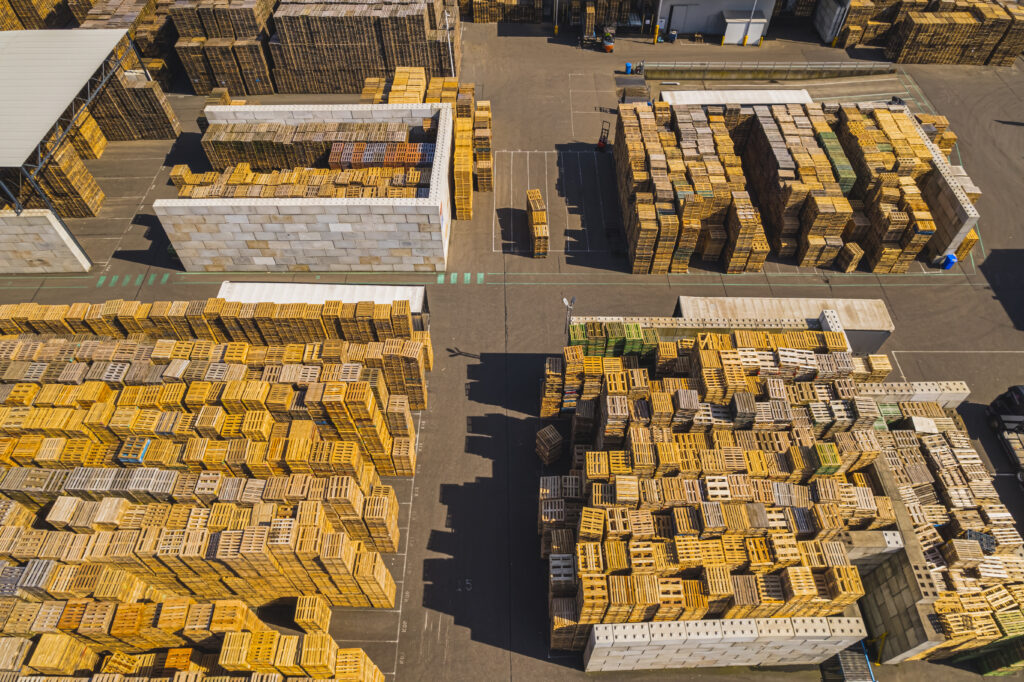
In 2025, Millwood recycled nearly 67 million pallet units.
That number is significant not only because of its size, but because it reflects a different way of thinking about resources.
Pallets are often viewed as disposable products. Millwood approaches them as assets with usable life that can frequently be extended through repair, reuse and recovery.
This approach supports pallet lifecycle management by helping customers maximize value while reducing unnecessary waste.
For organizations focused on sustainable packaging and supply chain performance, pallet recycling offers benefits that extend beyond environmental considerations. It can also improve resource efficiency, reduce demand for new raw materials and support operational continuity.
53 Million Pounds Diverted from Landfills

Through CORE initiatives, approximately 53 million pounds of material were diverted from landfills and repurposed into useful products.
The amount of material Millwood diverted in this year’s reporting period is equivalent to a stack of pallets approximately 17 times taller than Mount Everest.
This is a powerful and practical outcome of environmental stewardship. Instead of becoming waste, those materials were redirected into productive applications, including erosion control products and other beneficial uses. The result is less landfill material, greater resource utilization and additional value created from materials that might otherwise have been discarded.
More Than 7.5 Billion Pounds Recovered Through CORE and Recycling Initiatives
The report also notes that more than 7.5 billion pounds of additional material have been recovered through recycling and CORE initiatives across 2024 and 2025.
This figure helps illustrate the scale of Millwood’s commitment to recovery and reuse.
While individual sustainability initiatives can be difficult to evaluate in isolation, large-scale recovery programs provide a tangible example of how environmental stewardship can be integrated into everyday business operations.
Recovery efforts at this scale support both environmental and operational objectives by extending the useful life of materials and reducing waste throughout the supply chain.
Why Pallet Lifecycle Management Matters
At its core, pallet lifecycle management is about extending value.
Rather than focusing only on the initial purchase of a pallet, lifecycle management considers how pallets are designed, used, repaired, recovered and ultimately recycled.
This perspective aligns closely with the principles of Packaging Science.
When organizations evaluate packaging systems holistically and scientifically, they often uncover opportunities to improve efficiency, reduce waste and support long-term sustainability goals.
Millwood’s pallet recycling, pallet recovery and sustainable pallet solutions demonstrate how environmental stewardship can support both sustainability and operational performance.
The goal is not simply to recycle more materials. The goal is to create systems that help valuable resources remain productive for as long as possible.
Sustainability as a System of Continuous Improvement
The most important takeaway from the Millwood Sustainability Report 2026 is not any single statistic. It is the continued development of systems that support accountability, measurement and stewardship across the organization.
Supplier participation increased. Compliance training expanded. Environmental visibility improved. Resource recovery continued at a significant scale.
Viewed individually, of course, each of these accomplishments matters. Viewed together, however, they provide something even more valuable: a clearer picture of how sustainability initiatives connect to long-term operational performance.
Sustainability does not have to act as a separate business function. It can instead be embedded in the way organizations source materials, develop Team Members, measure performance and steward resources over time.
The Millwood Sustainability Report 2026 demonstrates continued progress across all three ESG categories while reinforcing the company’s commitment to responsible sourcing, environmental stewardship and continuous improvement.
Connect With Millwood
Interested in sustainable packaging, recycled pallets, pallet recovery programs or broader sustainability initiatives?
Connect with Millwood to discuss how practical, data-driven solutions can support your operational and sustainability goals.