The Complete Guide to Dunnage: What It Is, Why It Matters and How It Protects Your Supply Chain
Understanding the Types, Applications and Strategic Role of Dunnage in Modern Shipping and Logistics
October 20, 2026
11 Minute Read
Table of Contents

Josh Stipanovich
Stay Up To Date
Click the button below to recieve a collection of the latest case studies, articles and resources in Millwood’s newsletter in your inbox each month.
“Dunnage fills the space cargo could move into. Strapping removes the cargo’s ability to move by anchoring it to the pallet. Wrapping contains the entire assembly. Together, they eliminate movement from every direction to protect your products.”
“Dunnage is one piece of a larger protection strategy, and the pieces in that strategy work best when they are designed together.”
Table of Contents
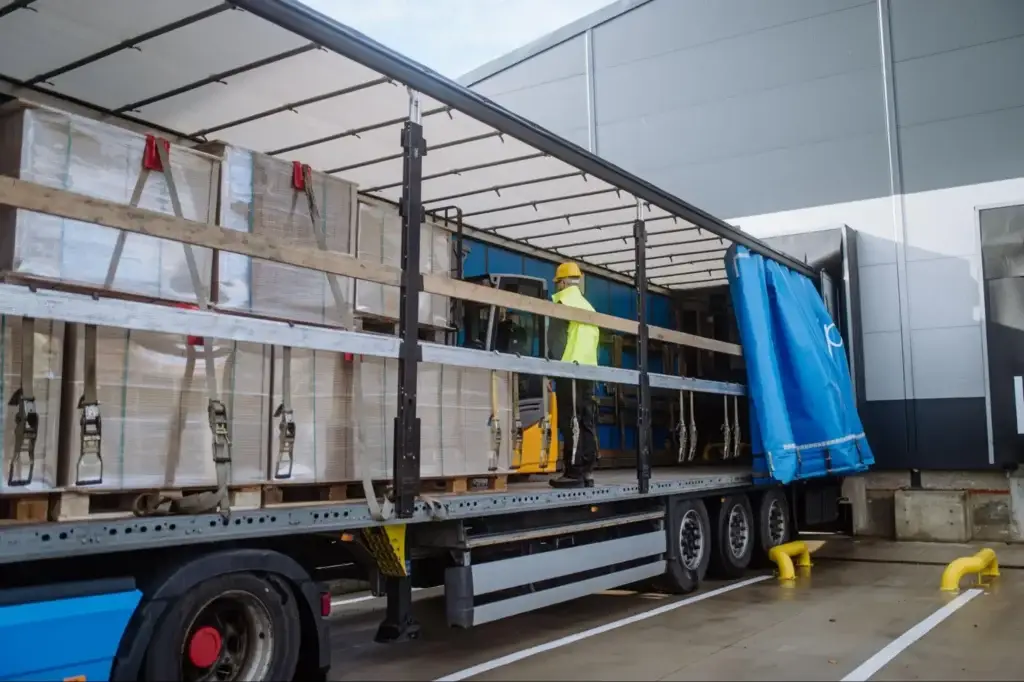
Dunnage is the material that fills the empty space in your shipment so cargo stays put. It is not the box around your product. It is the system that keeps that box from moving inside the trailer, container or railcar. Wood, air bags, foam, corrugated panels and void fill are the most common types, and each one solves a different protection problem. This guide covers all of them, how they fit into the complete unit load and how to choose the right one for your operation.
If you have ever opened a damage claim and wondered what went wrong between the loading dock and the destination, the answer often comes down to one thing: the empty space inside the trailer that nobody filled. That is the problem dunnage solves.
Dunnage could mean the wood blocks bracing a steel coil to the trailer floor. It could show up as the air bag wedged between two pallet rows inside a container. Even the foam insert cradling a medical device so precisely that it cannot shift even a millimeter counts. Walk through any well-run warehouse and you will see these materials everywhere, doing their job quietly. Most people never think about them until they are missing and the fallout is devastating.
What Is Dunnage?
Dunnage: Definition
Dunnage is any material placed around, under or between goods to secure, support and protect them during storage and transportation. Its primary purpose is to fill void space so cargo cannot shift, absorb impact so products are not damaged by vibration or collision and separate items so they do not contact surfaces or other goods that could cause harm.
The distinction between dunnage and packaging is important. Packaging encloses and protects an individual product: the box, the shrink wrap, the inner cushioning, whereas dunnage protects the load as a whole. It operates at the level of the pallet, the trailer and the container, filling the space between packages so nothing moves once the doors close.
This means a carton can be perfectly packaged and still arrive damaged if the open space beside it inside the trailer was not filled properly. The carton was never the problem. The empty space was.
Products used to manage that empty space take many forms. Dunnage packaging is versatile, from dunnage wood and dunnage air bags to dunnage void fill panels, foam inserts and corrugated separators. The right choice depends on the cargo, the transit mode and the specific risks the shipment will face. So, let’s take a closer look at the types of dunnage and the logic behind them.
Types of Dunnage in Modern Shipping and Logistics
Clearly, not all dunnage does the same thing. The material that braces a steel coil to a flatbed is solving a completely different problem than the foam cradling a medical device inside a carton. Understanding what each type does best helps you match the right protection to the cargo you are actually shipping.
Wood Dunnage
If you ship heavy or industrial freight, wood is likely already part of your operation. Dunnage wood includes lumber, blocks and bracing pieces placed under, beside or between cargo to stabilize loads and prevent movement during transit.
Wooden dunnage is the standard for flatbed shipments, machinery, steel coils and construction materials. If you have worked with open-deck carriers, you know that most drivers carry six to ten pieces of wood dunnage at all times, cut in standard sizes from two-by-fours to four-by-sixes.
Dunnage boards, the flat pieces of lumber placed under cargo to create clearance, elevate your goods two to six inches off the deck. That clearance gives forklifts access and keeps products away from moisture on the floor.
If your freight crosses international borders, this is where compliance becomes critical. All wood dunnage must meet ISPM 15 standards, meaning it must be heat-treated, debarked and stamped with the IPPC mark. Non-compliant shipping dunnage is one of the most common reasons shipments are held or rejected at destination ports, and that is a costly surprise you do not want on a tight delivery timeline.
Millwood supplies ISPM 15 certified dunnage wood and packaging lumber, so compliance is built into the material before it reaches your facility.
ISPM 15 Definition
ISPM 15 is the international phytosanitary standard governing wood packaging material in global trade. It requires all raw wood dunnage to be heat-treated to a core temperature of 56°C for a minimum of 30 minutes, debarked and marked with a standardized IPPC stamp identifying the country, treatment facility and treatment type. Every piece of wood dunnage must carry this mark individually.
Dunnage Air Bags
If you have ever loaded a trailer and noticed gaps between pallet rows that nothing solid can fill, dunnage air bags are designed for exactly that problem. These inflatable cushions are placed between loads, against container walls or in the voids between cargo blocks to prevent lateral movement.
The process is simple: position the bag in the void and inflate it with a dunnage air bag inflator tool. The bag expands to fill the gap and locks adjacent loads in place. Because they are lightweight and compact before inflation, dunnage air bags add minimal tare weight to your shipment and take up little storage space when not in use.
Dunnage air bags come in several material types, each suited to different environments:
- Paper dunnage bags: Best for single-use dry freight where moisture is not a concern
- Polywoven dunnage bags: More durable, moisture-resistant and suited for ocean containers or humid conditions
- Vinyl dunnage bags: Built for reuse in repeating lanes where the same bags cycle back through the supply chain
One thing to keep in mind: sizing the bag to the void matters. An undersized bag leaves room for movement. An oversized bag cannot inflate fully enough to create reliable pressure. Getting the fit right is the difference between a bag that holds and one that does not.
Void Fill and Corrugated Dunnage
When your cargo needs separation and stability but not the weight of wood, dunnage void fill is often the answer. The category covers several distinct products, each designed for a specific job:
- A-frame void fill panels: Foldable corrugated panels that stand upright between pallet rows to block lateral movement in trailers
- Bulkhead panels: Large, rigid panels placed at the back of a partial load to prevent cargo from shifting forward during braking
- Cargo separators: Lightweight dividers placed between different product groups or pallet blocks to keep them from making contact
- Corrugated inserts and layer pads: Flat sheets placed between stacked layers or between individual products inside a carton to prevent item-to-item contact
All of these options are lightweight and recyclable, which makes them a practical choice when you need structure without adding significant weight to the shipment. If your loads are experiencing strap cut-in or corner crushing, edge protection solutions like corner protectors work alongside void fill to distribute pressure across the load rather than concentrating it at contact points.
If you ship bottled products, glassware or consumer goods where even minor surface damage affects saleability, corrugated inserts and layer pads are standard for a reason: they are one of the simplest and most cost-effective ways to eliminate contact damage inside a carton.
Foam Dunnage
If your products are fragile, high-value or irregularly shaped, foam dunnage gives you the most precise protection available. It can be cut or molded to match the exact contours of your product, cradling it in place and absorbing shock and vibration throughout transit.
Electronics, medical devices, precision instruments and aerospace components are common applications. The close fit between foam and product means virtually no movement is possible, which is why foam is the preferred choice when even a minor shift could result in damage worth thousands of dollars.
Foam costs more per unit than most dunnage types, but consider the math: the cost of one custom foam insert is a fraction of the cost of a single damage claim on a high-value product. And if you run a closed-loop supply chain where the same products travel between the same facilities, custom dunnage inserts made from foam can be reused across hundreds of shipments, driving per-trip cost down significantly.
Custom and Reusable Dunnage
Not every shipment fits a standard solution. If your operation has unique products, specific routes or handling requirements that off-the-shelf dunnage cannot address, custom dunnage designed from plastic, metal, fabric or composite materials may be worth exploring.
Reusable plastic trays are common in automotive manufacturing, where the same parts move between plants on predictable schedules. Fabric dunnage offers flexibility for irregular shapes and collapses flat for return shipping. Steel and engineered supports handle the heaviest loads where wood alone is not sufficient.
The question to ask yourself is about volume and repetition. For a one-time shipment, standard materials work well. But if you are shipping the same product hundreds or thousands of times per year on the same route, a custom reusable system often pays for itself through reduced material waste, lower damage rates and faster packing times.
Dunnage Types at a Glance
| Dunnage Type | Best For | Key Advantage | Keep in Mind |
| Wood (lumber, blocks, bracing) | Heavy freight, flatbeds, machinery, steel | High load-bearing strength and structural stability | Requires ISPM 15 certification for international shipments |
| Air bags (paper, polywoven, vinyl) | Large voids between pallet rows in trailers, railcars and containers | Fast deployment, lightweight, minimal tare weight | Must be sized correctly to the void for reliable pressure |
| Void fill and corrugated (panels, separators, inserts) | Lateral movement prevention, layer separation, carton-level dividing | Lightweight, recyclable, no heavy equipment needed | Limited shock absorption on its own; best paired with other dunnage |
| Foam (cut or molded) | Fragile, high-value or irregularly shaped products | Precision fit, superior shock and vibration absorption | Higher per-unit cost; most economical in closed-loop or high-value applications |
| Custom and reusable (plastic, fabric, steel, composite) | Repeating routes, automotive, high-volume lanes | Lowest per-trip cost over time, reduced waste | Higher upfront investment; best suited for predictable, repeating shipments |
How to Choose the Right Dunnage for Your Operation: Consider the Complete Unit Load
Knowing the types of dunnage is only one half of the picture. The other half is understanding how dunnage connects to everything else that protects your cargo. No single material, no matter how well chosen, does the job alone.
Dunnage is one component of a larger system that includes the pallet, the strapping, the stretch wrap, the edge protection and the container itself. This is the full unit load: the complete assembly of product, packaging and securement that moves as a single entity through the supply chain.
Understanding how dunnage fits into this system is what separates entry-level freight protection from optimized freight protection. Dunnage fills the space cargo could move into. Strapping removes the cargo’s ability to move by anchoring it to the pallet. Wrapping contains the entire assembly. Together, they eliminate movement from every direction to protect your products.
A load with dunnage but no strapping is filled but not anchored. A load with strapping but no dunnage can still rock within unfilled gaps. The combination of both, designed and tested for the specific cargo and transit conditions, creates a load that travels as one immovable unit.
This systems-oriented thinking is central to how Millwood operates as a strategic provider across industries. Because dunnage spans across lumber and panels and load securement and protection, it touches nearly every product category in the unit load. That breadth matters. When your transit partner understands how every component interacts, the result is a system that works together rather than a collection of parts that happen to share a trailer.
Industry standards reinforce this approach. The International Safe Transit Association (ISTA) and the National Wooden Pallet and Container Association (NWPCA) have both established guidelines for how unit load systems should be designed and tested. Millwood’s ISTA-certified Packaging Science Lab validates solutions under simulated shipping conditions that match your operation and align with these guidelines, so you can see how dunnage, strapping and wrapping perform together for your products under real-world stress rather than guessing in the field.
When you work with Millwood to find the right dunnage solution as part of the whole unit load, these are some of the common factors that are considered:
- Cargo weight and fragility determine whether the priority is structural support or shock absorption
- Transit mode and distance influence how much vibration, shifting and environmental exposure the cargo will face
- Compliance requirements dictate whether wood dunnage needs ISPM 15 certification for international shipment
- Volume and frequency determine whether reusable or disposable dunnage is the better economic choice
- Sustainability goals influence material selection and end-of-life recovery options. Recyclable corrugated panels, reusable custom systems and material reduction strategies all connect dunnage decisions to broader sustainable supply chain management goals
There are a lot of factors that go into finding the right solution to keep your product safe, but the core principle is simple: dunnage is one piece of a larger protection strategy, and the pieces in that strategy work best when they are designed together.
The Invisible System That Keeps Your Supply Chain Moving
Dunnage is easy to overlook. It is not the product your customers see. It is not the truck, the warehouse or the pallet. But it is the reason those things work together without failure or waste. Every shipment that arrives intact, every damage claim that you don’t have to file, every product that reaches a customer in the condition it left the facility: dunnage played a role.
The details of getting it right, from choosing the correct material to sizing it for the void to ensuring ISPM 15 compliance, can feel like a lot to manage on your own. That is exactly where a partner who understands the full unit load system makes the difference. Millwood combines 40 years of packaging expertise with ISTA-certified testing to help you find the right dunnage fit for your operation, so you can focus on moving product and let the protection take care of itself.
Share:

FIND THE RIGHT DUNNAGE SOLUTION FOR YOUR OPERATION
Millwood is more than a pallet supplier. From certified wood and air bags to void fill panels and custom-engineered systems, Millwood helps businesses protect their cargo and strengthen supply chain performance. Whether your operation ships heavy industrial freight, fragile high-value products or a combination of both, Millwood works with you to evaluate your transit conditions, handling requirements and protection needs to identify the right-fit dunnage solution for your application.
Frequently Asked Questions
What is Dunnage in Shipping?
Dunnage is any material used to protect, support and stabilize cargo during transportation and storage.
Common examples include wood blocking, air bags, void fill panels, foam inserts and corrugated separators. Shipping dunnage serves the same fundamental purpose across trucks, railcars, ocean containers and warehouses: filling empty space so cargo does not shift, collide or sustain damage in transit.
What are the Most Common Types of Dunnage?
The most common types include wood dunnage, dunnage air bags, void fill panels, foam inserts and corrugated dividers.
Wood provides structural support for heavy loads. Air bags fill large voids between pallet rows in trailers and containers. Void fill panels and corrugated materials prevent lateral movement and separate layers. Foam inserts offer precision cushioning for fragile or high-value goods. The right type depends on cargo weight, fragility, transit conditions and whether the shipment crosses international borders.
What is the Difference Between Dunnage and Packaging?
Packaging encloses and protects individual products. Dunnage protects the load as a whole by filling empty space and preventing movement inside the container, trailer or railcar.
A product can be perfectly boxed and still arrive damaged if the void space around its package was not addressed with proper dunnage. Both layers of protection are necessary, but they solve different problems in the supply chain.
Does Wood Dunnage Need to be ISPM 15 Certified?
Yes, for any international shipment.
ISPM 15 requires all raw wood dunnage to be heat-treated, debarked and stamped with the IPPC mark before crossing international borders. This standard prevents the spread of invasive pests through wood packaging material. Non-compliant wood dunnage can result in shipments being held, fined or refused at the destination port. Millwood supplies ISPM 15 certified dunnage wood to ensure customers meet global requirements.
How Do You Choose the Right Dunnage for Your Cargo?
Start with the cargo itself: its weight, fragility, dimensions and transit conditions determine whether wood, air bags, foam or custom solutions are the right fit.
Heavy industrial freight typically requires wood blocking. Fragile goods need foam cushioning. Large voids in containers call for dunnage air bags. For operations shipping the same products repeatedly, reusable custom dunnage often delivers the strongest long-term value. Working with a dunnage specialist helps match the right material to the specific application.
What Are Dunnage Boards?
Dunnage boards are flat pieces of lumber placed under or between cargo to create clearance, distribute weight and prevent direct contact with trailer floors or other goods.
They are one of the most basic and widely used forms of wooden dunnage. Dunnage boards elevate cargo two to six inches off the deck, providing space for forklift access and protecting goods from moisture on the floor surface.
Can Dunnage Be Reused?
Many types of dunnage are designed for reuse, including plastic trays, fabric dividers, rubber mats and engineered foam inserts.
Reusable dunnage works best in closed-loop supply chains where the same products move between the same facilities on predictable routes. While the upfront investment is higher than single-use materials, the per-trip cost drops significantly over time, making reusable dunnage both an economic and sustainability advantage for high-volume operations.
Related Articles



Millwood’s National Accounts Sourcing Manager Chad McConnell was named to the board of the Western Pallet Association (WPA), signifying Millwood’s active leadership and influence in advancing the pallet industry’s future.
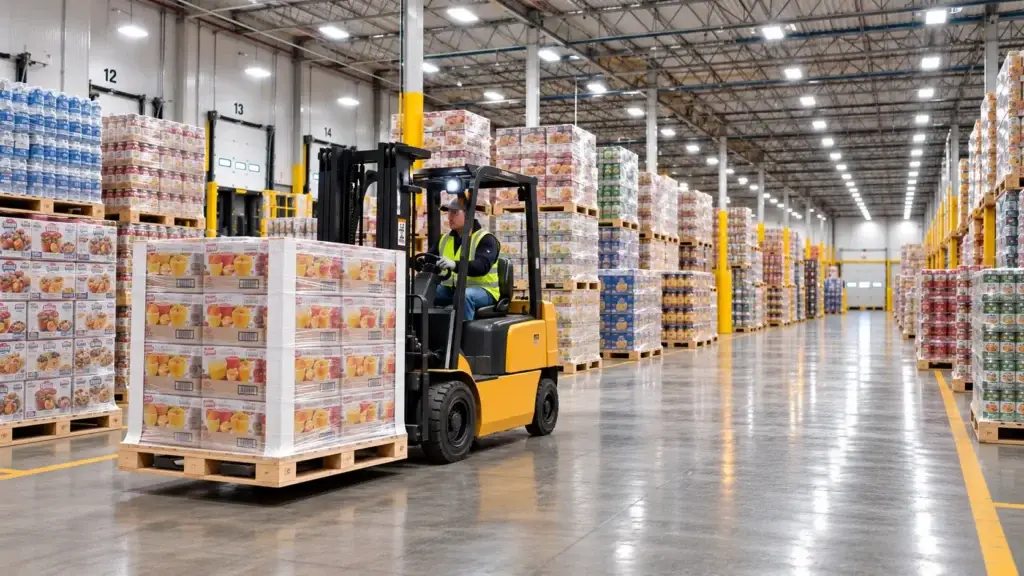
Discover 5 ways strategic sourcing strengthens food and beverage supply chains, from cost savings to risk reduction and sustainability.
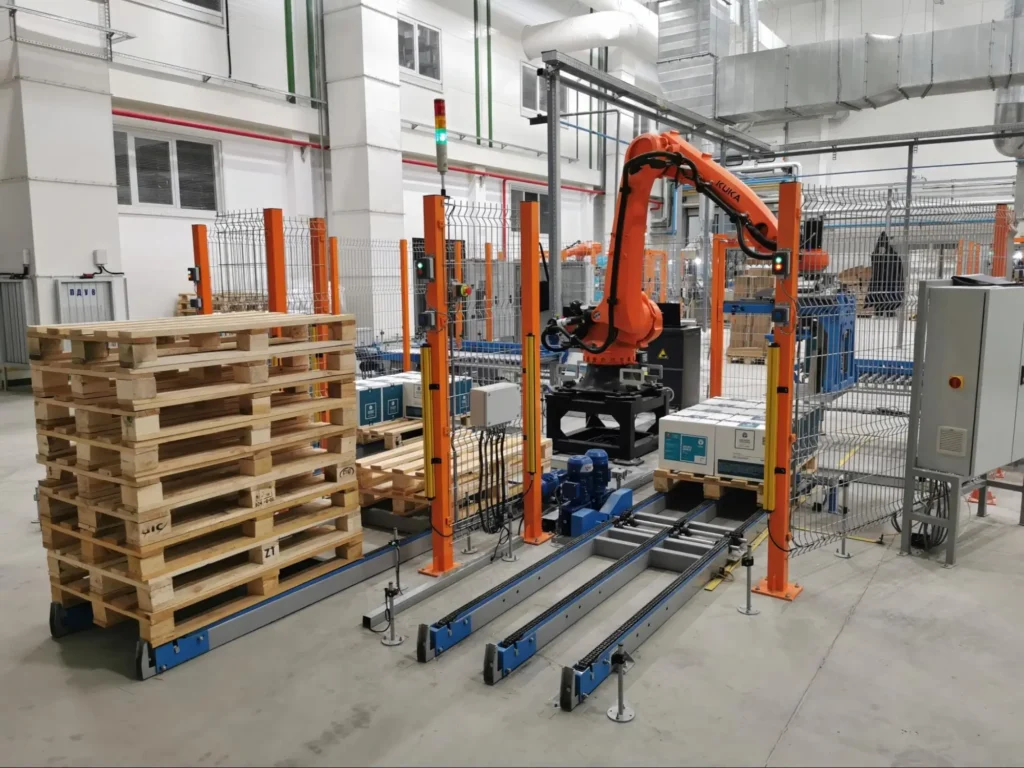
The smallest mistake in supply chain automation can have massive consequences. Discover how to minimize these mistakes to move forward.