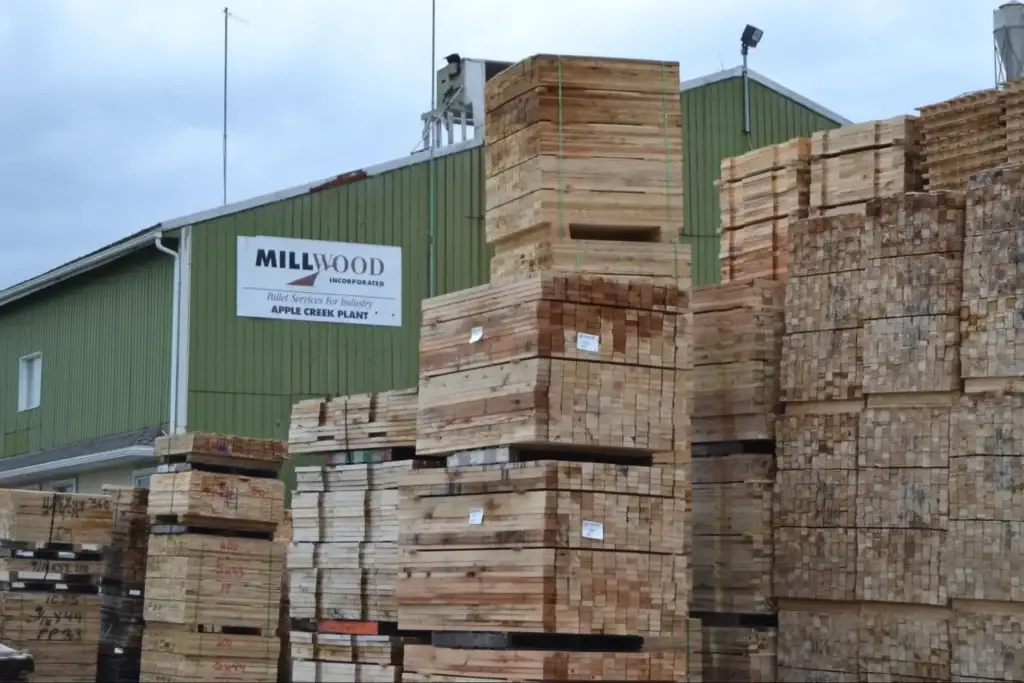
November is upon us, and with it comes the beginning of winter. As we eagerly anticipate snowball fights and cozy nights by the fire, we must also be mindful of how cold weather can affect our pallets.
Facilities that operate in colder, wintry environments can face a variety of issues related to pallets. This article explains the dangers of improper pallet care and how to prevent losing your pallets to cold temperatures and winter weather.
Because pallets are made from green wood, they have a high moisture content. When the weather gets cold, this can cause stacks of pallets to freeze together if left outside in the elements. This issue can also be exacerbated when pallets are left outside and become buried in snow since it will be harder to get them out of the snow and inside to thaw. The snow can also potentially damage the pallets or even render them unusable in the worst case.
In addition to these issues, when the green material is sawed, the sawdust re-freezes immediately onto the pallets, making it difficult to loosen the sawdust during assembly. Once the pallet warms up at its destination, there will be a much higher amount of sawdust and debris because the frozen sawdust gets knocked off after thawing. These issues are unavoidable for the manufacturer, however, they can be easily managed by proactive customers.
The best thing a pallet customer can do is be aware of these issues ahead of time to avoid making them worse or risk damaging their packaging or products in transit.
If you’re operating in a cold environment, it’s best to ensure that pallets are warmed up and dried out indoors before use. This will allow all snow to melt, the moisture to unfreeze and the sawdust to thaw. That way, the sawdust can be isolated to one location rather than tracked through the facility.
Being mindful of the different effects that cold and warm weather can have will ensure the best performance and maintain the quality of the pallets.
Stay connected! Subscribe to our newsletter for new articles, in-depth case studies, and the latest updates on how Millwood is serving industries like yours.
Millwood’s National Accounts Sourcing Manager Chad McConnell was named to the board of the Western Pallet Association (WPA), signifying Millwood’s active leadership and influence in advancing the pallet industry’s future.
Dunnage matters more than most people think. In fact, most people haven't even heard of dunnage. And yet, getting dunnage right can pay huge dividends for any operation shipping products nationally and internationally.