Nominal lumber sizes are classification labels, not physical measurements. A 2×4 does not measure 2″ × 4″. It measures 1.5″ × 3.5″ after kiln drying and surfacing. When packaging tolerances are tight and consistency determines whether a pallet line runs or stops, understanding this distinction is the starting point for every accurate specification.
A 2×4 is not literally a 2×4 when it comes to lumber. It never was, at least not in its finished form. Yet this label appears on thousands of purchase orders every day, and the actual lumber dimensions arriving at the dock tell a different story. The wood is smaller than the name suggests and it is supposed to be.
If that sounds like it should be simple, it is. But when a half-inch gap per dimension compounds across a pallet run of ten thousand units, “simple” can start showing up on the production floor as inconsistent assembly, rejected loads and pallets that do not perform the way the spec sheet promised.
For any operation that depends on industrial lumber and panel products, that is the real cost of treating a nominal lumber size as a measurement instead of what it actually is: a name.
This article walks through exactly how that gap happens, what the actual numbers look like for the lumber sizes most common in packaging and why it matters far more on a pallet assembly line or inside an automated racking system than it does in a home workshop. Here is the roadmap:
- What nominal actually means and why the industry uses this naming system
- The three processes that create the gap: rough cutting, kiln drying and surfacing
- Where this hits hardest in real packaging operations and what to do about it
- A complete reference chart of nominal vs actual lumber dimensions for packaging
What Nominal Lumber Dimensions Actually Mean
Let’s start with the word itself. “Nominal,” in this context, means “in name only”, a term that the lumber industry borrowed from its Latin root (nominalis, relating to a name) because it captures exactly what these numbers represent. A 2×4 is not a description of the board in your hand. It is the name assigned to a board that started at roughly those dimensions before two manufacturing processes changed its size permanently.
Think of it the way the industry does: a 2×4 is a label, the same way a “half-ton truck” does not literally weigh half a ton. The name stuck because it works for communication. In the same way, in the supply chain industry, many people know what a 2×4 refers to, even though the finished product measures 1.5″ × 3.5″. This nomenclature has ruled the day for more than a century.
Despite this, home improvement retailers have faced lawsuits from consumers who felt misled by nominal labels for lumber. Nevertheless, courts have consistently upheld the convention as an industry standard rather than false advertising.
That legal clarity matters less than the practical operational reality, however. If a pallet or crate design accidentally uses the nominal number as the actual dimension, every calculation built on that number will be off. In other words, the label is not the problem. Building a specification around the label without knowing the real size behind it is.
The other half of this equation is the actual lumber dimension: the physical measurement of the board after kiln drying and surfacing are complete. This is the number that should be used for engineering, assembly and performance. When a finished 2×4 measures 1.5″ × 3.5″, those are its actual lumber dimensions. That is the size that shows up on the production floor, the size that determines whether components fit and the size that every specification should be built around.
So if nominal is the name and actual is the reality, what turns a full-sized rough board into a smaller finished product? Three specific manufacturing steps, each one measurable and each one relevant to how lumber performs in a packaging operation.
Nominal Dimension
A nominal dimension is the named size classification of a piece of lumber based on its rough-sawn measurements before kiln drying and surfacing. It serves as a standardized label for ordering and identification rather than a description of the finished product’s physical size.
How Lumber Goes from Nominal Wood Sizes to Actual Operational Application: Three Manufacturing Stages
Every piece of lumber goes through three manufacturing stages as it moves from the forest to the packaging floor. Each one changes the board’s physical size. Understanding this process explains why the gap between nominal wood dimensions and actual sizes is predictable, standardized and something that can be accounted for in every specification. These are the broad brushstrokes of each stage:
Stage 1: Rough cutting
When a log enters the mill, it is sawn into boards at approximately nominal dimensions. At this stage, a 2×4 measures close to a true 2″ × 4″. This is the only point where the nominal label and the physical size roughly agree.
Stage 2: Kiln drying
Green lumber contains significant moisture, often 30% or higher. Kiln drying brings that moisture content down to levels suitable for structural and packaging use, typically between 6% and 19% depending on the species and application. As moisture leaves the wood, cells contract and the board physically shrinks.
This is where species selection enters the conversation. Softwoods like SPF (Spruce-Pine-Fir) generally shrink less than denser hardwoods like oak or maple because hardwood cell structures hold more bound moisture and contract more aggressively during drying.
For a packaging program specifying thousands of boards, the species going into that program directly influences the dimensional consistency coming out of it.
Stage 3: Surfacing (planing)
After drying, boards pass through planers that smooth the faces and bring the lumber to a uniform finished size. This step removes an additional fraction of material from each face, producing the clean and consistent surfaces that precision assembly requires.
The cumulative result is predictable and standardized. A board that started at approximately 2″ × 4″ in the rough now measures 1.5″ × 3.5″ as a finished product. And that is why actual and nominal lumber dimensions differ.
Dressed (Surfaced) Lumber
Dressed lumber is wood that has been planed on one or more faces to create a smooth, uniform surface and consistent thickness. The abbreviation S4S (Surfaced Four Sides) indicates all four faces have been planed. Surfacing removes material from the rough-sawn board, which is why dressed lumber dimensions are always smaller than the nominal classification.
Where Nominal vs Actual Hits Hardest: Packaging Operations
This is where the concept of nominal wood sizes leaves the textbook and shows up on the production floor.
In a home workshop, the gap between nominal and actual lumber sizes is a minor inconvenience. Frustrating for your Saturday afternoon, and maybe a little more expensive than you were shooting for. But in an industrial packaging operation assembling thousands of units per week, it can become a specification issue with real consequences for production schedules, product protection and cost.
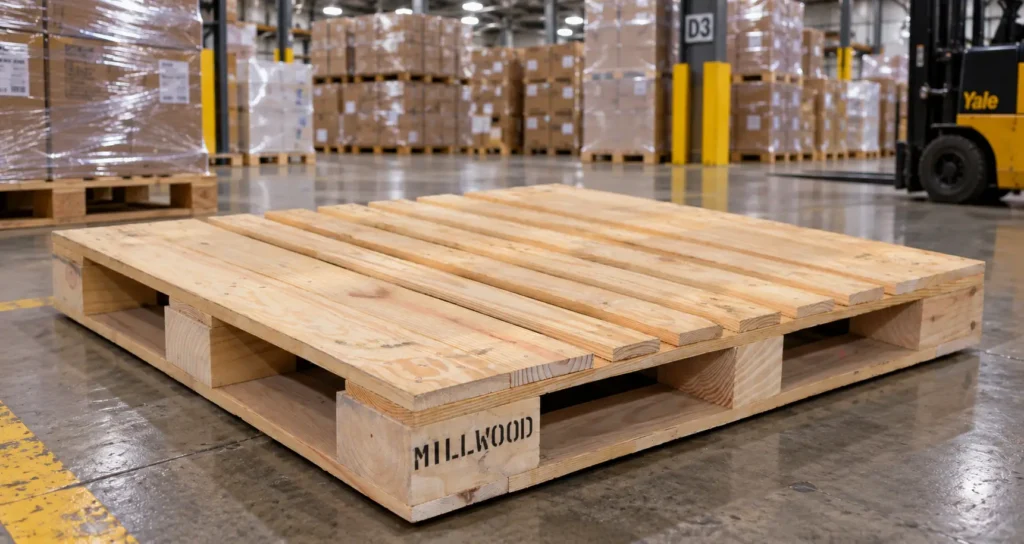
Consider a pallet design calling for 2×4 stringer pallets. If the design calculated load capacity based on a true 2″ × 4″ cross section rather than the actual 1.5″ × 3.5″, every pallet built to that specification falls short. Across a production run of ten thousand units, that miscalculation compounds. Boards do not seat correctly. Assembly time increases. Some pallets fail under loads they were supposed to handle. The operations Team sees the symptoms clearly, even if the root cause (a mistaken dimensional assumption buried in the original spec) is harder to trace.
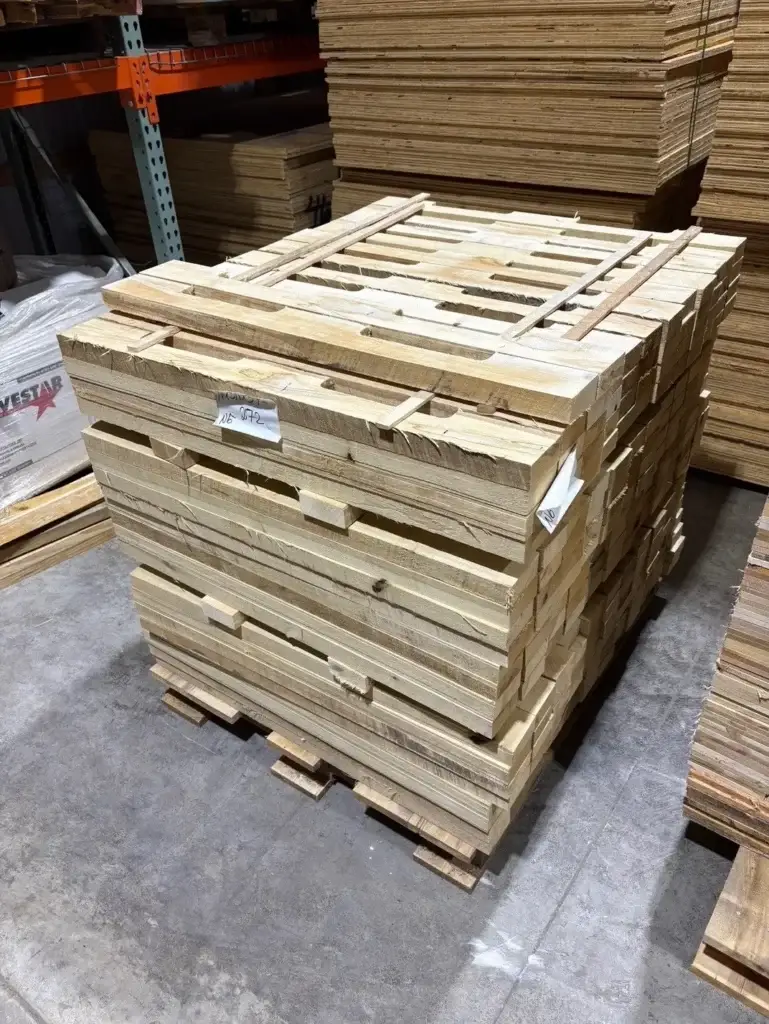
Anyone who has managed a packaging line through a run of pallets or crates that “should have worked” but did not knows that frustration. It often traces back to a specification built on nominal numbers rather than actual dimensions.
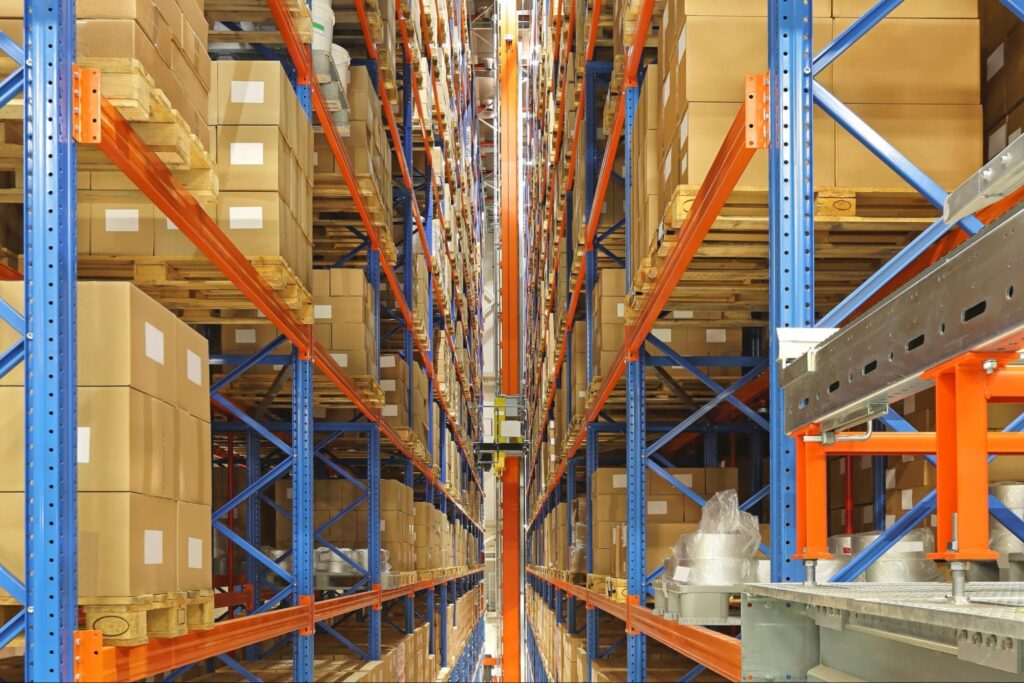
The stakes increase in automated warehouse environments where robotic systems operate on programmed tolerances with zero ability to compensate. An automated racking crane expecting a pallet at a specific height will reject a load that deviates by fractions of an inch. When actual lumber dimensions are not reflected in the pallet design, those deviations become systemic.
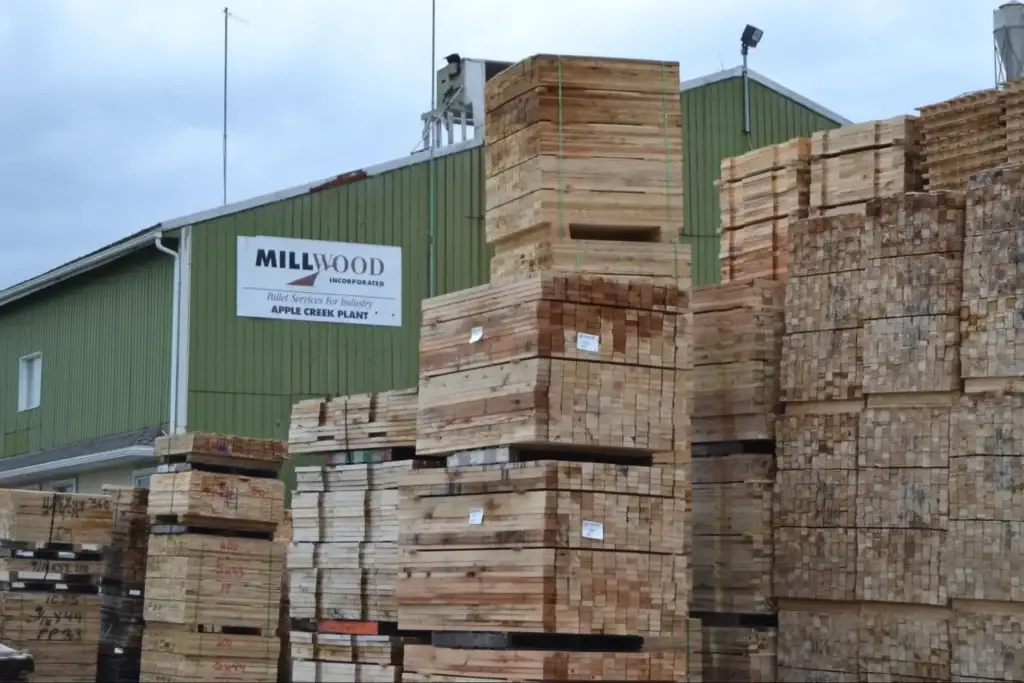
Millwood’s Packaging Science division exists to solve exactly this kind of problem. Using the Pallet Design System (PDS), Millwood’s engineering Team models pallet and crate configurations with actual lumber dimensions, validating structural performance under real conditions before a single board enters production.
That precision scales to complex programs. In one application, Millwood verified and designed a packaging system for a national solar manufacturer requiring 14 specific lumber cuts per pallet set, combining rough and precut pallet lumber to meet precise structural and dimensional requirements across a nationwide production operation. Every one of those 14 cuts started with knowing the actual size of the lumber, not just its name.
With that context in place, here are numbers Millwood sees in real world operational contexts, framed to help your company gain clarity around lumber dimensions where they matter.
Dimensional Tolerance in Packaging
Dimensional tolerance is the allowable range of variation in a component’s physical dimensions. In manual pallet handling, tolerances typically allow ±1/2″ of variation. Automated systems often require ±1/4″ or tighter. Understanding that nominal lumber dimensions do not represent actual sizes is the first step toward specifying materials that meet the tolerances a given operation demands.
Common Lumber Sizes: A Reference Chart for Packaging
The following lumber size chart compares nominal wood dimensions to actual lumber dimensions for the boards that show up most often in pallet, crate and industrial packaging work. These are the numbers behind the names.
| Nominal Size | Actual Size (inches) | Actual Size (mm) | Common Packaging Uses |
| 1×4 | 3/4″ × 3-1/2″ | 19 × 89 | Deck boards, light crating |
| 1×6 | 3/4″ × 5-1/2″ | 19 × 140 | Deck boards, panel components |
| 2×4 | 1-1/2″ × 3-1/2″ | 38 × 89 | Stringers, blocking, dunnage |
| 2×6 | 1-1/2″ × 5-1/2″ | 38 × 140 | Stringers, heavy crating |
| 4×4 | 3-1/2″ × 3-1/2″ | 89 × 89 | Block pallet components, posts |
| 6×6 | 5-1/2″ × 5-1/2″ | 140 × 140 | Heavy-duty blocking, skids |
One note on lengths: actual lumber lengths are generally sold at their stated measurement. A board sold as 8 feet long typically measures 8 feet or slightly longer. The nominal vs actual gap applies to the cross-section (width and thickness), not the length.
These dimensions apply to surfaced (dressed) lumber. Rough cut lumber retains dimensions closer to its nominal size because it has not been planed, though some shrinkage from drying still applies.
That distinction matters for packaging. Millwood’s industrial lumber and panel products include both rough and surfaced options. The right choice depends on whether the application prioritizes maximum cross-section or consistent finish and fit. Millwood’s packaging lumber program accounts for these differences at the specification level.
Key Takeaways
- Nominal lumber sizes are classification labels, not measurements of the finished product.
- A 2×4 measures 1.5″ × 3.5″ after kiln drying and surfacing. Actual lumber lengths are generally sold at their stated measurement.
- Three manufacturing processes create the gap: rough cutting, kiln drying and surfacing.
- Different wood species shrink at different rates during drying, making species selection a specification decision for packaging programs.
- For industrial applications, specifying based on actual lumber dimensions is essential for consistent assembly and reliable performance.
- Automated systems amplify the consequences of dimensional misunderstanding because they cannot compensate for variation.
- Millwood uses PDS modeling and Packaging Science to validate designs with actual dimensions before production.
Understanding Your Lumber Is the First Step
Every packaging system is only as reliable as the materials that go into it. When a specification starts with the right numbers, everything downstream benefits: tighter assembly, more consistent performance and fewer problems reaching the production floor.
The nominal vs actual distinction is not just a fun trivia question. It is the foundation of accurate lumber specification, and it is worth caring about because you deserve to know exactly what you are ordering, down to the fraction of an inch.