For companies shipping products to major retailers, pallet specifications are no longer an intuitive purchasing decision. They can determine whether a load moves through a distribution center as planned or arrives with a compliance problem attached to it.
Costco, alongside other major warehouse retailers like Sam’s Club, Walmart, and Kroger, has become a leading example of this shift, to the extent that their standards are now widely accessible via third-party trade associations like Woodpack Global.
Since 2011, Costco Wholesale has required block pallets for general delivery, rather than traditional stringer pallets. For suppliers that have historically relied on 48×40 stringer pallets, the change can introduce new sourcing challenges, especially when a noncompliant load means pallet rework, delays or rejection.
The shift toward designs that meet Costco pallet requirements and their wider effect on the industry have accelerated quickly across other major retailers. According to Lee Evans, Executive Vice President of Sales at Millwood, 48×40 block pallets once represented only around 2% of the pallets arriving at Millwood facilities. Over the last few years, however, that number has grown significantly.
Today, block pallets make up roughly 10% of the load on inbound trailers from grocery Distribution Centers, with Millwood receiving thousands of 48×40 block pallets each month. Evans attributes much of that fivefold growth to major retailers, led by Costco, requiring suppliers to ship products on block pallets rather than traditional GMA pallets.
The good news is that the market has been adapting quickly. The same retailer requirements driving demand for block pallets are also increasing the supply of quality recycled block pallets, creating an opportunity for companies to meet the new specification without automatically paying a premium for new pallets.
That is a significant shift in a relatively short period of time, and it is worth exploring the impact of that shift for your operation.
What Are Costco Pallet Requirements, and How Do They Align with Other Club Warehouse Pallet Standards?
For suppliers shipping general merchandise to Costco and other major retailers, understanding the pallet specification is the first step toward avoiding costly surprises.
Costco’s packaging requirements call for a 48×40 inch block pallet with no product overhang. General delivery loads must use block pallets rather than stringer pallets. The maximum load weight is 2,500 pounds. Costco pallet height requirements cap the total load at 58 inches, including the pallet.
These specifications align with broader packaging standards maintained by organizations like Woodpack Global (formerly the NWPCA), which defines block pallet classifications and retailer compliance terminology used across the industry.
But compliance is not simply about having a pallet that looks like a block pallet. The pallet, product configuration and finished unit load all need to work together within the individual retailer’s requirements.
For suppliers dealing with these Costco pallet requirements for the first time, that distinction matters. A pallet can be structurally sound and still be the wrong specification for the application.
The same point is true when dealing with other major retailers, including Walmart, Sam’s Club and Kroger, whose high volume distribution environments are increasingly requiring block designs. The broader shift reflects a practical need for greater handling flexibility in modern distribution networks.
Meeting the specification, however, is only part of the picture. Understanding why these retailers are moving to block pallets can help suppliers make smarter sourcing and design decisions.
Why Are Major Retailers Shifting to Block Pallets?
The difference between a block pallet and a traditional GMA stringer pallet is not simply how the pallet is constructed. It is how the pallet behaves inside a distribution environment.
A traditional stringer pallet uses long boards called stringers as its primary structural supports. Standard stringer pallets typically provide two-way forklift entry, although notched designs can provide partial 4-way access. Notching the stringers, however, is almost certain to affect structural performance.
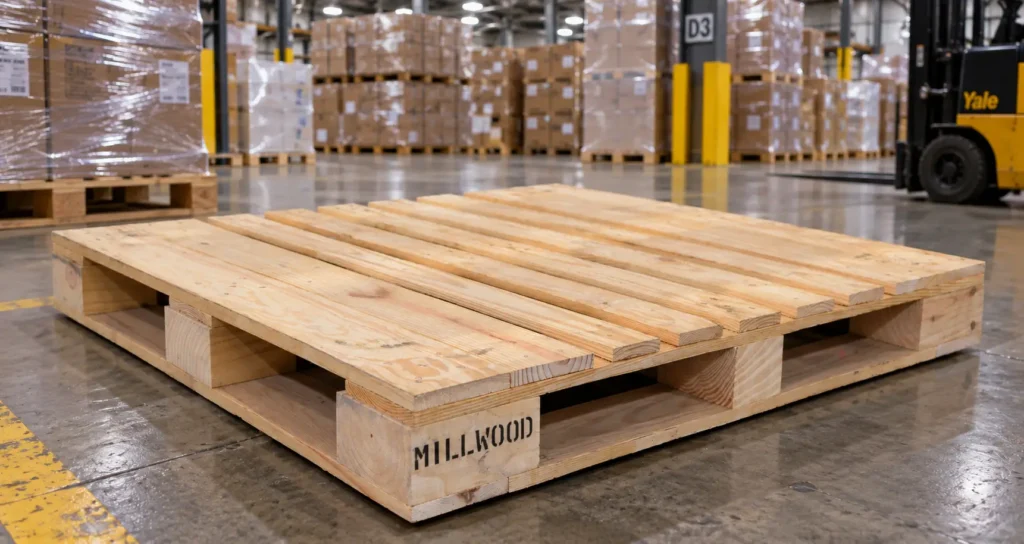
A block pallet, on the other hand, uses solid blocks between the top and bottom deck boards. A typical design uses nine blocks, creating true four-way entry for forklifts and pallet jacks. That four way access becomes particularly valuable in high throughput distribution environments. A forklift or pallet jack can approach a block pallet from any direction. Operators have more flexibility when positioning loads, retrieving pallets or moving product through a facility.
Consider a stack of eight pallets. With a true four-way pallet, an operator can access an individual pallet from the appropriate direction without necessarily having to move the pallets around it. In a high velocity distribution center, that flexibility can minimize handling time and maximize product movement efficiency.
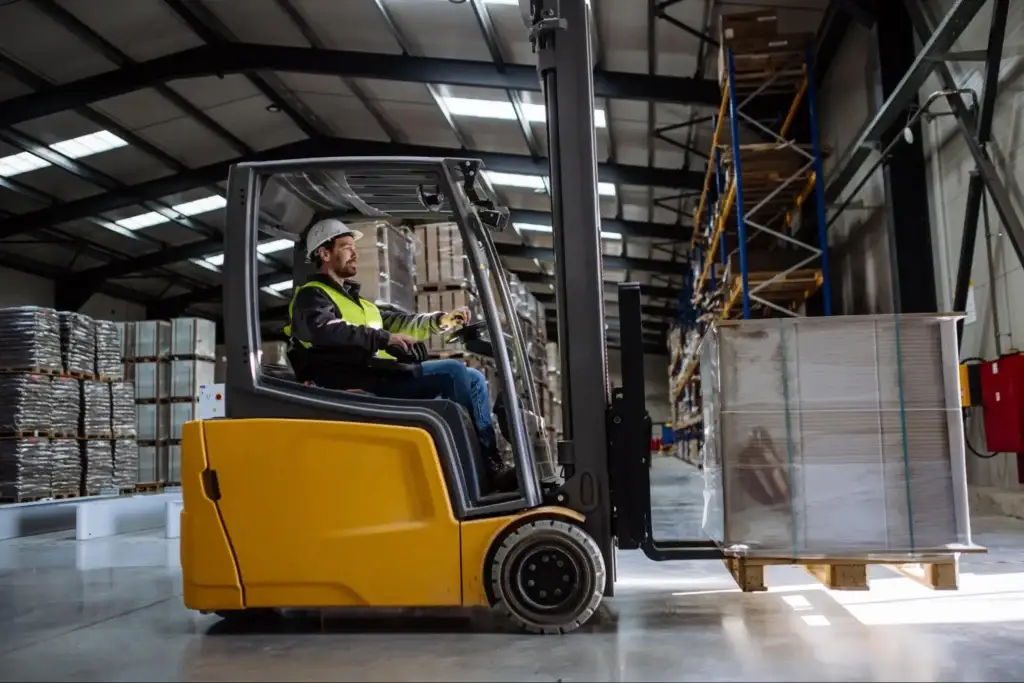
There is an additional safety dimension. Costco pallets go directly onto the retail floor, where customers and employees are working around displayed products. Four-way access allows store teams to position and retrieve pallets more safely in tight floor environments, reducing the risk of product shifts or handling incidents during restocking. The same is true in other major retailer environments.
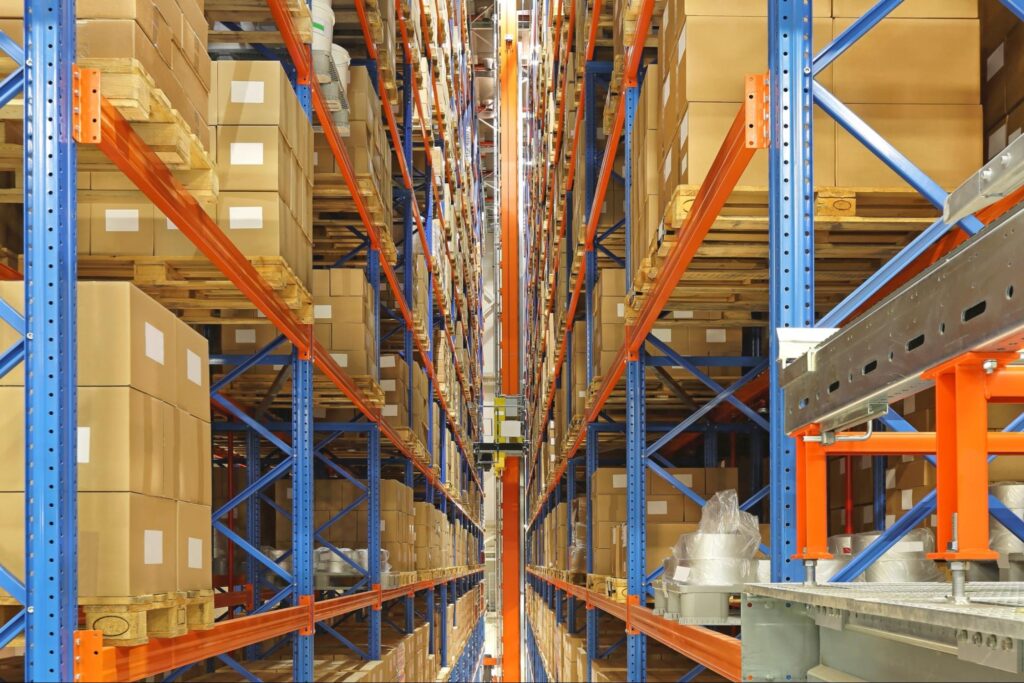
The downstream benefits do not stop there. Block pallets are increasingly compatible with the dimensional consistency required by automated material handling systems (ASRS). As more distribution centers adopt automated storage and retrieval systems, conveyors, automated guided equipment and other warehouse technologies, pallet specifications become increasingly important. The pallet is no longer simply a platform for the product but an essential part of the wider material handling system.
As explored in Millwood’s recent guide to ASRS pallets, automated systems can impose much tighter requirements on pallet dimensions and construction. An upcoming article will examine the relationship between block pallets and automated warehouse environments in greater depth.
What the Block Pallet Requirement Means for Your Supply Chain
For procurement and packaging teams, the transition to retailer packaging requirements similar to Costco pallets and other block pallet specifications can initially look like another cost increase.
The reality is closer to the opposite.
The shift in retailer packaging and pallet requirements helps to create a larger North American supply of recycled block pallets. As companies across the supply chain transition to block designs, more usable block pallets are entering recycling streams. Increased supply means more competitive pricing for recycled block pallets, of which there are considerably more in circulation, in large part thanks to retailer requirements. In many cases, quality recycled block pallets can cost less than half the price of comparable new pallets.
While the pricing advantage is real, it is not the full opportunity.
For customers, sourcing is not always as simple as finding a truckload of 48×40 block pallets at the right price. The right pallet depends on load weight, handling equipment, stacking requirements, automation and the customer’s broader unit load.
This requirement does not necessarily mean a one-size-fits-all pallet, and simply swapping a stringer for an off-the-shelf block pallet without evaluating the rest of the load can leave performance and long-term cost savings on the table.
That is where the transition becomes a chance to rethink the entire unit load, not just the pallet underneath it. Optimizing the wood species, deck spacing or other pallet specifications around the actual application can significantly increase your operation’s performance.
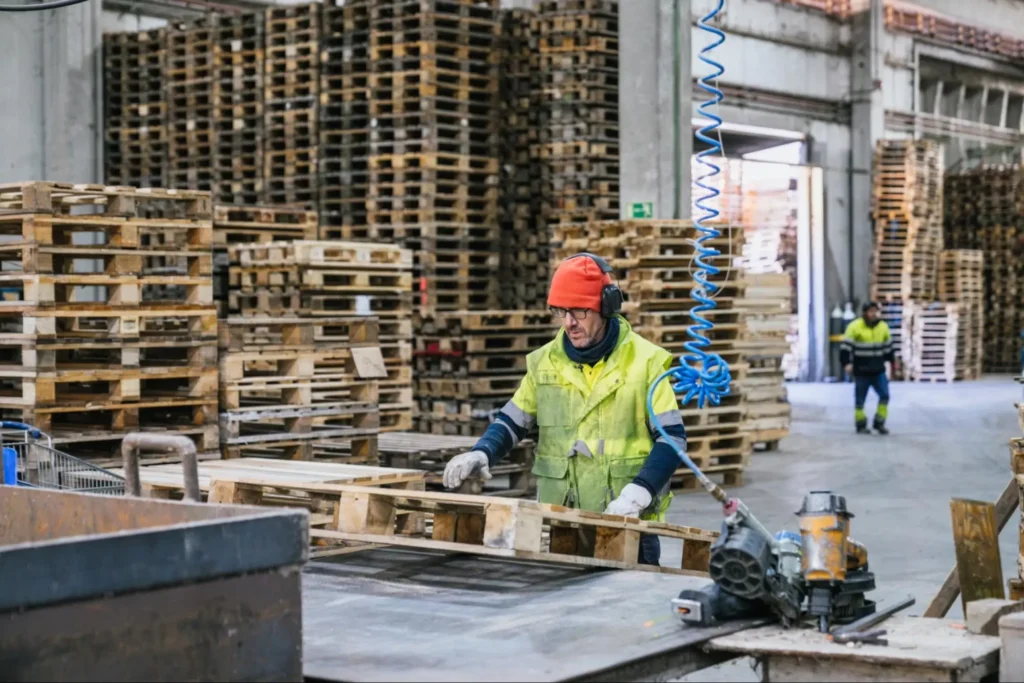
Testing solutions against real-world operational needs, for instance through Millwood’s ISTA-certified Packaging Science Lab, can validate performance before it reaches the supply chain.
The same principle extends beyond the pallet itself. Evaluating stretch wrap, shrink wrap and other components of the unit load can help move products to the end customer as efficiently as possible.
When pallet sourcing becomes a Packaging Science question rather than a commodity purchase, the goal is not simply to find a pallet that technically meets a specification. It is to develop a packaging solution that performs reliably throughout all parts of the supply chain.
How Should Companies Prepare for a Block Pallet Requirement?
The first step is to confirm compliance with baseline Costco pallet requirements, or the equivalent specification from your retailer. Do not assume that a standard 48×40 pallet is sufficient simply because the footprint is correct.
Review the required pallet construction, load height, maximum weight, overhang restrictions, grade and approved pallet programs.
Next, evaluate the current unit load.
If your company is transitioning from a stringer pallet to a block pallet, changing the pallet without evaluating the rest of the load can create unnecessary problems. Product placement, stretch wrap, corner protection, stacking patterns and trailer utilization are all worth considering.
Finally, evaluate new and recycled pallet options not just on price, but on how each option performs within the complete unit load. The growing supply of recycled block pallets means companies have more choices than ever, but the right pallet is the one engineered for your product, handling environment and your retailer’s distribution requirements.
The objective should be a compliant unit load that performs reliably from your facility through the customer’s actual distribution environment, not simply the lowest cost pallet that meets a specification on paper.
Wood vs. Plastic Block Pallets
The shift toward block pallets has also fueled discussion about whether companies should move from wood to plastic.
Costco’s requirement is for a block pallet. The same is true for the other major retailers mentioned here. This requirement is not inherently a requirement for a pallet made from a particular material. Costco specifically accepts whitewood block pallets with advance approval, meaning the key change is the pallet design and performance characteristics rather than a mandatory material change.
Properly engineered wood block pallets can provide the four way access, structural performance and dimensional consistency required for demanding retail and distribution applications. Millwood’s Packaging Science Lab provides a resource for validating pallet designs and unit loads through testing rather than relying on assumptions.
Wood also brings advantages at the end of a pallet’s useful life. Wood pallets can be repaired, reused and recycled. Damaged pallets can often be repaired and returned to service. Pallets that can no longer be repaired can be processed for other uses such as mulch or biomass.
While plastic pallets are appropriate for some applications, and can be the right choice in certain supply chains, it would be simplistic to assume that plastic is automatically the more sustainable or durable option for every operation. Instead, the right material depends on the specific application, handling environment, required service life, cost structure and end-of-life strategy.
For companies facing a retailer block pallet mandate, engineered recycled wood can provide another option by meeting the required block design while controlling pallet costs and keeping sustainable materials in circulation.
The Market Is Moving Toward Block Pallets
The growing adoption of block pallets is not simply a passing change in pallet preference.
Retailer requirements are accelerating the transition. High throughput distribution centers benefit from four-way access. Automation is creating tighter dimensional requirements. And the expanding recycled block pallet pool is making the transition more economically attractive.
Costco is one of the major forces behind that change, but the implications extend well beyond any one retailer. For companies that have historically purchased stringer pallets, now is the time to understand what the transition means for your supply chain. A requirement that initially looks like a sourcing disruption can also create an opportunity to rethink pallet specifications, improve handling efficiency and take advantage of a growing recycled pallet supply.
For procurement teams, the key is not simply to find a block pallet. It is to find the right block pallet for the product, the retailer and the supply chain.
Explore Millwood’s block pallet solutions or connect with Millwood to evaluate the right pallet and unit load solution for your operation.