Automation requirements or heavy loads alone do not determine the right pallet construction. Wood block pallets make sense when the handling route requires four-way access that a stringer design cannot provide, or when equipment or destination specifications explicitly require block construction. Where a stringer pallet provides the necessary access, product support and structural performance, it may already be the right fit.
A pallet can be right for the robotic palletizer and still be wrong for the next handoff. For procurement and operations Teams, that is where the block pallet vs stringer pallet comparison becomes more than a purchasing decision.
Following the load through the full operation brings those differences into focus. The examples below show where each construction can help, where its advantages may add little value and what deserves a closer look.
The question is not simply which pallet design is cheaper in the short-term. It is which specification will perform optimally in a given application, starting from empty-pallet dispensing and robotic palletizing through to conveyors, wrapping, storage, shipping and receiving.
The pallet you choose needs to work everywhere the load goes, not just at one machine.
Start With Construction, Then Map the Handling Route
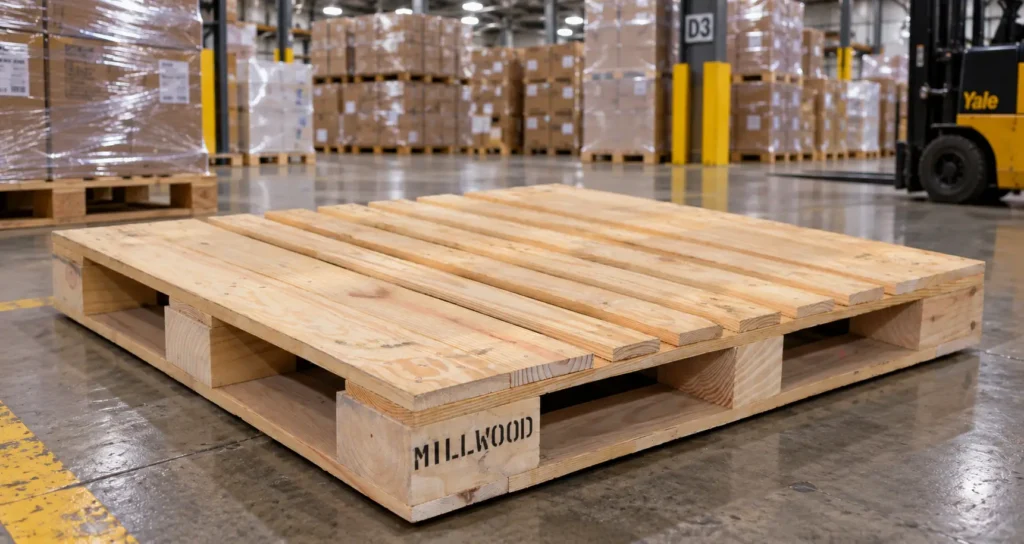
The right construction depends on how the pallet supports your product and moves through your operation. Wood block pallets use separate blocks between the decks, creating openings for access from all four sides, while stringer pallets use long support runners called stringers. Notched stringer designs can allow four-way forklift entry but generally do not provide equivalent side access for pallet jacks.
Those construction differences matter most when they meet the realities of your operation’s handling route. A few practical questions help connect the pallet drawing to what actually happens on the floor:
- How are empty pallets stacked, dispensed and positioned in your operation?
- Where does your equipment lift, convey, turn or support loaded pallets?
- How are your products arranged and secured?
- What happens during storage, shipping and receiving?
Mapping this route from start to finish can give procurement and operations shared criteria for a practical block pallet vs stringer pallet comparison when automation is a key consideration.
Millwood’s guide to pallet design and configuration explains in greater depth how unique customer application requirements shape the finished pallet.
1. Before Loading: Can the Equipment Handle the Empty Pallet?
A pallet’s first job in an automated line is to reach the loading position correctly. Some facilities use a pallet dispenser, a machine that separates empty pallets from a stack and feeds them into the line. A robotic palletizer then places boxes or other products onto each pallet in a programmed pattern.
For that sequence to run smoothly, the pallet must fit the equipment and provide support where the product needs it. Differences in pallet height, misplaced boards or damaged components can interfere with dispensing or positioning. Gaps between the top boards can also leave parts of a package unsupported.
Neither block nor stringer construction automatically solves those problems. Four way pallet access from block designs may be valuable farther down the line, but it does not guarantee that the pallet will feed correctly through a dispenser or support the intended arrangement of boxes. A properly designed stringer pallet may meet both needs.
At this first stage, the distinction is less about access and more about fit: whether the equipment can position the pallet reliably and whether the deck supports the intended product arrangement. Required dimensions and allowable variation are worth verifying with your equipment supplier, while evaluation with the actual product and stacking pattern shows how the proposed design performs.
2. Through Conveying and Wrapping: Will the Loaded Pallet Move Safely?
Once loaded, the pallet may travel along a conveyor to a wrapping machine. Here, the boards underneath the pallet matter just as much as those supporting the product.
Conveyors use rollers, chains or other moving surfaces to carry the load. The pallet’s bottom boards must rest on those surfaces in the right places so it remains supported as it travels. A pallet that moves smoothly along one conveyor may behave differently when it changes direction or crosses onto another piece of equipment.
Think about it this way: a loaded pallet might leave the robotic palletizer in a straight line, then move sideways toward a wrapper. Wood block pallets can suit that route when their bottom-board arrangement provides the necessary support. Stringer pallets could also work if their design matches the conveyor layout. Again, four way entry alone is not a relevant consideration when determining whether a pallet can make that transfer successfully.
A smooth straight run, in other words, tells only part of the story. The turns and transfers deserve just as much attention.
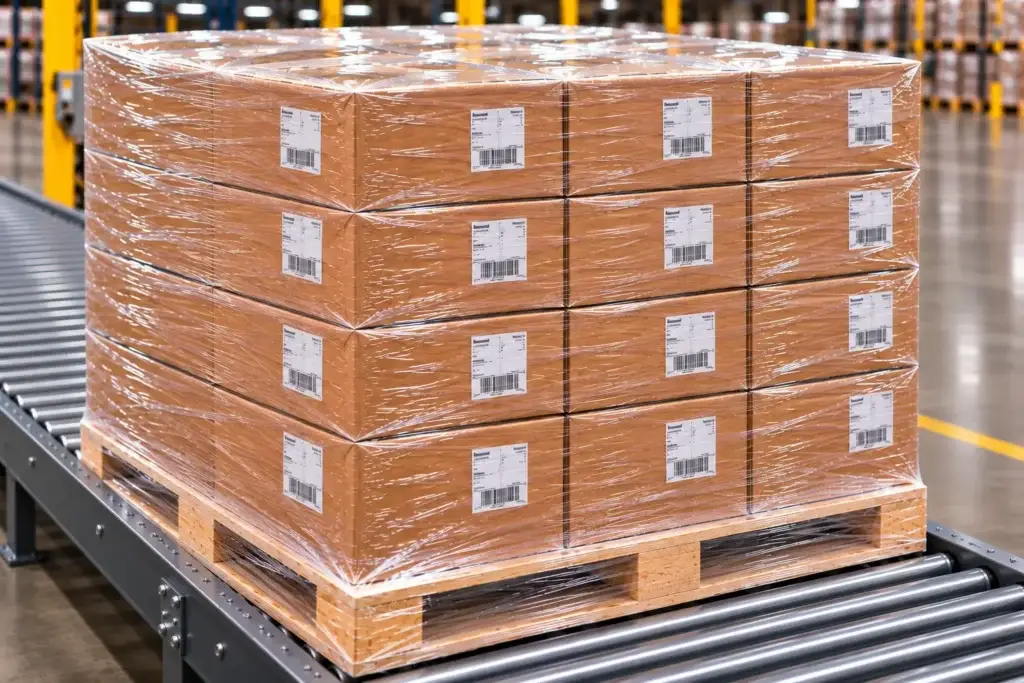
At the wrapper, the question expands from how the pallet moves to how the entire load stays together. Stretch film helps hold the products in place, while corner protectors and other packaging materials help prevent damage. Those materials must work with the pallet and the way the product is stacked.
At this stage, switching from stringer to block construction will not, by itself, prevent products from shifting if they lack adequate support or the wrapping process does not provide enough restraint. As such, the pallet and protective packaging need to be evaluated together.
The key point here is that reliable movement and a secure load are two different requirements. Procurement and operations approvals depend on both: the loaded pallet traveling reliably through your equipment and the overall packaging solution keeping the product secure.
Millwood’s supply chain automation overview explains how these components work best together.
3. At Pickup and Transfer: Make Four-Way Entry Practical
Pickup and transfer are where four-way access can become a deciding factor, rather than simply another feature on the pallet drawing. For example:
- An automated vehicle may need to collect a pallet from the side after wrapping.
- A staging area may require pickup from different orientations.
- Receiving Teams may need pallet-jack access where turning the load would require extra handling.
A four way entry pallet can simplify these handoffs by allowing approach from multiple sides. Where the design and equipment are compatible, that flexibility can reduce repositioning and unnecessary touches.
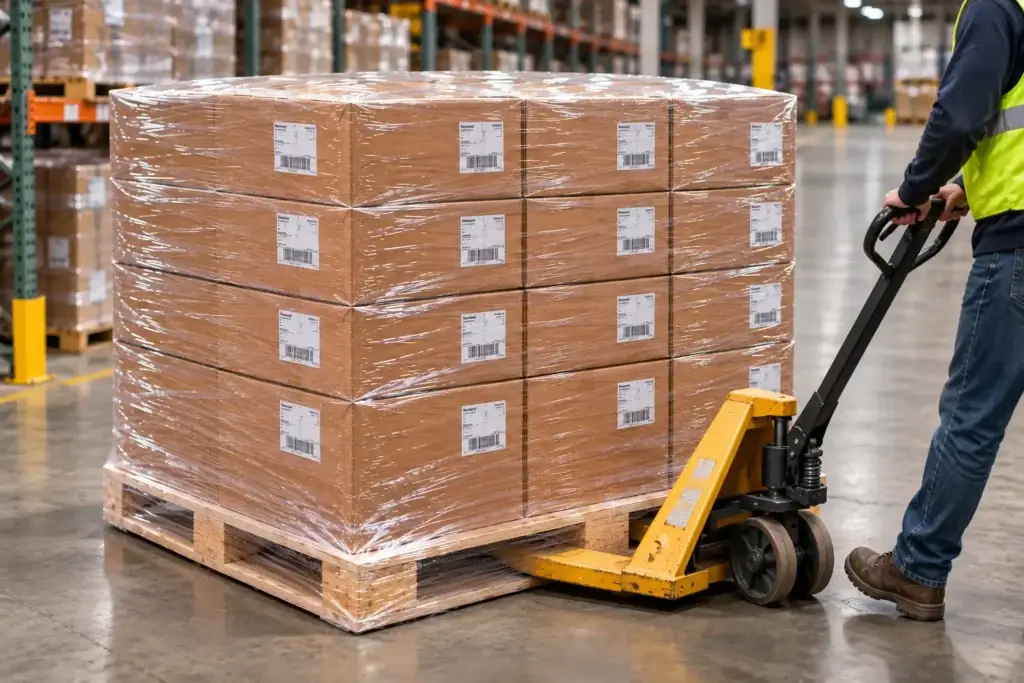
The important distinction is what “access” means for the equipment doing the work. Forklift tines can enter the side notches of a notched stringer pallet, but a pallet jack needs clearance for both its forks and its load wheels. An opening that works for one generally does not provide the side access the other needs.
Wood block pallets can provide true four-way access for both, but buyers should still confirm opening dimensions, bottom-board configuration, wheel clearance and the specific equipment’s requirements. The same caution applies to automated fork vehicles: access alone does not establish compatibility.
If every transfer uses end entry and a validated stringer design meets the equipment requirements, additional access may offer little operational value. Where the route repeatedly requires side pickup, however, block construction deserves closer consideration.
The useful question, then, is not simply whether a pallet offers four-way entry. It is whether that access works at the pickup and transfer points your operation actually uses.
Millwood’s ISTA-certified Packaging Science Lab can help customers evaluate their proposed design against equipment specifications before a purchasing program begins.
4. In Storage: Validate Support, Not Just Weight
The load may weigh the same on the floor and in the rack, but the pallet is required to do a different job in different contexts. Support across a flat warehouse floor creates different conditions from spanning rack beams or resting on a shuttle.
In any storage evaluation, it is important to establish:
- Where support occurs,
- How long the load is likely to remain there
- How much deflection, or bending, the system permits.
The biggest factor in this evaluation is understanding how the product’s weight distribution affects the unit load, not just its total weight.
Block construction may be appropriate where storage equipment requires particular access openings or support geometry. A stringer design can remain suitable where its structural arrangement matches the storage conditions. It is therefore helpful to remember that a generic capacity claim will not tell the whole story for either construction.
For automated storage and retrieval systems (ASRS) in particular, it is worth confirming the system-specific pallet requirements with your equipment provider.
Detailed tolerances, racking performance and captive pallet arrangements are covered in Millwood’s expansive ASRS pallet guide.
A Food and Beverage Launch Shows Why Verification Matters
These details can sound routine until a launch depends on them. Millwood’s partnership with a global fast food leader demonstrates how critical these details can be when pallet procurement and the final application are evaluated separately.
Weeks before an automated distribution center was scheduled to open, the customer discovered that a packaging vendor had supplied inaccurate product dimensions. The stacked load had been miscalculated by more than two inches, threatening compatibility with the automated system and putting the launch at risk.
Jim Pepperney, Millwood’s Director of Sales, described the urgency: “We were in the seventh inning when the specs changed.”
Working alongside the customer’s engineering and operations Teams, Millwood developed three new system-pallet configurations with Pallet Design System software. The designs then underwent compression and deflection testing in the Millwood Lab, accounting for freezer conditions and automated handling requirements. Thanks to this rapid validation, the facility opened on time.
The lesson from this customer was not that a construction label guaranteed success. It was that verified product dimensions, pallet design and equipment requirements must align before production begins.
5. From Staging to Receiving: Keep Following the Load
Leaving the automated line is not the end of a pallet’s job. The next handoffs, through staging, trailer loading and receiving, can reveal requirements that were easy to miss inside the facility.
In staging and trailer loading, four-way access can provide more positioning options where space and equipment permit. A compatible block pallet may reduce the need to turn or reposition a load. On the other hand, a stringer pallet may remain entirely appropriate when the loading plan and receiving equipment accommodate its entry directions.
Moving on, neither construction necessarily guarantees better trailer utilization. Pallet dimensions, load orientation, product overhang and the loading plan must be evaluated together to determine the best use of space.
Once the load is on the road, the conditions change again. Vibration, impacts and load movement put product support, stacking pattern, containment and securement to the test. Finally, the receiver’s unloading and handling equipment add another set of requirements.
Load failure can occur during any of these five broad stages. Maintaining stakeholder satisfaction at every juncture is only possible, therefore, when you configure a pallet design that accounts for every handling, transit and equipment consideration.
Consult Millwood’s Costco pallets industry perspective for an exploration of changing retailer-specific considerations, and confirm current requirements directly with the destination.
Turn Validated Design Into a Purchasing Specification
When you landed on this page, the question in your mind might have been, “Do we need block pallets?” After following the load through your operation, you have a clearer picture of what the pallet needs to do and where the choice of construction can make a practical difference.
Perhaps side pickup makes block construction worth considering. Perhaps a stringer design already provides the access and support you need. Either way, your Procurement Team now has something more useful than a preference for one pallet type. You have a sequential way of thinking through requirements grounded in how your operation works.
That clarity matters when comparing supplier proposals. A lower price might seem attractive, but not if it involves pallets that interrupt the line, require extra handling or arrive at the end customer in a condition they cannot accept. A higher price needs to earn its place, too, through benefits your operation can actually use.
For reused or recycled pallets, the question becomes whether those requirements will be met consistently, delivery after delivery. Clear inspection criteria and repair limits give your Team and supplier a shared understanding of what is acceptable, beyond a general grade description.
An informed, chronological purchasing specification brings those decisions together. It records the design, equipment interfaces, load configuration and test results, along with what to inspect on arrival and how future changes will be reviewed. That gives the next delivery, and the next purchasing decision, a reliable reference point.
Wood block pallets may be the ideal solution for your operation. The difference is that your Team can explain why their fit, what has been validated and what your supplier needs to deliver.
Connect with Millwood to evaluate the right pallet construction for your equipment, product and handling requirements, or explore Millwood’s wood block pallet options.