A skid has no bottom deck boards and a pallet does, and that one structural difference determines which platform keeps your products safe during stacking, handling and storage.
If you have ever used the words “skid” and “pallet” interchangeably, you are in good company. Across warehouses, loading docks and procurement offices, the two terms get swapped daily. But a skid and a pallet are not the same thing. The difference is structural and it directly affects how products are stored, stacked and shipped.
This article will clarify the single difference between a skid vs pallet so that you can choose the best product for your storage and shipping needs, beginning with the specifications of a skid.
What Is a Skid?
A skid is a single-deck load platform that rests on runners (also called stringers). It has a top deck for loading products but no bottom deck boards. The stringers sit directly on the ground or on whatever surface supports the load.
Skids predate modern pallets by decades. Early industrial versions appeared in the late 1800s to move heavy goods across factory floors. The modern pallet emerged in the 1920s and 1930s alongside the forklift, adding bottom deck boards to improve stability during mechanical handling.
Think of it like a sled on runners. That open-bottom design offers clear advantages in certain applications but introduces limitations that matter when stacking, storing or handling products repeatedly.
What Is a Pallet?
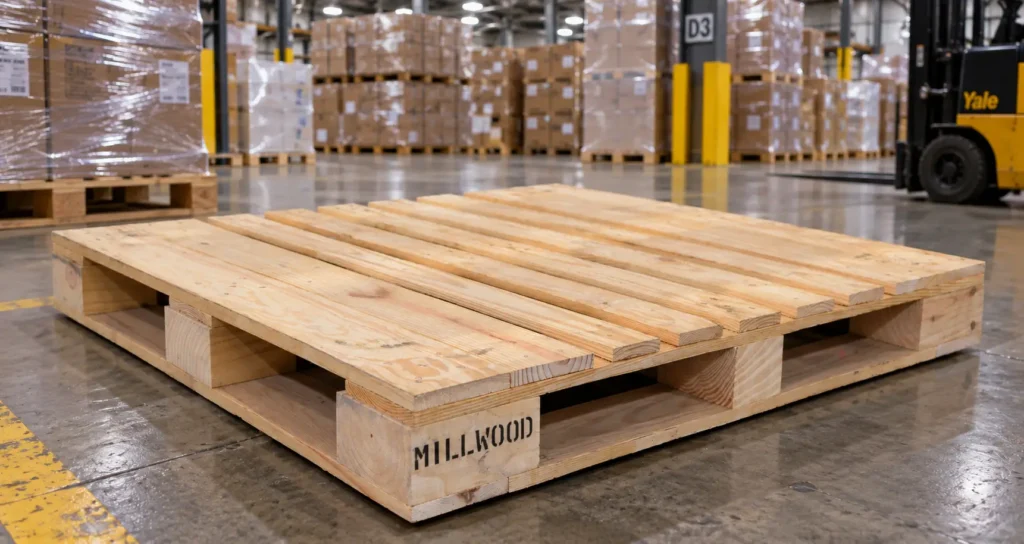
A pallet is a load platform with deck boards on both the top and bottom. Those bottom deck boards attach to the stringers and distribute weight across a wider surface area, creating a stable, flat base for stacking, forklift handling and racking.
Today, pallets are the dominant load platform in North American supply chains. They are engineered for the demands of warehousing, distribution and automation, where dimensional consistency and structural integrity determine whether products arrive intact.
Skid: A load platform with a top deck and exposed stringers on the bottom. Unlike a pallet, a skid has no bottom deck boards, making it lighter and less expensive to produce.
Pallet: A portable, horizontal load platform with top and bottom deck boards connected by stringers or blocks. The bottom deck provides weight distribution and structural stability that support repeated handling and safe stacking.
Stringer: A structural beam running the length of a skid or pallet that provides primary support.
Skid vs Pallet: The Structural Difference
As you may have surmised, the difference between a skid and a pallet comes down to one component: the bottom deck boards.
A wood pallet has deck boards on both the top and bottom. Those bottom boards distribute weight across a wider surface area and provide stability during stacking, forklift handling and racking.
A skid has deck boards on the top only. Without bottom boards, the load rests entirely on the stringers. That concentrated contact creates less surface area and less resistance to lateral movement.
Ralph Rupert, Manager of Unit Load Technology at Millwood Inc. and a packaging industry veteran with more than 40 years of experience, puts it simply: “The difference really is only the bottom deck board. A skid technically has no bottom deck board. A pallet has bottom deck boards.”
Bottom Deck Board: Boards fastened to the underside of a pallet that distribute weight, increase stability and create a flat surface for safe stacking.
Skid vs Pallet: Comparison Chart
| Feature | Skid | Pallet |
| Bottom deck boards | No | Yes |
| Weight | Lighter | Heavier |
| Repeated loading/unloading | Not recommended | Built for it |
| Stackability | Limited (concentrated stringer contact) | Strong (weight distributed across bottom deck) |
| Stability during handling | Lower | Higher |
| Forklift and rack compatibility | Limited | Designed for repeated forklift and rack use |
| Mobility | Easier to drag across surfaces | Less suited for dragging |
| Empty storage | Interlocks for compact nesting | Requires more space |
| Cost | Lower (less lumber and fewer fasteners) | Higher |
| Permanent foundation use | Ideal | Not typical |
When to Use a Skid
Skids perform best in applications that play to their structural strengths:
- Permanent equipment foundations. This platform serves as an effective long-term base for heavy machinery such as industrial HVAC units, engines and manufacturing equipment. The open-bottom design allows operators to drag equipment into position, and the platform stays in place as a permanent foundation that keeps machinery off the ground.
- One-time heavy shipments. Industries like agriculture, construction and metals rely on skids to move stone, brick, cement, sod and steel. When a product travels once from origin to destination, the material savings make clear economic sense.
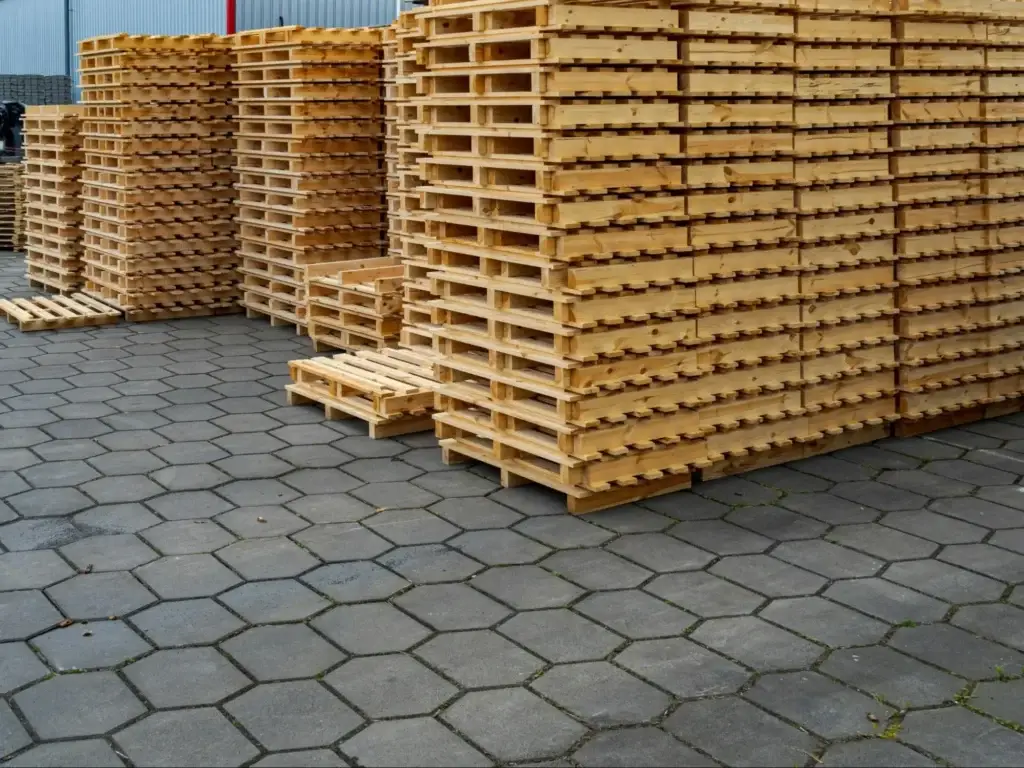
- Storage efficiency. Empty skids interlock and nest together, occupying less warehouse space than pallets. High-volume operations benefit from that compact footprint.
- Cost-driven applications. Because this platform requires less lumber and fewer fasteners, it costs less to produce. For situations where bottom deck stability is unnecessary, that cost advantage goes directly to the bottom line.
There are two important structural considerations for any application that you choose for a skid. The first is that, on a skid, stringers rest directly on the ground. On a pallet, bottom deck boards attach to the stringers.
Secondly, there is an important design consideration: because a skid lacks bottom deck boards, lateral collapse of the stringer becomes a critical risk. Manufacturers often compensate with wider stringers to provide the stability that bottom deck boards would otherwise deliver.
When to Use a Pallet
For most warehouse, distribution and supply chain operations, pallets remain the standard choice for the following reasons:
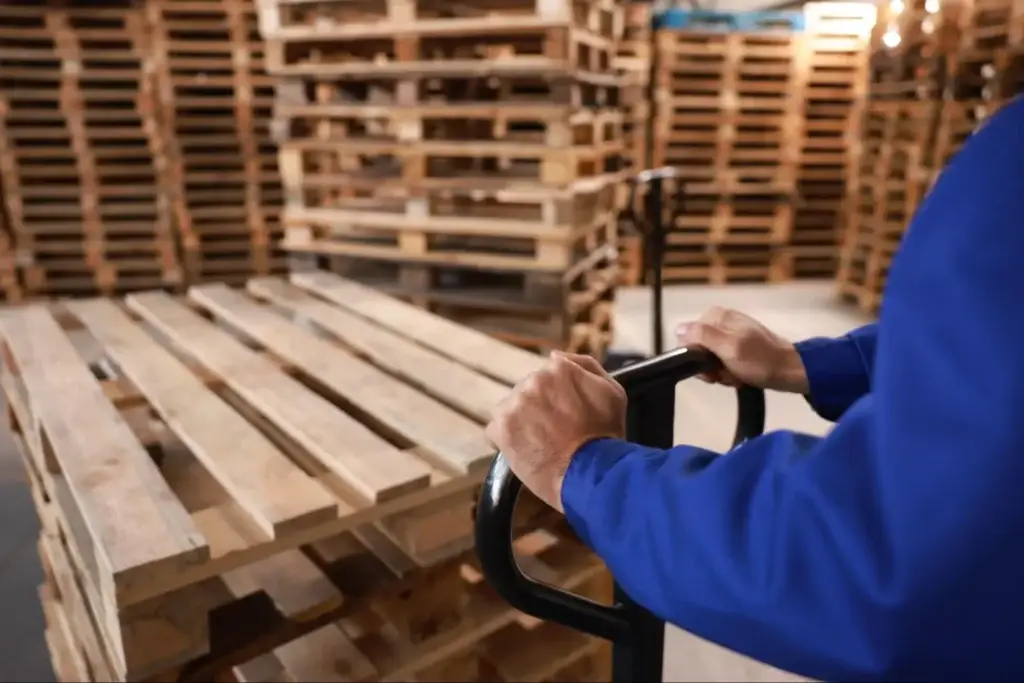
- Repeated handling. Loading and unloading with a forklift places significant torque on a platform. Bottom deck boards absorb and distribute that force, giving pallets far greater durability through repeated cycles.
- Double stacking. Stacking one loaded unit on top of another requires a stable, flat bottom surface. A pallet’s bottom deck boards create that surface. Exposed stringers on a skid concentrate weight on narrow contact points and increase the risk of product damage. Safe double stacking requires a flat, stable bottom surface, which is why pallets with bottom deck boards are preferred.
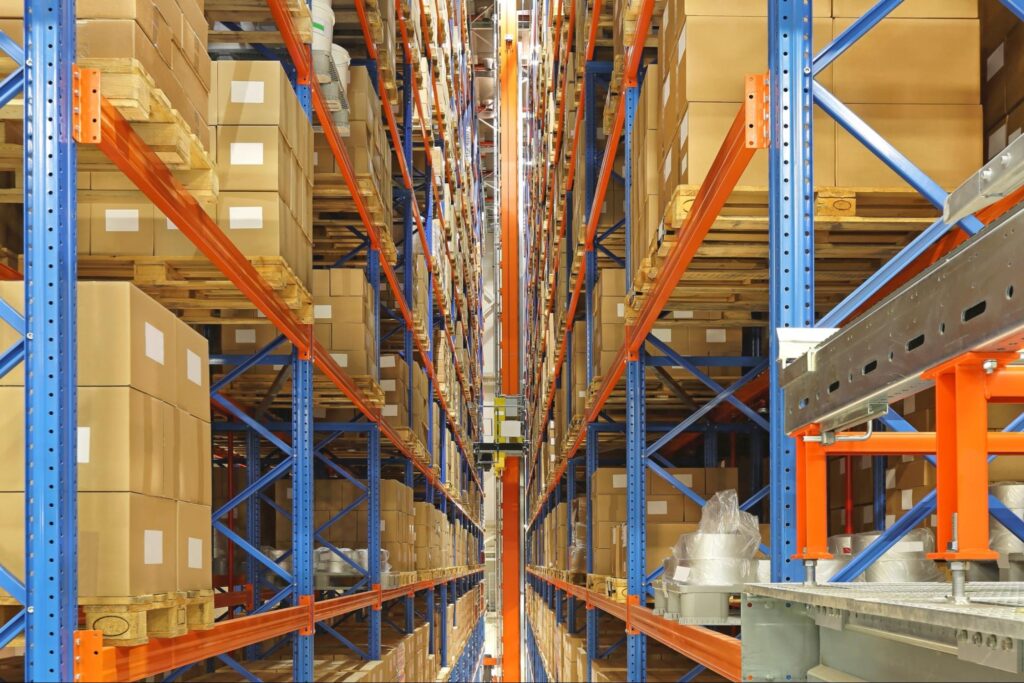
- Racking and automation. Modern racking systems and automated storage and retrieval systems (ASRS) require the dimensional consistency and structural integrity that pallets provide. An open-bottom platform is generally incompatible with these systems.
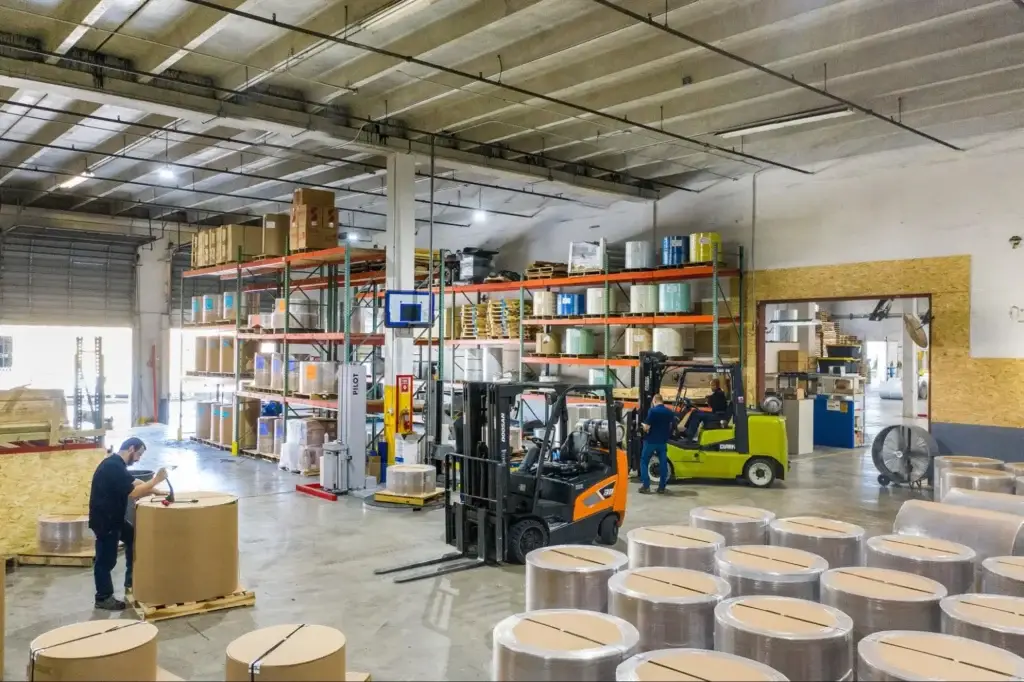
- Multi-stop distribution. Products moving through multiple supply chain touchpoints need a platform that maintains structural integrity at every transition. Pallets deliver that reliability from the manufacturing floor to the final dock.
Double Stacking: Double stacking refers to the operational practice of placing one loaded platform on top of another for storage or transport purposes.
Why the Skids vs Pallets Distinction Matters
Confusing a pallet vs skid specification might seem like a terminology issue, but the wrong choice creates real operational consequences.
Ralph Rupert recalls one scenario that illustrates the stakes: “A customer was demanding a skid. I tried to go through what the differences were and why the skid would not work in their stacking situation. It was really going to damage the product when they double stacked.”
When procurement teams source by name rather than by specification, the wrong platform can show up on the dock. The downstream effects range from minor delays to significant product damage and rework costs.
Getting the terminology right is the foundation of every sound packaging decision. If a team is calling pallets “skids” (or the reverse), every subsequent choice about stacking, storage and automation starts on the wrong footing.
Choosing the Right Platform for Your Operation
Whether to use a skid or a pallet depends on the application: what the product is, how it moves, how it is stored and how many times the platform will be handled. A packaging specialist evaluates these factors and identifies the solution that fits, including the platform and the wrap and supports that protect the product throughout the supply chain.
Millwood’s Packaging Science approach starts by learning how a customer’s product moves through the supply chain before engineering a specification built for that reality. Connect with a Millwood pallet expert to make sure you’re specifying the right unit for your application.