
5 Things to Know When Considering Recycled Pallets
Considering recycled pallets? Learn the key factors that impact performance, cost and reliability before making a decision for your operation.
May 19, 2026
8 Minute Read
Table of Contents

Josh Stipanovich
Josh serves as Communications Manager at Millwood, overseeing internal and external communications to ensure the company’s mission and message are delivered clearly and consistently. He leads initiatives ranging from company-wide communications and website content to PR, trade show promotions, and sales support materials. Since joining Millwood in 2014, he has played a key role in major projects including the company rebrand, website redevelopment, and HubSpot launch.
Stay Up To Date
Click the button below to recieve a collection of the latest case studies, articles and resources in Millwood’s newsletter in your inbox each month.
“What starts as a supply issue can turn into a moment where a facility is uncomfortably close to stopping altogether – and the buyer responsible for purchasing pallets feels that pressure in real time.”
“The conversation around recycled pallets needs to go deeper than cost savings. It needs to account for how these pallets will perform in real conditions, across time and under pressure.”
Table of Contents
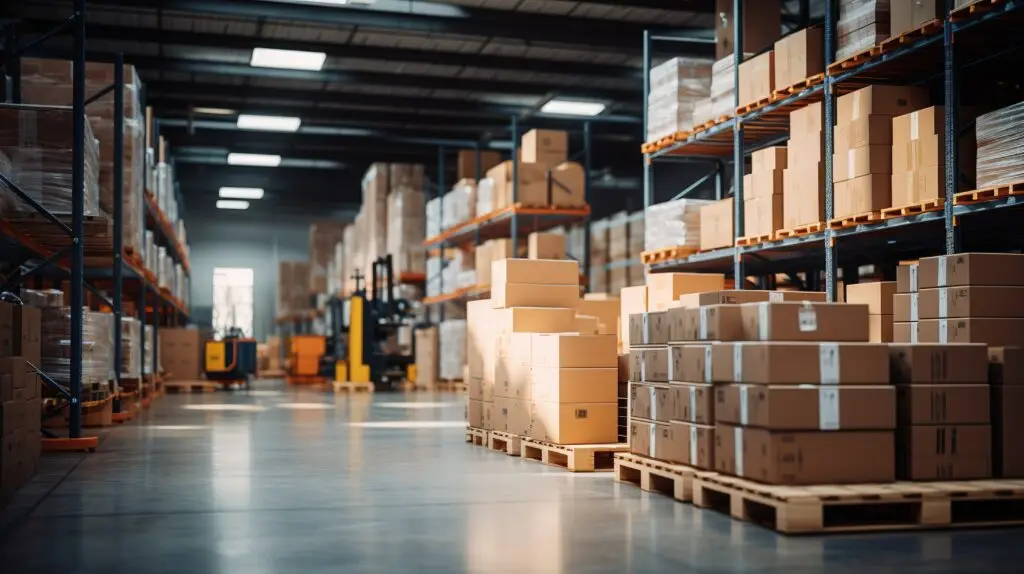
Recycled pallets are a common part of modern pallet supply chains. In the right application, they can reduce upfront cost, support sustainability goals and provide a reliable option for moving product.
But deciding how – or if – they fit into your operation isn’t always straightforward.
Because when pallet decisions are off, the impact doesn’t stay contained.
It shows up in product damage, inefficiencies and, in some cases, in production delays that affect everything downstream.
That’s why this isn’t just a purchasing decision: it’s an operational one.
When Pallet Supply Breaks Down, Operations Feel It Fast
Pallets are easy to overlook when everything is running smoothly.
They show up. Product moves. Shipments go out. The process works.
But when something breaks – when supply becomes inconsistent or performance starts to slip – pallets move from background detail to immediate priority.
The impact is rarely small.
It often starts quietly. A shipment is delayed. A delivery is short. A load doesn’t perform the way it should. At first, it feels like something that can be worked around. But in a high-volume operation, small gaps don’t stay small for long.
Facilities can move through their available pallets faster than expected. Production teams begin adjusting to compensate. Shipping schedules tighten. What was manageable early in the week can become a real constraint by the end of it.
At that point, the margin for error is gone. Production lines are waiting. Shipments are at risk. And the responsibility lands squarely on the people managing the process to keep everything moving.
As Jim Pepperney, Western Sales Director at Millwood, has observed from conversations with customers, these situations escalate quickly. What starts as a supply issue can turn into a moment where a facility is uncomfortably close to stopping altogether – and the buyer responsible for purchasing pallets feels that pressure in real time.
“When pallets don’t show up, everything stops.”
– Jim Pepperney
That’s where the real weight of pallet decisions shows up. It’s not in the price per pallet but in whether the operation can depend on them when it matters most.
In many operations, pallet supplier reliability becomes just as important as pallet cost.
That means reliability isn’t just a service feature; it’s what keeps product moving, schedules intact and pressure off your operation when things are tight.
That’s also why the conversation around recycled pallets needs to go deeper than cost savings. It needs to account for how these pallets will perform in real conditions, across time and under pressure.
Before making a change, there are a few key factors worth weighing.
1. Not All Recycled Pallets Are the Same
For many pallet buyers, the challenge isn’t a lack of knowledge, but a lack of consistency in how the market defines quality.
Terms like A grade, B grade or 1A are used across the industry, but they aren’t always applied the same way from one supplier to another.
That creates a frustrating reality.
Two pallets described the same way can perform very differently once they’re in use. Differences in repair quality, material condition and inspection standards can show up quickly in handling, storage or transit.
This is something Millwood witnesses regularly in the field.
As Jim Pepperny explains:
“A lot of customers will say they’re buying A grade or B grade, but we still have to go in and validate what that actually means.”
Kyle Countryman, Eastern Sales Director at Millwood, sees the same issue from another angle:
“There’s a lot of variation out there. Two pallets can be called the same thing and still perform completely differently.”
That variability is what makes consistency one of the most important, and most overlooked, factors in recycled pallet performance.
That’s also why understanding pallet grading standards and how they are applied is critical to performance: variation in pallet grading is one of the most common causes of inconsistency across recycled pallet programs.
If consistency matters in your operation, it’s important to understand:
- How your pallets are graded
- What repair standards are applied
- How quality is maintained over time.
Without this kind of clarity in procurement decision-making, what appears to be a straightforward purchase can introduce variability that affects performance across your entire operation.
If you’re evaluating recycled pallets, it helps to understand how grading impacts performance. You can view our in-depth explainer on the topic of pallet grading here.
2. Your Customer's Requirements May Shape the Decision
In many cases, the pallet decision isn’t fully controlled internally. Customer requirements often play a significant role.
Depending on the industry and your application, those requirements can include:
- Specific pallet sizes or footprints
- Grade expectations
- Cleanliness or hygiene standards
- Handling or storage constraints.
For example:
- Food and beverage operations may require higher levels of cleanliness and consistency.
- Pharmaceutical or healthcare-related shipments may have stricter expectations around condition and traceability.
- Retail and consumer product distribution often relies on standard 48×40 GMA pallet formats.
As Jim noted when discussing customer-driven requirements, expectations can be firm, especially when pallets are tied directly to how product is received and handled downstream.
Kyle also emphasized that these expectations often depend on the type of product and how it moves through the supply chain, not just the pallet itself.
That means even if recycled pallets make sense internally, they still have to meet external requirements.
So before making any changes to your pallet supply chain, it’s important to understand:
- What your customers require
- What they will accept
- Where there is flexibility.
Without that clarity, changes can lead to rejected shipments or added friction across the supply chain.
3. Upfront Price Is Not the Same as Long-Term Cost
Recycled pallets are often selected because of their lower upfront price.
In many situations, that price advantage is real, but it’s only part of the equation.
The more important question is: What will this cost over time in your operation? In other words, working out pallet cost vs performance over time.
Several factors influence that equation:
- Product Damage: A pallet that doesn’t perform consistently can lead to load instability, shifting or breakage in transit.
- Durability and Reuse: Is the pallet used once or expected to move through multiple handling cycles?
- Operational Efficiency: Inconsistent pallets create added time inspecting, sorting and adjusting loads.
- Time and Attention: Small issues compound into real operational costs over time.
When making pallet procurement decisions around these factors, it can help to think through a few key questions:
Common Pallet Logistics Questions → What They May Indicate
- Is this a one-way shipment? → Recycled pallets may be a strong fit.
- Will the pallets be reused? → Durability matters more.
- Is product damage costly? → Performance outweighs price.
- Is automation involved? → Consistency becomes critical.
As Kyle pointed out above, sometimes the decision isn’t just new vs recycled, it’s also about material choice, such as hardwood versus pine and how that impacts performance.
Overall, that means the goal isn’t to find the lowest upfront price. It’s to understand the total cost of ownership and how that cost shows up in your operation over time.
For a deeper comparison, see our recent discussion on when new or recycled pallets fit best for your operation.
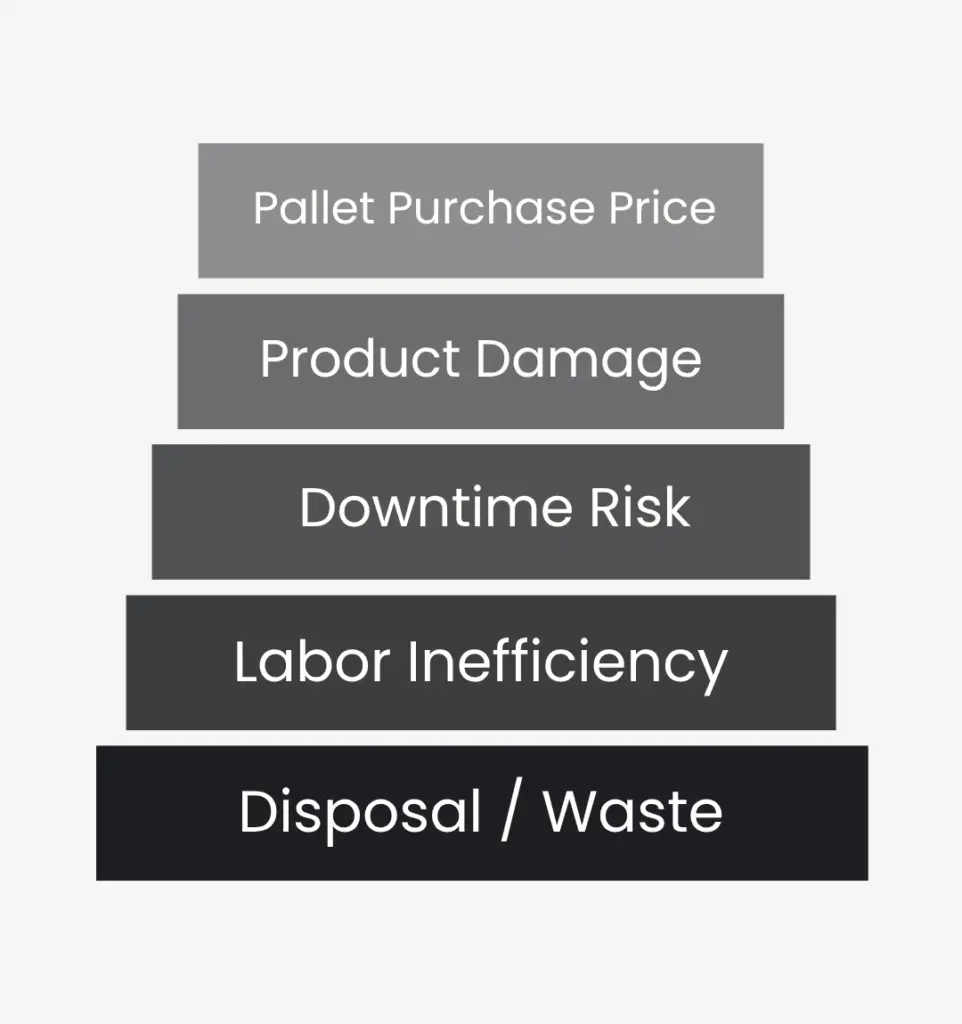
Upfront price is only part of the total cost.
4. Supplier Capability Matters More Than You Think
The performance of recycled pallets is closely tied to the supplier behind them.
It’s not just about availability; it’s about whether that supplier can consistently support your operation. That’s because not all recycled pallet suppliers operate the same way.
Operational variations include questions around:
- Consistent grading and quality control
- Reliable supply across facilities
- Responsiveness when demand shifts
- The ability to maintain performance over time.
Two suppliers can offer ‘recycled pallets’ but deliver very different outcomes.
The difference shows up in:
- Consistency from load to load
- Reliability over time
- How issues are handled when they arise.
In many operations, pallet supplier reliability matters just as much as price, and sometimes even more, especially when you frame it in terms of long-term performance. Inconsistent supply leads to immediate negative consequences; reliable, on-time delivery allows your operation to run smoothly, as it should.
At Millwood, we’ve staked our reputation on reliability, and that’s why we were recently named Supplier of the Year by a major building materials manufacturer. The customer awarded this honor after we delivered more than 3 million pallets in a single year with 99.5% on-time performance and 100% satisfaction – recognition of decades of reliable service supporting their operation.
A record like this is why we can say choosing the right recycled pallet supplier can be the difference between consistency and disruption.
This decision does not depend on price alone. What matters are your supplier’s systems, processes and ability to support customers at scale over time.
So, when evaluating recycled pallets, it’s important to see suppliers not just as an abstract source but as part of the system your operation depends on, day to day, year over year.
5. Recycled May Be Part of the Answer, Not the Whole Answer
A common assumption is that considering recycled pallets means making a full transition in their favor.
In practice, that’s rarely how decisions are made. Most operations are more nuanced. Different parts of the same operation have different requirements, and not every application demands the same level of consistency, durability or appearance.
For example:
- Standard 48×40 GMA pallets in distribution may be well-suited for recycled pallets.
- Internal movement may allow for more flexibility.
- Non-standard loads may benefit from combo pallets, built with a mix of new and recycled materials.
- Higher-risk applications may still require new pallets.
- Where performance requirements are lower, used pallets can provide a cost-effective solution.
In other words, it isn’t about choosing one option over another. It’s about understanding where each option fits and how they can work together within your operation.
In many cases, the best approach is a customized pallet program that aligns cost, performance and consistency with how your business actually runs.
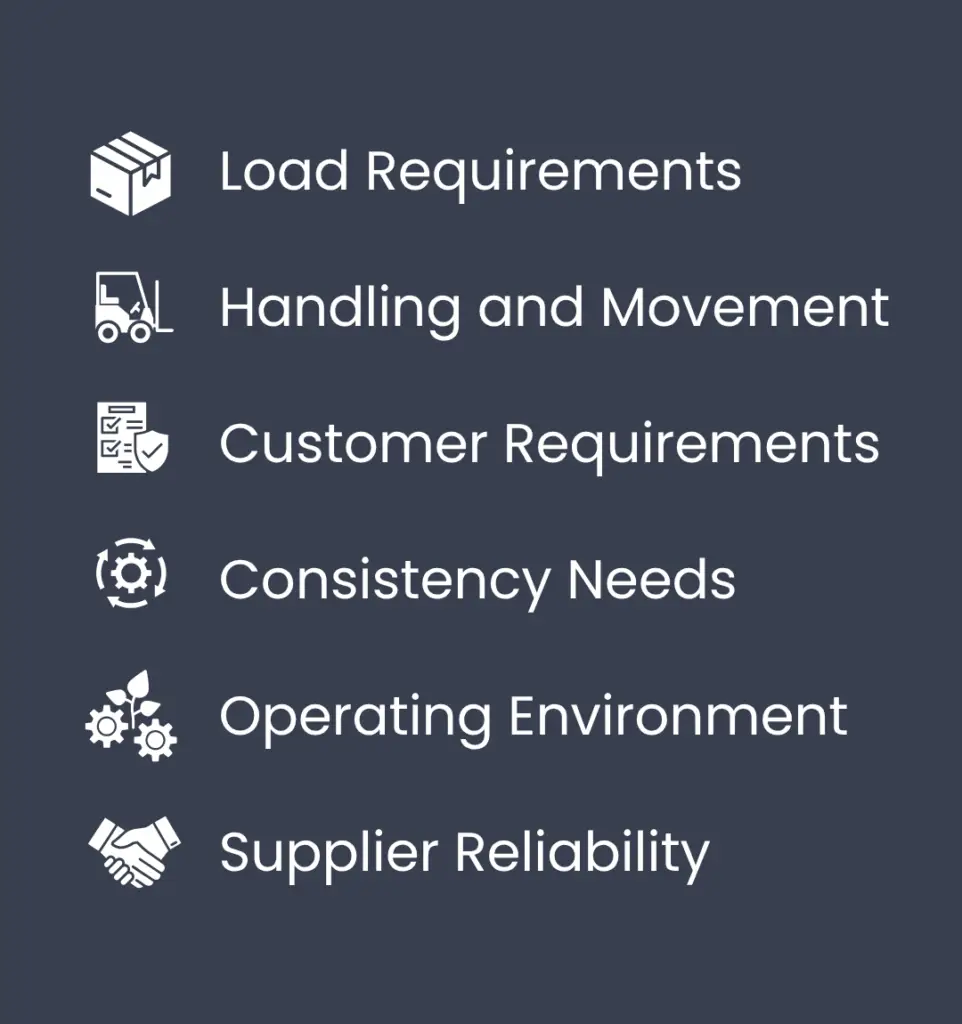
Have you considered every pallet procurement angle?
“What starts as a supply issue can turn into a moment where a facility is uncomfortably close to stopping altogether – and the buyer responsible for purchasing pallets feels that pressure in real time.”
Putting Theory Into Practice
Understanding these factors is what leads to better procurement decisions.
In many cases, the challenge isn’t a lack of options but a lack of clarity around how those options will perform in your specific environment.
That’s why the process starts with understanding the operation itself:
- How product moves
- Where risk exists
- Where consistency matters most.
From there, pallet decisions can be refined based on real-world performance, not assumptions.
In practice, that often means stepping back from the question of “new vs recycled” and instead asking:
What does this operation actually require to run consistently?
Because once that answer is clear, the right pallet strategy tends to follow.
See how Millwood helped optimize a long-standing pallet program.
Start with the Right Conversation
If you’re considering recycled pallets, the most valuable next step is not simply requesting a quote.
It’s understanding how your current pallets are performing and where changes may create value or introduce risk.
Are you seeing:
- Inconsistent pallet quality
- Product damage
- Supply gaps or delays
- Costs that don’t match expectations?
If so, the answer may not be switching pallet types; it may be understanding what your operation actually needs.
The right next step is a conversation focused on your operation, your constraints and what will actually work over time.
Talk with a Millwood Team Member to evaluate your pallet program and identify a right fit today, or explore recycled pallet solutions.
“The conversation around recycled pallets needs to go deeper than cost savings. It needs to account for how these pallets will perform in real conditions, across time and under pressure.”
Share:

FIND THE RIGHT PALLET FOR YOUR OPERATION
Millwood is more than a pallet supplier — we help businesses reduce product damage, avoid downtime and improve operational performance through smarter pallet selection strategies. Whether your operation requires recycled pallets, new pallets or a combination of both, our team works with you to evaluate risk, performance and total cost to identify the right-fit solution for your supply chain.
Related Articles
Josh Stipanovich
Josh serves as Communications Manager at Millwood, overseeing internal and external communications to ensure the company’s mission and message are delivered clearly and consistently. He leads initiatives ranging from company-wide communications and website content to PR, trade show promotions, and sales support materials. Since joining Millwood in 2014, he has played a key role in major projects including the company rebrand, website redevelopment, and HubSpot launch.
Stay Up To Date
Click the button below to recieve a collection of the latest case studies, articles and resources in Millwood’s newsletter in your inbox each month.