
When evaluating pallet types, it can be tempting to focus on simple specifications such as size, material or price. However, pallet selection is rarely that straightforward. The pallet that performs well in one supply chain may create unnecessary costs, inefficiencies or product damage in another.
While there are common pallet types associated with specific industries and supply chain applications, the most effective pallet solution goes beyond the pallet itself to account for the way products are packaged, handled, stored and transported. Load characteristics, environmental conditions, handling equipment and transportation requirements – operational realities that vary from one company to the next – all influence pallet performance.
That is why Millwood believes pallet selection should be viewed as part of a larger unit load strategy. Within the unit load system, pallets are only one feature of a wider network that includes packaging materials, load stabilization methods and distribution conditions. Understanding how different pallet types and designs function within that system can help companies make more informed packaging decisions.
What Unit Load Factors Determine the Right Pallet for Your Needs?
Selecting the right pallet involves more than choosing a standardized spec or material. Procurement leadership must evaluate how products move through their company’s supply chain and the demands placed on the pallet throughout its lifecycle.
Important considerations include:
- Product weight and load distribution
- Storage methods and warehouse conditions
- Expected reuse cycles and service life requirements
- Forklift and material handling equipment requirements
- Sanitation requirements for food, pharmaceutical or industrial applications
- Whether pallets will be used indoors, outdoors or in mixed environments
- Whether shipments remain domestic or move through international supply chains
- Sustainability goals and pallet recovery opportunities
For many applications, traditional wood pallets provide the ideal balance of cost, performance and sustainability. Other operations may benefit from plastic pallets, metal pallets or specialized custom pallets designed around unique load requirements.
Even so, the goal is not simply to select a pallet. The goal is to identify a solution that supports product protection, handling efficiency and transportation performance throughout the supply chain.
Why Pallet Design Matters
Effective pallet design requires understanding how the entire unit load performs under real-world conditions.
A pallet that exceeds requirements may increase material costs without delivering meaningful value. A pallet that is under-engineered can contribute to product damage, load instability and transportation inefficiencies.
Because pallet performance is closely tied to the overall unit load, pallet selection should be evaluated alongside:
- Packaging materials
- Load stabilization methods
- Product placement
- Trailer and container utilization
- Material handling practices
- Distribution environments
When these elements are considered together, Millwood has seen customers improve load stability, reduce damage and optimize packaging costs.
Common Pallet Types Used in Supply Chains
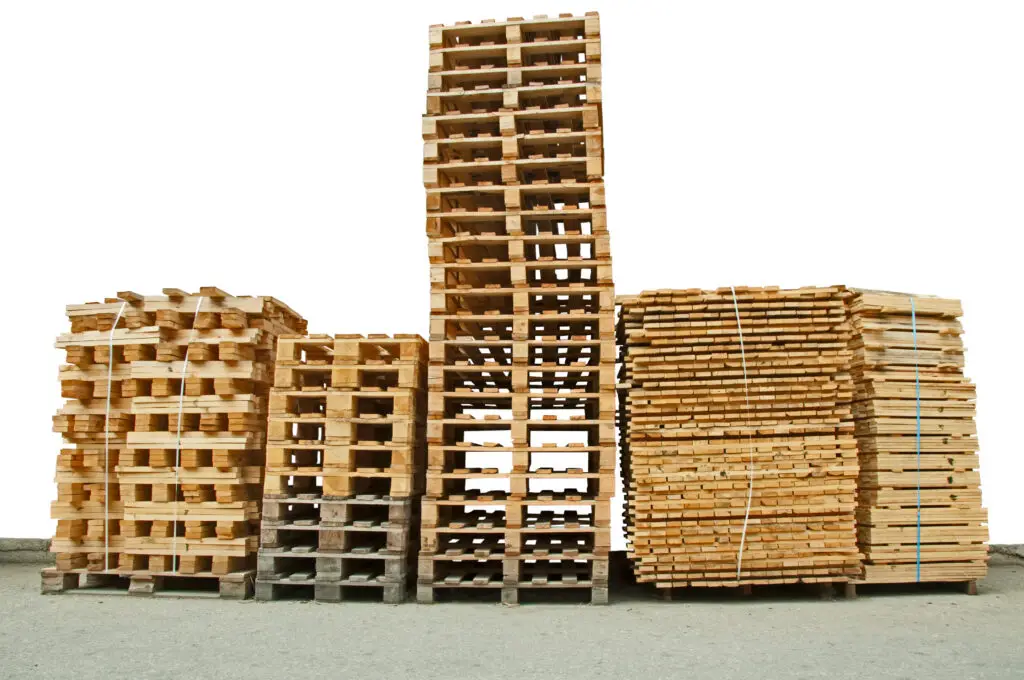
While every application has unique requirements, several common pallet types are widely used across manufacturing, warehousing and distribution operations.
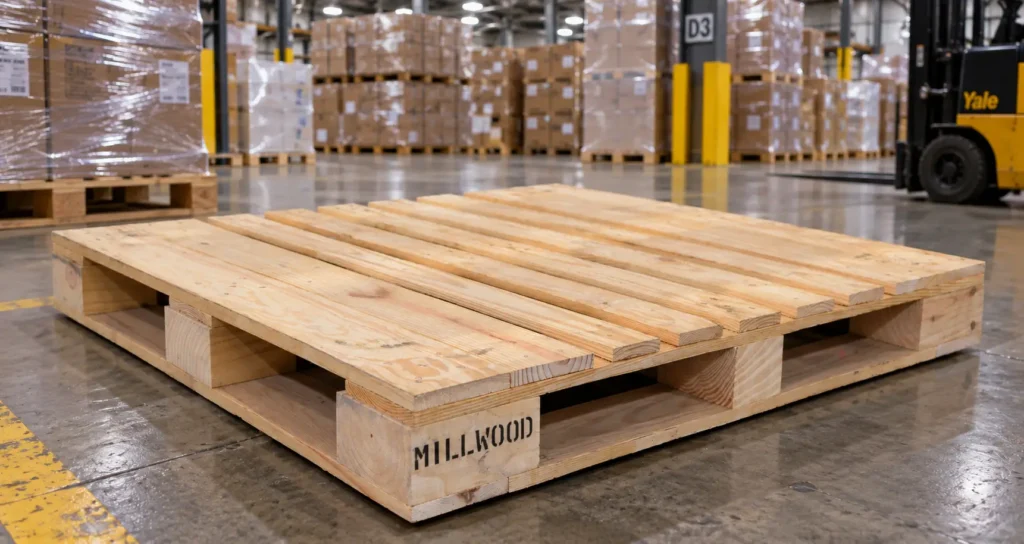
Stringer Pallets
Stringer pallets are among the most commonly used pallet designs in North America and come in a 2-way or 4-way style. 4-way stringer pallets are sometimes called ‘notched stringer pallets’.
A stringer pallet consists of top and bottom deck boards supported by longitudinal members known as stringers. These stringers provide structural support and create openings for material handling equipment.
Because of their simple construction and widespread availability, stringer pallets are often used in a broad range of shipping and storage applications.
Block Pallets
Block pallets utilize solid blocks positioned between the top and bottom deck boards rather than continuous stringers.
Compared with many stringer designs, block pallets often provide increased durability, improved load stability and four-way forklift access. Their strength and versatility make them a common choice for high-volume distribution environments and reusable pallet programs.
Wing Pallets
Wing pallets feature deck boards that extend beyond the outer edges of the pallet structure.
These extensions increase the usable load surface and can improve load support for certain products. Wing pallets may also facilitate handling with slings or specialized lifting equipment.
Recycled Pallets
Recycled pallets are repaired, rebuilt or refurbished pallets that have been returned to service after their initial use.
Recycling extends pallet life, reduces waste and can provide a cost-effective alternative to new pallets. Depending on the application, recycled pallets can deliver reliable performance while supporting sustainability initiatives.
Many recycled pallets are built to standards associated with GMA pallets, which remain widely used throughout the grocery and consumer packaged goods industries.
Understanding GMA Pallets
GMA pallets refer to pallets that conform to standards historically established by the Grocery Manufacturers Association (GMA).
Officially, those standards no longer exist because the GMA became the Consumer Brands Association, and with that change came a shift in priorities away from standardized pallet dimensions.
Colloquially, however, many industry insiders still call the 48″ x 40″ footprint by the same name (“GMA pallet”), especially throughout retail, grocery and consumer goods supply chains.
Because of their prevalence in those supply chains, GMA pallets are frequently found within pallet recycling and recovery programs. Both new and recycled pallets can be built to historic GMA specifications depending on application requirements.
Wood, Plastic and Metal Pallets
While pallet construction styles are important, material selection also plays a significant role in performance.
Wood Pallets
Wood pallets remain the most commonly used pallet type due to their versatility, availability, cost-effectiveness and recyclability. They can be manufactured in a wide variety of designs and are well-suited for both one-way and reusable applications.
Plastic Pallets
Plastic pallets are often selected for applications requiring consistent dimensions, moisture resistance or enhanced sanitation. They are commonly used in food, pharmaceutical and closed-loop distribution environments.
Metal Pallets
Metal pallets provide exceptional durability and load capacity for demanding industrial applications. Although typically more expensive than other options, they offer long-term value in environments where durability is a primary concern.
What Are Some Useful Pallet Terms to Know?
Understanding common pallet terminology can help simplify discussions around pallet selection and performance.
Spacer
A spacer is a pallet component located between the top and bottom deck boards, providing structural support within the pallet assembly.
Block
A block is a deck spacer used in block pallets, typically located at corners, edges or central support points.
Stringer
A stringer is the primary structural support member used in traditional stringer pallets, running longitudinally beneath the deck boards.
Notch
A notch is a cutout located in some stringer pallets that allows partial 4-way access for forklift tines to enter the pallet from each direction. The four-way entry design of ‘notched’ stringer pallets can improve handling efficiency and provide greater flexibility within warehouse and distribution environments.
Fastener
A fastener is a component used to secure pallet parts together, including nails, screws, staples, bolts and other joining methods.
How Packaging Science Optimizes Unit Loads
While understanding pallet types is important, successful pallet selection ultimately depends on how the pallet performs as part of the complete unit load.
Millwood’s Packaging Science approach evaluates how pallets, packaging materials and products work together under real-world distribution conditions.
Through ISTA-certified testing, engineers evaluate factors such as:
- Vibration
- Compression
- Impact
- Temperature variation
- Environmental exposure
- Material handling stresses
Testing in the Millwood Lab allows our customers to validate pallet and packaging performance before their products enter the field, providing opportunities to improve load stability, reduce damage and optimize packaging costs.
This process consistently reveals that the best solution is not simply selecting from existing pallet types common in a given industry, but instead developing custom pallets and packaging solutions tailored to the application.
While standard pallet footprints exist, there is no universally correct pallet design. The right solution depends on the product, packaging configuration, handling methods and distribution environment.
The Importance of Pallet Configurations
Effective pallet configurations play a critical role in overall unit load performance.
How products are stacked, supported and stabilized on the pallet directly affects load integrity during transportation and storage.
Improper pallet configurations can contribute to load shifting, product damage and increased transportation costs. Optimized configurations help improve stability, maximize trailer utilization and reduce the risk of damage throughout the supply chain.
When combined with the appropriate pallet design and load stabilization strategy, proper pallet configurations support safer and more efficient distribution operations.
Match Pallet Types with Your Application
Understanding common pallet types provides a useful starting point, but effective pallet selection requires evaluating the entire unit load.
Every application presents unique challenges related to product characteristics, handling requirements, transportation conditions and supply chain objectives. The most effective solution is one that aligns pallet performance with the broader packaging system.
Millwood’s Packaging Science Team works with customers to evaluate these variables and develop pallet and packaging solutions tailored to their specific applications. Whether the solution involves wood pallets, block pallets, stringer pallets, recycled pallets, GMA pallets or fully-engineered custom pallets, the goal remains the same: improving unit load performance throughout the supply chain.
Explore Millwood’s pallet solutions, recycling programs and Packaging Science resources to learn how pallet design, packaging and transportation work together to support supply chain success.