Wood pallets are more than simple shipping platforms. When supported by responsible sourcing, engineered design, pallet recovery and recycling systems, they become part of a renewable lifecycle that helps reduce waste, extend material value and improve operational efficiency across the supply chain. From forest sourcing to pallet repair and reuse, modern pallet management systems support sustainability goals and long-term supply chain performance.
In modern supply chains, wood pallets are often viewed as simple shipping platforms.
Yet behind nearly every product moved across North America is a system uniquely designed to support transportation, storage, product protection and operational efficiency.
While wood pallets play a critical role in manufacturing, warehousing and distribution, their value extends far beyond a single shipment cycle. When supported by responsible sourcing, engineered design, pallet recovery and recycling systems, they become part of a renewable lifecycle that helps reduce waste and improve long-term supply chain performance.
At Millwood, that lifecycle begins long before a pallet enters a warehouse and continues long after its first delivery.
Where Does the Pallet Lifecycle Start?
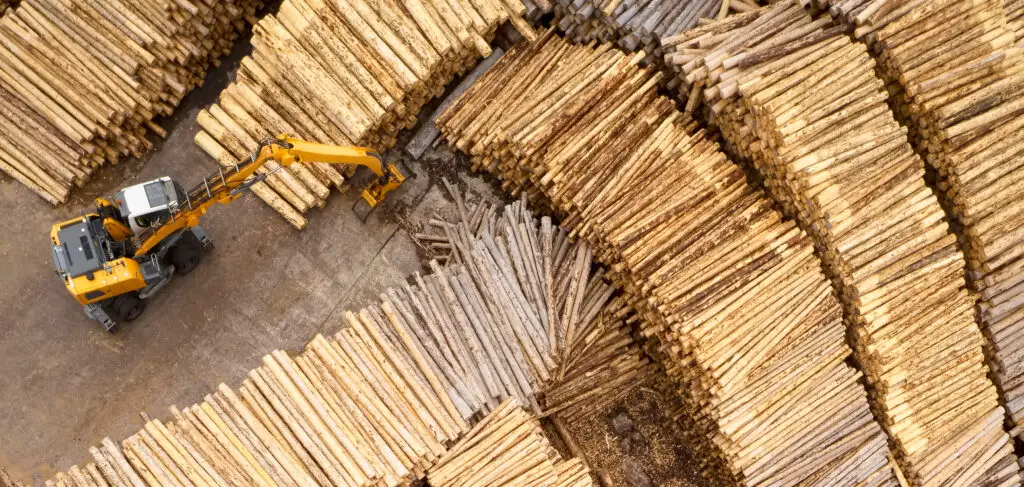
The pallet journey begins at our full-service scragg mill, where short logs are debarked and processed into cants. A cant is a partially sawn log with at least one flat side that can later be processed into pallet stock or other wood products.
The cant then undergoes the process of debarking. Debarking serves several important functions within the pallet lifecycle. Removing bark helps wood dry more efficiently, reduces the likelihood of rot and can expose invasive insects that may damage lumber during storage or transportation. This process also helps improve the longevity and performance of the finished pallet.
As cants are cut into pallet components, sawdust and excess wood fiber are generated. Rather than treating these materials as waste, Millwood repurposes them into additional products including animal bedding, biofuel and mulch. The mulch is tested and used for erosion and sediment control in biodegradable filter socks used in various applications such as construction sites. When the project is completed, the biodegradable sock stays on site and naturally degrades into the nearby ecosystem.
This approach reflects a broader principle within wood packaging sustainability: maximizing the value of renewable materials throughout the manufacturing process.
Pallet lifecycle management refers to the process of designing, manufacturing, tracking, recovering, repairing, reusing and recycling pallets throughout multiple shipment cycles. Rather than treating pallets as disposable materials, lifecycle management approaches focus on extending pallet usability, reducing waste and improving operational efficiency across the supply chain.
Engineering Wood Pallets for Performance
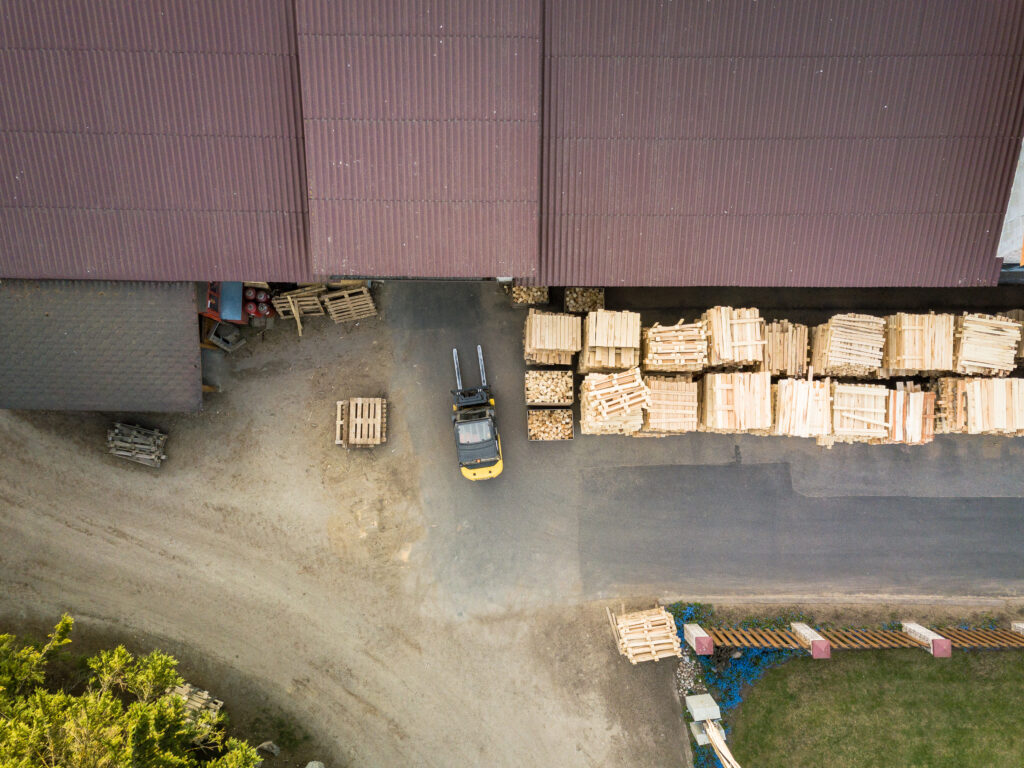
After the process outlined above, the pallet stock is cut to size. Then, the boards are inspected, sorted and prepared for assembly. Depending on the customer application, boards may be chamfered at this stage to help reduce forklift damage and runner boards may be notched to allow four-way forklift access.
From there, pallets move into one of two assembly processes. Millwood leverages both automated nailing systems and hand-built assembly tables to support different pallet programs and customer requirements.
Automated systems allow for precision fastening and high-volume throughput, while trained Team Members build specialized or custom pallets by hand using equipment designed to maintain dimensional consistency and specification accuracy. This flexibility allows Millwood to support a wide range of pallet applications across manufacturing, distribution and automated handling environments.
Similarly, not every operation requires the same pallet design. Product dimensions, load weight, handling equipment, transportation methods and warehouse systems all influence downstream pallet performance throughout the supply chain.
That is why custom designed pallets have become increasingly important for many operations. For instance, a properly engineered pallet can help improve product protection, reduce material waste, support automation systems and improve transportation efficiency. Even relatively small design changes can improve load stability, reduce damage and extend pallet lifespan over time.
Millwood also utilizes packaging science and testing capabilities to evaluate pallet and crating performance under real-world conditions, validating load performance and reducing excess material usage.
In many operations, pallet performance affects much more than transportation alone. Pallets interact with conveyors, forklifts, warehouse systems, trailers and packaging materials throughout the entire unit load process.
Looking at pallets as part of a larger operational system often helps identify opportunities for improved efficiency and lifecycle performance.
How Pallet Recovery and Recycled Pallets Extend the Pallet Lifecycle
The lifecycle of a pallet does not end once it reaches a warehouse or distribution center.
One of the most important developments in modern pallet management has been the growth of pallet recovery, repair and reuse systems. Rather than discarding pallets after limited use, many companies now recognize recycled pallets and pallet recovery programs as practical operational strategies that support cost control and sustainability goals.
Millwood repairs more than 60 million pallets annually through structured recovery and remanufacturing programs. These programs help extend pallet life, reduce landfill waste (through wood waste as a resource), and keep valuable materials in active circulation longer.
Recovered pallets are inspected, sorted, repaired and returned to service based on customer specifications and operational requirements. When pallets can no longer be repaired, remaining wood materials can still be recycled.
From Start to Restart: How Circular Supply Chain Systems Reduce Waste
Sustainability within pallet manufacturing is often misunderstood.
While discussions around sustainability frequently focus on disposal, the greater opportunity lies in lifecycle management, as demonstrated in Millwood’s annual Sustainability Report.
Wood pallets are manufactured from renewable materials. They can be repaired, reused, recovered and recycled across multiple shipment cycles. When managed properly, pallets support a system designed to extend material value rather than shorten it.
Millwood refers to this lifecycle approach as “From Start to Restart.”
The process begins with responsible sourcing and manufacturing, continues through transportation and warehouse operations and extends into pallet recovery, repair and reuse programs that keep materials in circulation longer.
This operational model helps support several important supply chain objectives:
- Lower disposal costs
- Reduced material waste
- Improved pallet utilization
- Extended lifecycle performance
- Reduced demand for replacement pallets
- Better visibility into pallet movement and recovery activity.
For companies focused on packaging sustainability, these systems provide measurable operational benefits while supporting broader sustainability initiatives.
Pallet Lifecycle Stages and Sustainability Impact
| Pallet Lifecycle Stage | Operational Purpose | Sustainability Impact |
| Responsible Sourcing | Provides renewable wood material for pallet manufacturing | Supports renewable material usage |
| Manufacturing & Design | Builds pallets for transportation, storage and automation systems | Reduces unnecessary material usage through engineered design |
| Distribution & Use | Supports product movement throughout the supply chain | Improves operational efficiency |
| Recovery & Repair | Extends pallet life through reuse and refurbishment | Reduces landfill waste and replacement demand |
| Recycling & Repurposing | Converts unusable materials into additional products | Maximizes material value and supports circular supply chain practices |
Why Sustainable Pallet Management Matters in Modern Supply Chains
Pallets may appear simple, but the way customers use them can have significant effects throughout the supply chain.
From manufacturing and storage to transportation and recovery, wood pallets support operational continuity across countless industries. Millwood believes the key to their most effective use is to design and manage them strategically, targeting waste reduction, efficiency gains and long-term sustainability goals without sacrificing performance.
The measurable impact of this kind of sustainable pallet management can be seen across real-world operations and industries. One of Millwood’s customers, a national manufacturing firm, faced rising disposal costs and excessive pallet replacement expenses before working with us.
Millwood guided them to adopt a repair-and-return program that now repairs and repurposes approximately 96,000 wood pallets annually, significantly reducing landfill waste while generating an estimated $2 million in annual savings through lower disposal and replacement costs.
This live case study remains a textbook example of sustainable pallet management, proving that the journey of a pallet does not end at the warehouse dock. Through recovery, repair and recycling systems, it can continue ‘From Start to Restart’.
Connect With Millwood Today
Connect with a pallet expert to learn more about pallet recovery, recycled pallet programs and sustainable pallet management solutions.
From responsible sourcing to pallet recovery and reuse, Millwood supports customers with practical pallet solutions throughout the full lifecycle of the supply chain.