There is a simple truth at the core of every supply chain: what goes in determines what comes out.
If “you are what you eat,” then companies are what they consume throughout their supply chain. That means no amount of polish, branding or after-the-fact adjustments can override what has already been built into the system. Inevitably, inputs catch up and outputs and outcomes reflect leadership directives built into the foundation of every operation.
This is offered not as a criticism, but an observation – a field perspective validated by decades of service in packaging and supply chain management. Importantly, it carries a powerful implication for any company serious about supply chain sustainability: the most effective path to sustainable outcomes begins not at the reporting stage, but at the sourcing, design and operational decision-making stage, long before a product ever ships.
What is Supply Chain Sustainability?
Supply chain sustainability, at its most effective, is the practice of embedding environmental stewardship into material selection, pallet design and operational decisions.
Sustainable Supply Chains through Systems, not Add-ons
Many organizations approach sustainability as a standalone initiative: a department, a report, a goal posted on a website. In practice, however, a more effective approach to sustainable supply chain management involves strategic decision-making throughout the packaging lifecycle, starting from material selection and pallet design and moving through to recovery, repair and reuse.
Consider pallet design alone. Two pallets can share identical dimensions yet perform very differently, because how a pallet is configured depends not on size, but on the application: the product being shipped, how it is handled, how it is stored and how the complete unit load performs throughout the supply chain.
When packaging engineering aligns with those realities, pallet solutions last longer, fail less often and require fewer replacements. When it does not, the result is premature breakage, mounting disposal costs and dumpsters full of material that could have remained in service. That waste is not a sustainability problem to be managed downstream; it is a design problem that should have been solved upstream.
This is why Millwood starts with each customer’s application, not the pallet. Every sustainability-focused engagement follows the same approach: understand the operation, evaluate pallet volumes and waste streams, validate packaging performance through ISTA-certified testing, then deliver consistently through Millwood’s recycling partnerships, 40+ facilities and 250+ partners across North America.
That operational infrastructure, paired with a zero-landfill commitment and vertically integrated supply chain spanning forest to finished product, is what produced the results documented in Millwood’s 2026 Sustainability Report: 67 million pallets recycled annually, more than 7.5 billion pounds of material recovered, and a 24% improvement in third-party EcoVadis sustainability performance. The numbers did not emerge from a sustainability department. They came from an integrated approach, beginning with pallet configuration itself, designed to keep materials in circulation longer.
Numbers alone only tell part of the story. The real proof of a sustainable packaging solutions partner is found in decades of consistent action.
Walking the Walk: Sustainability as a Founding Principle
Millwood did not discover sustainability because the market demanded it; the company literally would not exist without it.
In the late 1980s, as landfill restrictions tightened across the manufacturing sector, a customer named Norma Ruble at Pretty Products faced a growing challenge: used pallets were accumulating throughout her operation with no efficient system for recovery or reuse. Rather than treating it as a standard sales call, Chip Trebilcock and Steve Miller, who would go on to co-found Millwood in 1996, walked the plant floor alongside the customer to understand the problem firsthand.
What they found was not a disposal issue, but a systems issue. With the right sorting, repair and recovery processes, many of the customer’s discarded pallets could be restored to active service. That single walkthrough became the philosophical foundation for what is now a company recovering over 60 million pallets annually and saving an estimated 1.5 million tons of material from landfill each year.
From the beginning, better inputs (listening, collaboration, creative problem-solving) led to better outputs (less waste, lower costs, stronger partnerships). The principle has never changed.
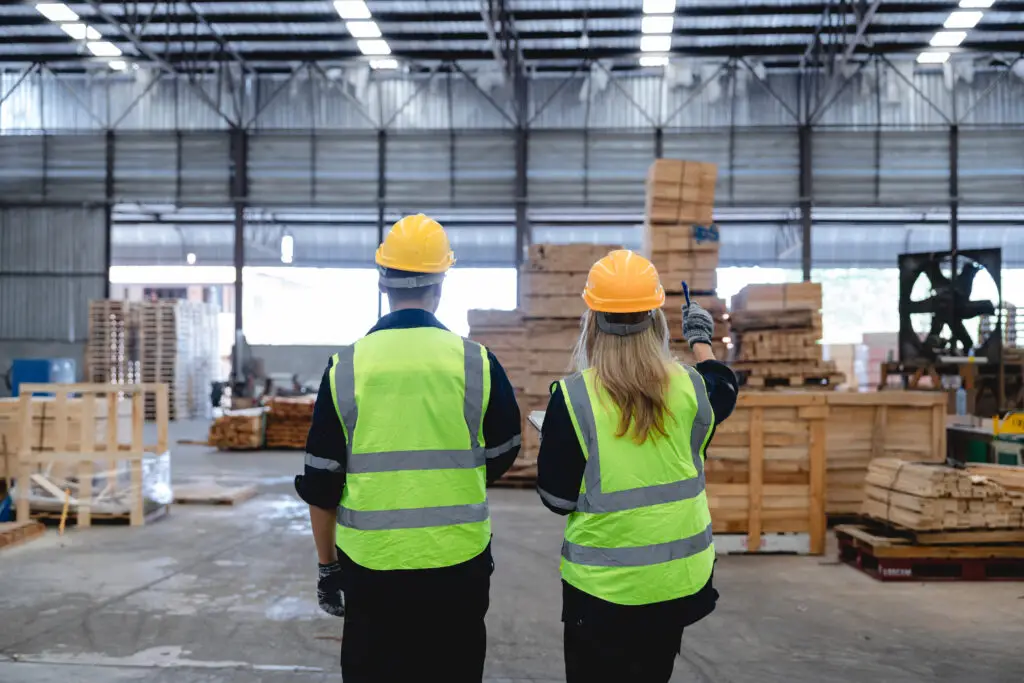
How do Better Packaging Inputs Improve Supply Chain Sustainability Outcomes?
At Millwood, we are not interested in talking about sustainable supply chain practices; we are committed to walking with each customer as a supportive, active growth partner, investing real resources to improve sustainability throughout the supply chain. The following real-world examples demonstrate this commitment.
Correcting the Spec, Building the Infrastructure
A global leader in kitchen, bath and plumbing products was spending over $60,000 per month on waste disposal, discarding tens of thousands of pallets annually while paying full price for replacements with each order. When Millwood analyzed their pallets in our ISTA-certified Packaging Science Lab, we identified a root cause beneath the presenting issue: the previous supplier had been providing the wrong pallet specification.
Millwood corrected the spec immediately. Then, hearing the customer’s ESG concerns, Millwood went further, purpose-building a dedicated pallet repair-and-return facility less than 10 miles from the customer’s warehouse. Opened, equipped and staffed in under three months, this facility repurposed approximately 96,000 pallets annually, keeping 4,800 cubic yards of wood waste out of landfills and delivering estimated annual savings exceeding $2 million.
This is what sustainable partnership can look like at its most effective. Not selling products for the sake of it, but actively working alongside customers to meet sustainability and production goals, even when that means constructing physical infrastructure to do so.
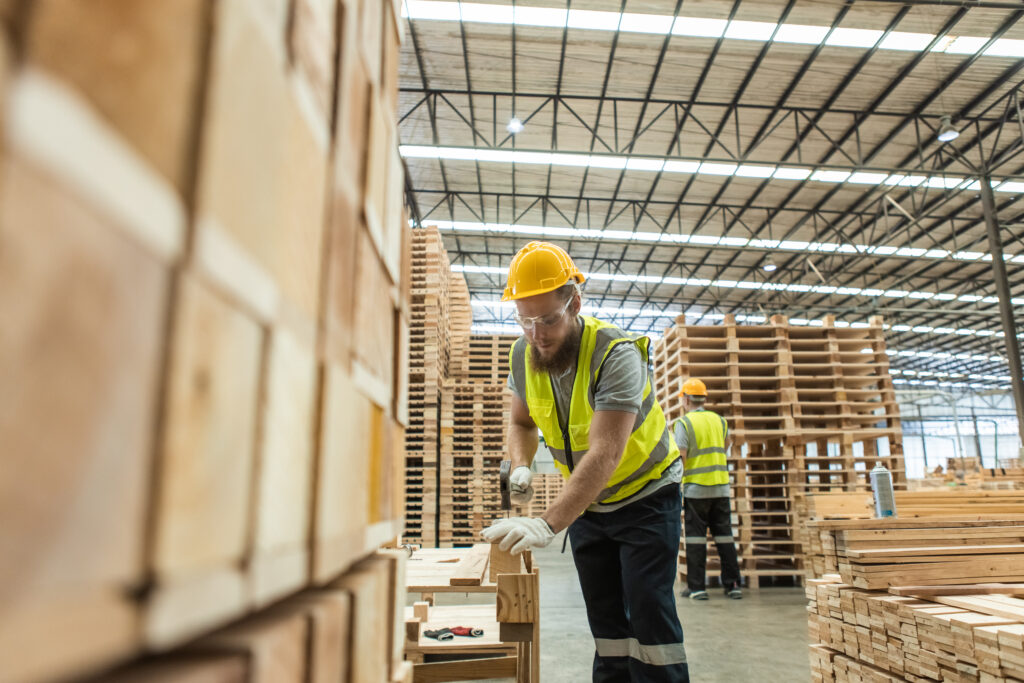
Turning Difficult Waste Into Recovered Value
Waste always catches up. An aerospace manufacturer was discarding custom steel-reinforced pallets after minimal use – pallets that cost over $20 each to produce – simply because no recovery system existed. Dumpsters filled. Disposal costs escalated. Valuable materials that could have been repaired were treated as scrap.
Some materials are especially difficult to work with. But Millwood treated this customer’s challenge as fuel to learn, adapt and develop new solutions. Millwood implemented a specialized repair-and-return program supported by Vendor Managed Inventory, invested in equipment that could handle the customer’s steel-reinforced designs and redesigned failure-prone components for greater durability.
The result: 3,473 specialized metal pallets repaired and returned to active service in the first year, over $1 million in verified annual savings, and a three-year strategic sourcing contract that continues to expand nationally.
The input changed. Sustainable outcomes followed.
Verifying What Already Works, Making It Scalable
Even companies already committed to sustainable practices need help identifying better packaging solutions. A leading solar panel manufacturer had designed its own pallet system and conducted internal field testing. The concept was sound, but the company lacked the engineering capabilities to validate performance across its network of manufacturing partners.
Working with the customer, Millwood’s engineering Team applied Packaging Science principles and advanced modeling tools to verify the design, confirm load capacity and identify optimization opportunities, providing the data-backed confidence needed for the customer to scale production nationwide.
Today, Millwood delivers 3 million board feet of pre-cut lumber monthly across their facilities, supporting their pallet design and ensuring consistent quality and strength at every one of their manufacturing partners.
Almost all companies can improve operational efficiency by optimizing their packaging solutions according to Packaging Science principles and testing through Millwood’s ISTA-certified Lab. This approach provides verifiable, real-world results that customers can rely on, not assumptions.
Stewardship as a Conviction, Not a Convenience
Why does Millwood invest so deeply in sustainable packaging solutions and pallet recovery systems? Because the company views sustainability not merely as good business, but as a responsibility to steward the resources and relationships entrusted to us.
Millwood is upfront about this cultural commitment, both internally and externally:
“Perfect stewardship calls us to cultivate not only the lives of individuals, but also the life of creation itself. We view sustainability as an act of care for future generations. By recycling millions of pallets, engineering reusable solutions and reducing waste in the supply chain, we participate in preserving the resources entrusted to us (Genesis 2:15). Our responsibility to the planet mirrors our responsibility to people; both deserve to be stewarded with diligence and respect.”
This conviction is what drives the continuous improvement documented in the 2026 Sustainability Report: the push from 42% to 59% supplier code of conduct participation, the expansion of compliance training from 154 to over 1,337 hours, the investment in electric forklift conversion, and the establishment of a comprehensive carbon baseline. These are not extraneous details; they are milestones in an ongoing commitment.
Packaging Principles Hold True
Better inputs produce better outputs. A proactive sustainability strategy leads to more efficient outcomes. Companies that invest in sustainable packaging solutions, validated by Packaging Science principles and tested under real-world conditions, consistently achieve results that reactive approaches cannot match: less waste, lower costs, stronger supply chains and measurable environmental progress.
A man reaps what he sows. Millwood has spent decades sowing operational partnership, creative problem-solving, scientific rigor and responsible stewardship into its supply chain relationships. The harvest is visible in 67 million pallets recycled annually, billions of pounds of material recovered across our network, hundreds of millions in documented customer savings and a growing network of long-term partnerships built on shared results.
For any organization evaluating its supply chain sustainability strategy, the question is not whether to pursue sustainability. The question is whether your current packaging inputs are designed to produce the outcomes you need.
Download Millwood’s full 2026 Sustainability Report to explore the data, metrics and commitments behind the lifecycle approach described in this article.
Connect with Millwood to learn how pallet recovery, Packaging Science and lifecycle management can support your operational and sustainability goals.