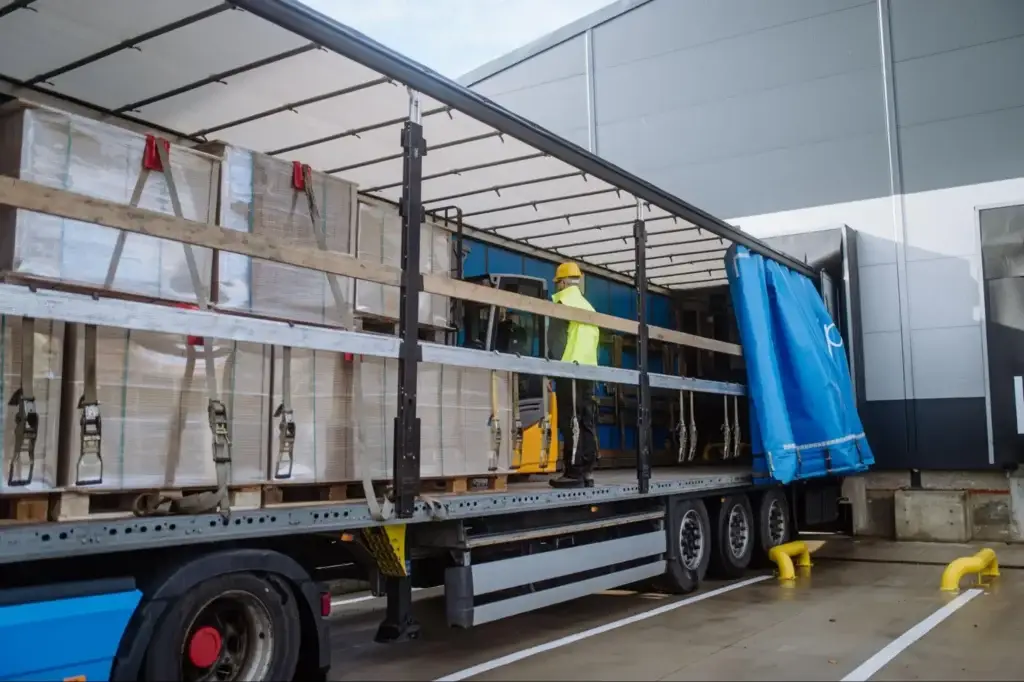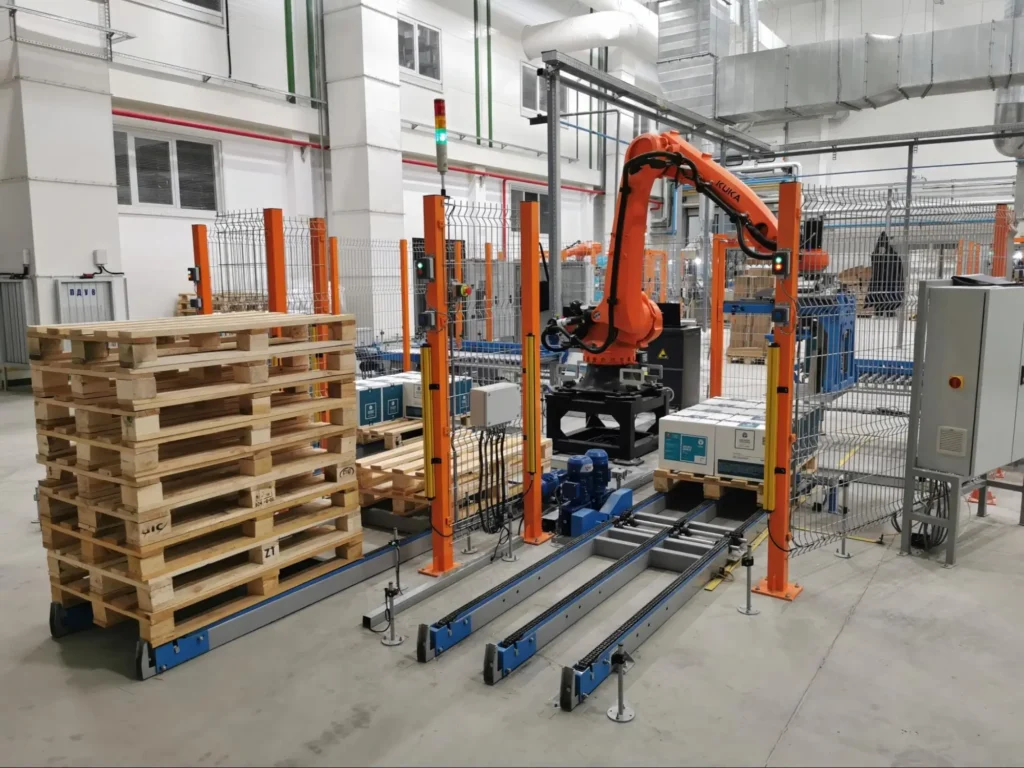
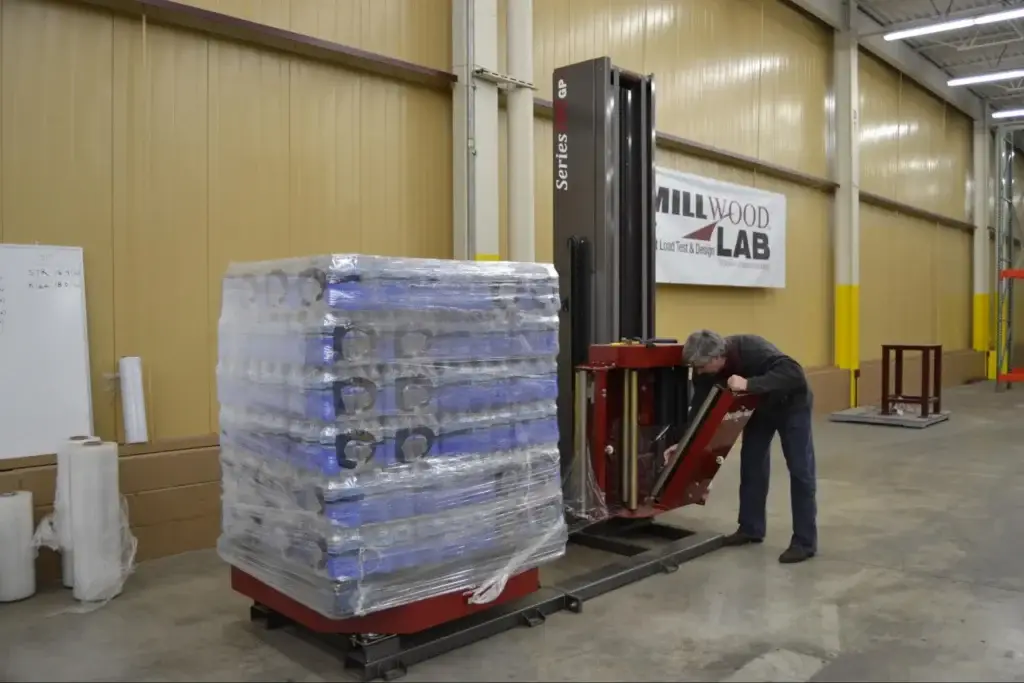
Total unit load maintenance treats stretch wrappers, conveyors, shrink systems and ergonomic equipment as part of the packaging system, because every machine at the end of the line shapes the unit load that leaves your dock. When end of line packaging equipment drifts out of specification, the problem rarely looks like a machine issue. It shows up as leaning loads, freight claims and ASRS rejections, with the pallet often taking the blame. Routine maintenance, detailed records and testing in the ISTA-certified Millwood Lab can confirm whether current systems are producing stable, consistent unit loads before you budget for new equipment.
When a pallet load arrives damaged, leans inside a trailer or gets rejected at an automated storage system, the pallet usually takes the blame. In many cases, the real cause sits much earlier in the process. The stretch wrapper, conveyor or shrink system that built and secured the unit load may have drifted out of specification weeks ago without anyone noticing.
As automated warehousing raises the bar for pallet precision, the role of end of line packaging can no longer be an afterthought.
Traditional maintenance asks whether a machine is running. Total unit load maintenance asks a more useful question: Are the systems that prepare your loads for transit still producing the results you paid for? This perspective treats end of line packaging equipment as part of the packaging system itself, because every unit load reflects the condition of the machines that finalized it. The definitions below build on Millwood’s guide to packaging and pallet terminology.
What Does Total Unit Load Maintenance Actually Mean?
Traditional equipment maintenance focuses on the machine: Is it running? Is anything broken? Total unit load maintenance widens that view. It treats end-of-line packaging equipment as part of the packaging system itself because every machine at the end of the line shapes the final load that leaves your dock. Here’s some packaging terminology to make sure we’re on the same page.
- Unit Load: A group of products assembled on a single pallet or platform and secured so it can move, store and ship as one piece.
- End of Line Packaging: The final stage of production, where finished products are palletized, wrapped, strapped or otherwise secured for storage and shipment. Common equipment includes stretch wrappers, shrink wrappers, pallet conveyors and ergonomic lifting equipment.
1. Why End-of-Line Packaging Systems Are the Hidden Variable in Load Performance
Most equipment problems at the end of the line do not announce themselves. A stretch wrapper rarely stops running because its film tension has drifted a few percent. A conveyor keeps moving even when its rollers fall slightly out of alignment. The machine looks healthy, so no one checks it.
The consequences, however, appear elsewhere:
- Wrap patterns vary from one pallet to the next.
- Product arrives damaged and freight claims climb.
- Automated systems reject loads at the point of entry.
- Loads bulge or overhang and fail dimensional checks.
- Loads shift or lean in transit because containment force has dropped.
Because these failures surface downstream, people often blame the pallet, the carrier or the product. Meanwhile, the actual cause (a machine that no longer applies wrap or moves loads consistently) goes unaddressed.
In other words, when a stretch wrapper’s film tension drifts, the failure rarely shows up as an obvious machine problem. It shows up disguised as a load problem.
This matters most in automated environments, and especially those in which unit load ASRS requirements apply. An automated storage and retrieval system (ASRS) can reject a load for dimensional errors as small as a quarter inch.
That means, for ASRS pallet tolerance requirements, precision must start long before a load reaches the rack. Given that many large distribution centers run wrapping equipment directly on the conveyors that feed their storage systems, a single drifting machine can affect every load that enters the building.
Automated Storage and Retrieval System (ASRS)
A computer controlled system that automatically places loads into storage locations and retrieves them when needed. These systems depend on consistent load dimensions and stability to operate without errors.
2. From Optional Purchase to Non-Negotiable Infrastructure: Rethinking Equipment as Part of the Unit Load
Procurement teams often view end-of-line equipment as a capital line item: a single purchase to approve, install and depreciate. Operations teams see it as a production tool that needs to keep pace with throughput. Both views are at risk of missing its larger role as part of the unit load.
Automation accelerates this shift, and not just to satisfy ASRS requirements. Practically every step of supply chain automation depends on consistency, and manual wrapping or neglected equipment can introduce variation that most automated handling cannot absorb.
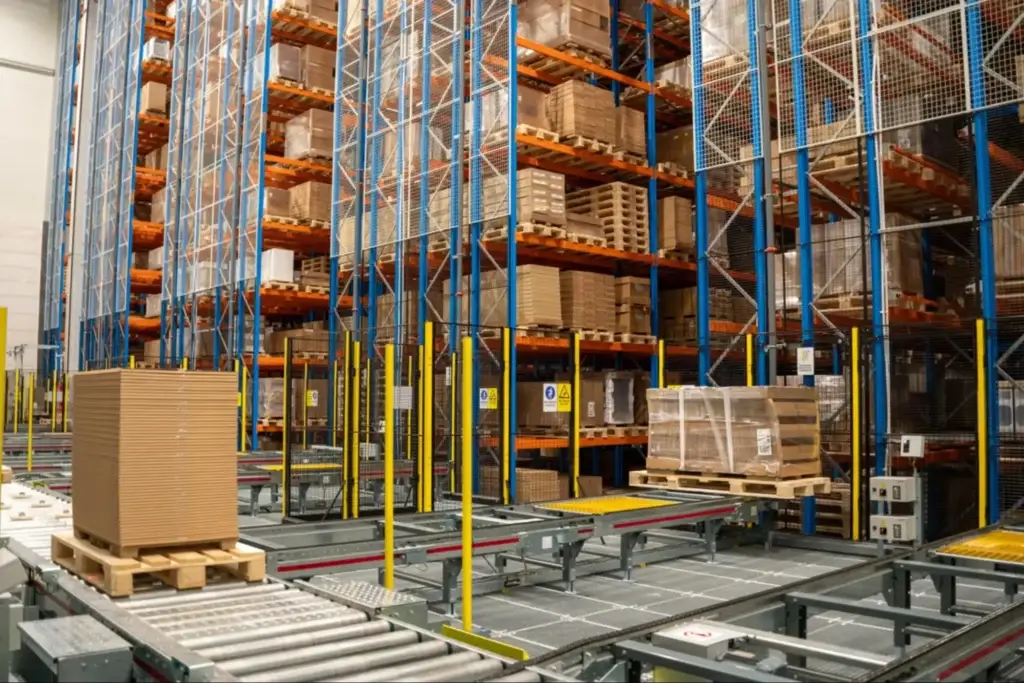
In that environment, a stretch wrapper is more than just a tool to apply film. It becomes the precision layer that protects load stability from the dock to the storage rack.
For procurement officers, this means the purchase price is only the first line of the equation. A complete view of total cost of ownership also includes:
- Product damage and the freight claims that follow.
- Downtime and repair costs from deferred maintenance.
- Rejected unit loads and slowdowns at automated storage systems.
- Rework, rewrapping and handling time for loads that fail inspection.
- Film consumption, which can climb when prestretch or tension settings drift.
An overlooked or lower priced machine can quickly become the more expensive option if it quietly produces inconsistent unit loads. A well configured and maintained system, by contrast, can help offset its own cost through reduced film use and fewer damage claims over time.
Total Cost of Ownership (TCO):
The full cost of equipment over its working life, including purchase, installation, operation, maintenance, consumables and the downstream impact of the unit loads it produces.
3. Getting More from What You Already Own
End-of-line equipment represents a significant investment. Yet a surprising amount of performance loss does not come from equipment failure. It comes from how the equipment runs day to day. Common examples include:
- Film settings that use more material than the load actually needs.
- A conveyor set up for a product mix that has changed since installation.
- A stretch wrapper running a film tension that no longer matches the load profile.
- Wrap patterns that no one has recalibrated after pallet sizes, load heights or products evolved.
Millwood sees these situations regularly. Many customers who reach out already own equipment and simply want to lower shipping costs or to reduce damage. Often, the fix is not a new machine but a conversation about how the current system runs, followed by testing to confirm whether the setup truly fits the operation.
That perspective has deep roots. Millwood’s history in end-of-line packaging traces back to Liberty Industries, which began building its own stretch wrapping equipment around 1984. Engineers in that lineage developed patented stretch wrapping techniques that, once the patents expired, became widely used across the industry.
Millwood acquired Liberty Industries about two decades ago and re-branded it as Liberty Technologies, which serves as the product brand for all of its end-of-line packaging equipment. That institutional knowledge of how these machines work (and where they fail) now informs how Millwood diagnoses application issues and recommends the right fit for each unit load, regardless of brand.
4. A Practical Maintenance Framework for End-of-Line Packaging Equipment
Consistent packaging equipment maintenance protects both the machine and the loads it builds. The following practices apply to stretch wrappers, pallet conveyors, shrink systems and ergonomic equipment.
1. Know Your Warranty Terms
Know what your warranty covers and when coverage ends, then schedule a full inspection before the term expires so you can file any claims in time. For stretch wrappers, pay close attention to coverage on the film carriage, prestretch rollers and turntable drive, since these components carry the heaviest workloads.
2. Follow a Routine Maintenance Schedule
Falling behind on routine tasks allows small issues to build into costly failures and inconsistent loads. Use the chart below as a starting point, then adjust it based on your manufacturer’s recommendations and production volume.
Not sure where to start? Contact Millwood to schedule an inspection with a service technician and get help maintaining or repairing your end-of-line packaging equipment.
Sample Maintenance Schedule for End of Line Equipment: A Simple Guide
| Equipment | Daily | Weekly | Monthly | Annually |
| Stretch Wrappers | Clean film path and rollers; check film tension and wrap pattern | Inspect prestretch rollers, belts and chains; test emergency stops | Lubricate bearings and drives; calibrate tension settings | Professional inspection of gear drives, turntable and electrical systems |
| Pallet Conveyors | Clear debris; watch for loads drifting off center | Check roller alignment and belt tracking | Inspect drive chains, sensors and motors | Full alignment review; replace worn rollers |
| Shrink Wrappers | Check seal quality and film alignment | Clean sealing bars and heat tunnel surfaces | Verify temperature settings and conveyor speed | Inspect heating elements and electrical connections |
| Ergonomic Equipment | Test controls; check for air leaks or unusual movement | Inspect springs, hoses and fittings | Lubricate moving parts; verify load capacity settings | Professional safety inspection |
3. Work with a Qualified Maintenance Partner
Routine checks are essential, but some maintenance needs go beyond what your team can handle in-house. Look for a service provider with experience working on your equipment brand and model. Ask what their preventive maintenance program includes, whether they can source replacement parts and how they handle unexpected repairs.
Millwood provides preventive maintenance and repair services for Wulftec, Orion, Lantech and other stretch wrapper brands, helping your team address issues that routine checks may miss.
4. Keep Detailed Maintenance Records
Log every inspection, adjustment, repair and part replacement. Over time, these records reveal patterns, such as a conveyor section that drifts out of alignment every few months or a stretch wrapper that needs frequent tension adjustments. Good records also support warranty claims and add value if you ever sell the equipment.
5. Keep Spare Parts on Hand
Stock the parts that wear out most often, such as prestretch rollers, conveyor belts, sealing elements and air fittings. Many manufacturers provide a recommended spare parts list. A few essential packaging equipment parts on the shelf can turn a week of downtime into a quick repair.
Need replacement parts or help deciding what to keep on hand? Contact Millwood’s parts and service team for help finding the right parts for your packaging equipment.
6. Know When to Upgrade
Well maintained equipment can run for decades. However, when repair costs begin to outpace the value of the machine, or when equipment can no longer keep up with automation or new load profiles, it may be time to explore new options. Millwood’s stretch wrapping machines, shrink wrapping machines, pallet conveyor systems and ergonomic equipment offer a starting point, and the Team can help identify the right fit for your operation.
5. How Packaging Science Validates the System
Maintenance keeps equipment running. Testing confirms that each unit load the equipment secures actually performs. Millwood’s Packaging Science approach looks at the pallet, the product, the wrap and the equipment as one connected system.
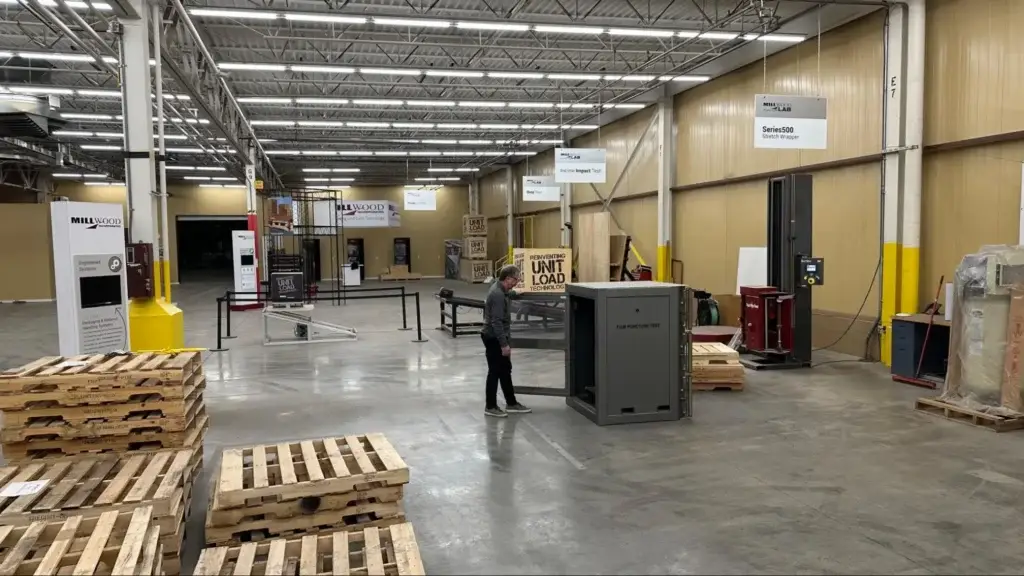
The Millwood Lab holds certification from the International Safe Transit Association (ISTA), which sets widely used standards for package performance testing. In this ISTA-certified Packaging Science facility, the Team recreates the conditions a load faces in real distribution, including vibration, compression and impact. Instead of discovering in the field that a wrap pattern falls short, you can see how a load holds up on a long trip by truck or rail before it ever leaves your dock.
This testing closes the loop between packaging equipment maintenance and load performance. It can confirm whether a current setup works, identify adjustments that reduce film use or damage and show whether new equipment would truly improve results.
Finalize Every Load as Part of a Well-Maintained System
The systems that build your loads deserve the same attention as the loads themselves. When stretch wrappers, conveyors, shrink systems and ergonomic equipment stay properly configured and maintained, every unit load can leave your facility stable, consistent and ready for the demands of automated handling.
Connect with Millwood to evaluate how your end of line systems fit into your total unit load strategy.
Millwood helps operations connect every part of the system: pallets, protection, equipment, all working as one. Explore Millwood’s End of Line Packaging Systems.