Pallet terminology matters more than most people realize. The language used in a supplier conversation directly shapes what gets delivered, what it costs and how well it performs. This article covers eight essential terms organized by where they are in the unit load system, with context for why each one affects real purchasing and operational decisions.
Pallet terminology shows up everywhere in sourcing conversations. You’ve probably seen it pop up in RFQs, supplier emails, spec sheets and internal reviews. Sometimes they feel like a second language that you’re trying to pick up while also juggling multiple other responsibilities.
A term like “dunnage” appears in a quote, or a supplier references “dynamic load capacity,” and suddenly decisions are being made around language that has not been fully explored. It’s a common problem that we see. The ripple effect can be frustrating, impacting budget, timeline and the safety of your Team Members.
This article covers the parts of a pallet and the broader packaging terms that matter most when sourcing, specifying or evaluating pallets to cut down on such frustrations. Rather than acting as an alphabetical glossary, these eight terms are organized by where they live in the unit load system: the pallet structure, the materials securing the load and the system-level concepts that tie it all together.
The Pallet: What You’re Actually Looking At
Understanding the parts of a pallet is the foundation for every sourcing conversation that follows. These three terms describe what a pallet is made of and how its structure determines where and how it can be used.
Stringer vs. Block
The most fundamental structural distinction in pallet terminology is the difference between two of the most common pallet types: stringer pallets and block pallets.
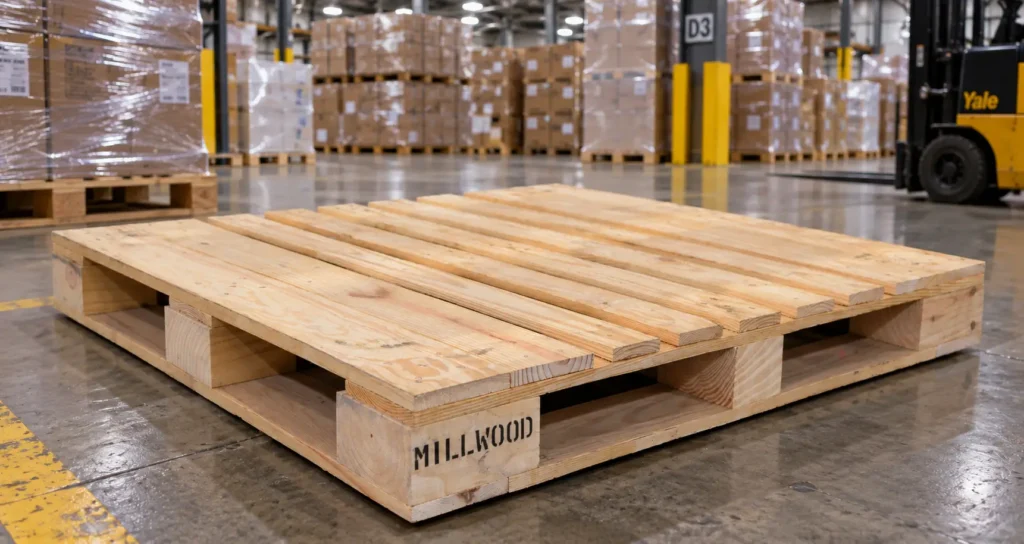
A stringer pallet uses long, narrow boards (aptly called stringers) running between the top and bottom deck boards to provide structural support. The 48×40 GMA pallet is one of the most widely recognized stringer pallet formats in North America.
In contrast, a block pallet replaces those stringers with solid blocks at key connection points, creating a frame that allows forklift access from all four sides.
Think about it this way. When a warehouse requires forklifts to approach pallets from any direction (common in automated storage and retrieval systems), block pallets eliminate the need to reposition loads before engagement.
When an operation moves pallets in a single direction along a conveyor or through standard dock doors, stringer pallets often deliver the structural strength required at a lower cost. One current example of how this structural choice shapes purchasing requirements at scale is the growing adoption of block pallets for Costco compliance and ASRS environments.
What is the Difference Between a Stringer vs Block Pallet?
A stringer pallet uses long boards (stringers) for structural support and typically offers 2-way forklift entry. A block pallet uses solid blocks at connection points and allows 4-way entry from all sides. The choice between them affects equipment compatibility, storage layout and cost.
Deck Boards
Deck boards are the flat boards forming the top and bottom surfaces of a pallet. Top deck boards support the product. Bottom deck boards make contact with racking, conveyor systems or the warehouse floor.
Board thickness, spacing and material quality all affect how a pallet performs under load. Wider boards distribute product weight across more surface area. In contrast, thinner boards reduce material cost, yet may flex or crack under concentrated weight. The Millwood Pallet Grading Guide outlines how deck board condition factors into quality assessment and grading decisions.
When evaluating a pallet quote, deck board specifications reveal whether the pallet was designed for your product weight and handling environment or built to a generic standard that may underperform. A spec sheet listing deck board dimensions is telling you exactly how much support your product will receive. Read it accordingly. That line item is not filler, but the difference between a pallet that does its job quietly for months and one that fails under load on a Tuesday afternoon when your Team is counting on it.
What is a Deck Board?
A deck board is any flat board forming the top or bottom surface of a pallet. Top deck boards support the product; bottom deck boards contact racking or the floor. Board thickness, spacing and material quality determine how a pallet performs under load.
4-Way Entry vs. 2-Way Entry
Entry refers to the number of sides from which a forklift or pallet jack can access the pallet. As the names suggest, a 4-way entry pallet allows access from all four sides, whereas a 2-way entry pallet restricts access to two opposite sides. Hybrid/partial 4-way pallets also exist, with notches cut out on the runners of a 2-way pallet.
This distinction affects warehouse flow directly. Operations with narrow aisles, cross-docking requirements or high-density racking often require 4-way entry to maintain efficiency. A facility that moves pallets in a single direction through a linear process may find 2-way entry sufficient and more cost effective.
If a pallet’s entry configuration does not match the handling environment, the result is repositioning, slowdowns and increased risk of product or equipment damage. That fifteen seconds of perhaps unnecessary repositioning per pallet multiplies fast across a full shift. Millwood’s approach to pallet configuration accounts for entry requirements as one of several design variables aligned to each customer’s operation.
What is the Difference Between 2-Way and 4-Way Entry?
A 4-way entry pallet allows forklift or pallet jack access from all four sides. A 2-way entry pallet restricts access to two opposite sides. Entry configuration determines how efficiently pallets move through a facility and whether repositioning becomes necessary.
Load Securement: Keeping Everything in Place
The pallet is only part of the equation. Products that keep the product stable during transit and storage are equally critical to the success of the shipment. These terms around load securement describe the materials that hold everything together once the product is on the pallet. If the pallet is the foundation, securement is the promise that what you shipped arrives the way you sent it.
Strapping
Strapping is flat banding material (steel or plastic) applied around or across a unit load to hold products firmly to the pallet surface. It prevents lateral shifting and vertical separation during transport.
The choice between steel and plastic strapping depends on load weight, handling conditions and product sensitivity. Steel strapping offers higher tensile strength for heavy or rigid loads. Plastic (polypropylene or polyester) strapping provides flexibility, corrosion resistance and safer handling for lighter applications.
Strapping is the first line of defense against load shifting in transit. When it is underspecified, products arrive damaged. When it is overspecified, cost increases without corresponding benefit. Either way, it’s your phone that rings when something with strapping goes wrong. Knowing what your load actually demands is what makes all the difference.
What is Strapping?
Strapping is flat banding material (steel or plastic) applied around or across a unit load to hold products firmly against the pallet surface and prevent shifting during transport.
Stretch Film vs. Shrink Film
Both stretch film and shrink film secure products on a pallet, yet they work through entirely different mechanisms and serve different purposes.
Stretch film is an elastic plastic film wrapped around the unit load under tension. It clings to itself through elastic memory and holds the load together. Application can be manual or machine-applied depending on volume and consistency requirements.
Shrink film is a plastic film applied loosely over the load and then heated until it contracts tightly around the product. It creates a sealed enclosure offering weather protection, tamper evidence and load stability simultaneously.
Think about it this way. Stretch film is the everyday workhorse for most warehousing and distribution environments. Shrink film is the choice when environmental exposure, product sensitivity or tamper evidence becomes a priority. Knowing which one your operation actually needs prevents overspending on protection that is unnecessary or underprotecting loads that demand more.
The Bigger Picture: How It All Works Together
Individual terms gain their full meaning when understood as parts of a larger system. These three concepts connect the pallet, the product and the securement materials into a single engineered solution.
Dunnage
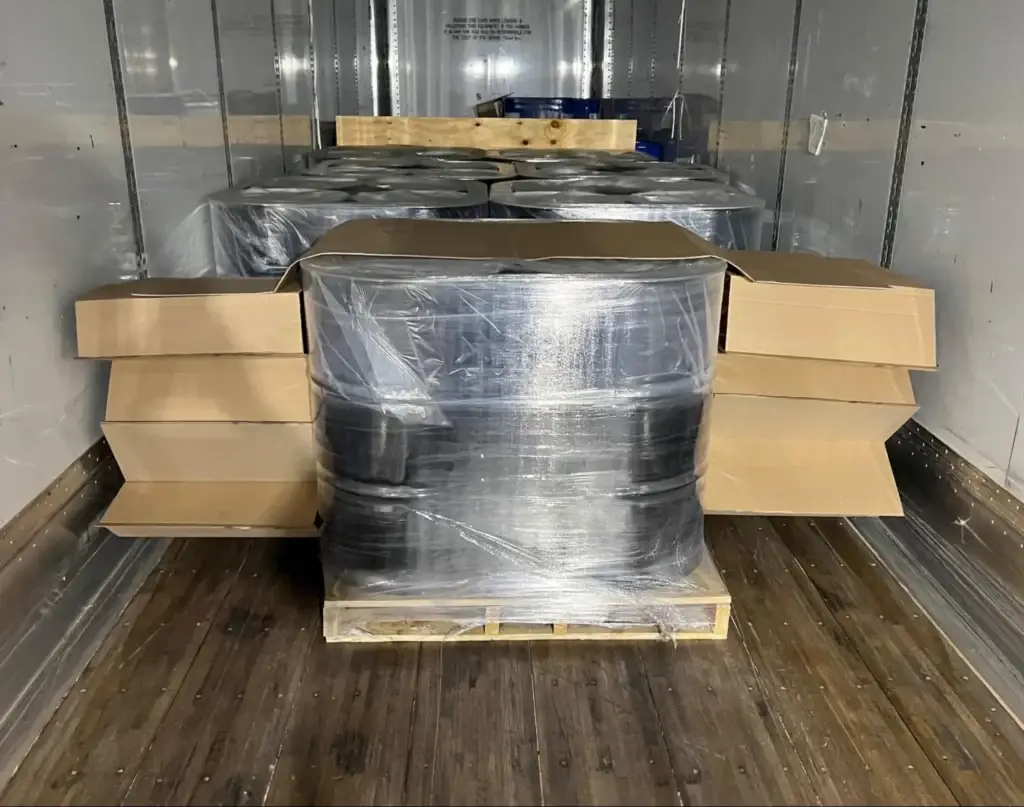
Dunnage refers to any material used to fill voids, cushion products or prevent movement within a shipment. It is the protection that lives inside the load: between products, between layers, between the goods and the container walls. Examples include airbags inflated between pallets in a trailer, corrugated void fillers placed between product layers, foam inserts protecting fragile components and dunnage wood supporting heavy machinery during transit.
Dunnage deserves particular attention because it is often the variable between a shipment arriving intact and one generating a damage claim. When product shifts inside a container because internal support was insufficient, the cost extends beyond the damaged goods: rework, replacement orders, strained customer relationships and eroded confidence in the supply chain. For the procurement professional who sourced that shipment, it means a difficult conversation that proper dunnage specification could have prevented entirely.
Millwood’s approach to dunnage reflects a broader philosophy: the pallet is one component of a complete packaging system, and every element in that system needs to work in concert. In our experience, a collaborative redesign of the full packaging system (including dunnage) has reduced costs while elevating safety.
What is Dunnage?
Dunnage is any material used inside a shipment to fill voids, cushion products or prevent movement during transit. Common examples include airbags, corrugated void fillers, foam inserts and blocking wood. Dunnage protects products from the shifting and impact that external securement alone cannot prevent.
Unit Load
The unit load is the complete assembled system: pallet, product, securement and dunnage working together as a single movable entity. It is the concept that connects every other term in this article.
Understanding the unit load concept is what transforms pallet terminology from a collection of separate definitions into a framework for decision-making. Each choice (stringer or block, stretch or shrink, what type of dunnage to specify) affects the performance of the whole system. Once this clicks, supplier conversations start to feel less like a foreign language and more like a system you can navigate with confidence.
The most common procurement challenge is optimizing individual components in isolation rather than engineering the unit load as a cohesive system. A pallet meeting its own spec perfectly can still fail if the strapping, film or dunnage working alongside it is mismatched to the application. Millwood’s Packaging Science approach evaluates the full unit load to identify where individual choices create or prevent risk across the system.
What is a Unit Load?
A unit load is the complete assembly of a pallet, the product it carries, the securement materials holding everything in place and the dunnage protecting the contents. When these components are engineered to function as an integrated system rather than selected independently, the result is a load that moves safely, stores efficiently and arrives intact.
Load Capacity: Static, Dynamic and Racking
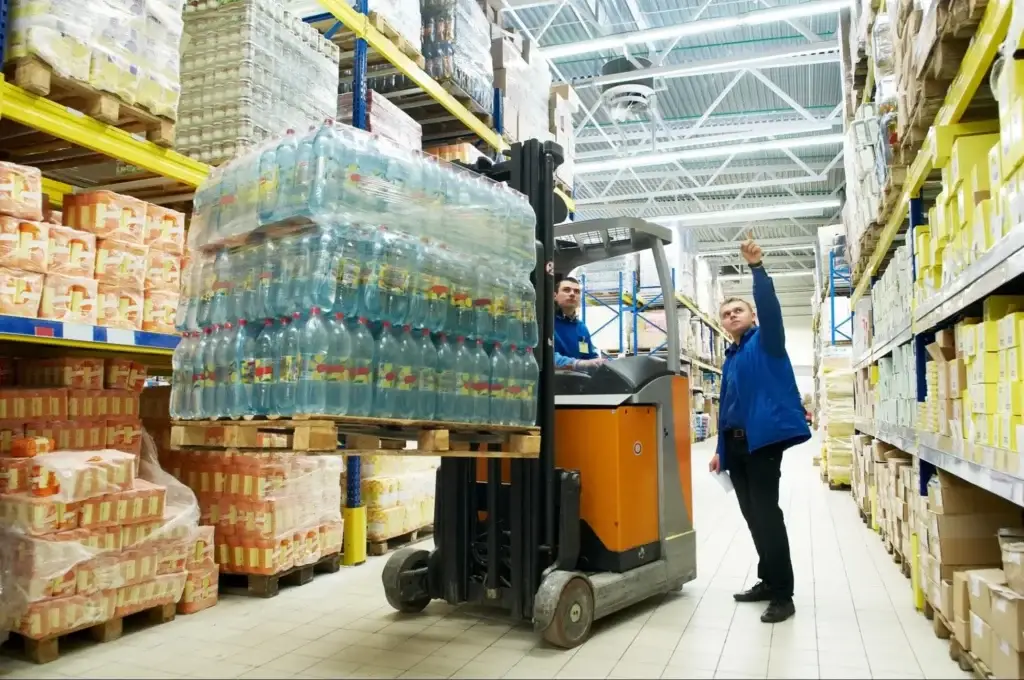
Now, for application: load capacity. Load capacity is not a single number. Pallets carry three distinct capacity ratings, and confusing them creates operational risk that compounds unnoticed until something fails.
- Static load capacity is the maximum weight a pallet supports while stationary on a flat surface.
- Dynamic load capacity is the maximum weight it supports while being moved by a forklift, pallet jack or general transit.
- Racking load capacity is the maximum weight it supports while spanning racking beams with no center support beneath the pallet.
Racking capacity is almost always the lowest of the three because the pallet bears weight only at its edges. A pallet rated for 2,500 pounds in dynamic applications may support only 1,500 pounds when racked. Operations that specify pallets based on dynamic capacity alone risk structural failure when those same pallets enter racking systems.
This is where the cost equation becomes personal. A pallet that costs less upfront yet cannot safely support the load in racking creates risk that compounds over time: product damage, safety incidents and operational shutdowns that affect everyone on the floor. The procurement officer who saved pennies per pallet is now fielding calls about a collapsed load that shut down a line for half a shift. Those ”saved” pennies actually cost more than they were worth.
In contrast, a recycled pallet specified correctly for the application performs reliably, as Millwood’s recycled pallet programs demonstrate at scale. A new pallet specified incorrectly does not. The variable is not whether the pallet is new or used. It is whether the pallet was correctly configured for the environment in which it operates.
What does Capacity Mean in Packaging Terminology?
Load capacity is the maximum weight a pallet can support under specific conditions. Static capacity applies when stationary. Dynamic capacity applies when being moved. Racking capacity applies when spanning racking beams with no center support. Racking capacity is almost always the lowest rating and the most commonly overlooked in procurement.
Speak the Language. Make Better Decisions.
Here’s a complete list of the terms discussed in this article, for your quick reference:
- Stringer vs. Block: The structural frame of the pallet. Stringers use long boards; blocks use solid pieces at connection points. Determines forklift access and cost.
- Deck Boards: The flat top and bottom surfaces. Thickness and spacing determine load support.
- 4-Way vs. 2-Way Entry: How many sides a forklift can access. Affects warehouse flow and efficiency.
- Strapping: Flat banding (steel or plastic) securing product to the pallet. Prevents shifting in transit.
- Stretch Film vs. Shrink Film: Stretch wraps under tension; shrink seals with heat. Different tools for different protection needs.
- Dunnage: Internal void-fill and cushioning materials that prevent movement inside the shipment.
- Unit Load: The complete system of pallet, product, securement and dunnage working as one.
- Load Capacity: The weight a pallet supports under three conditions: stationary (static), in motion (dynamic) and in racking (racking).
Every term in this article connects back to a single idea. When the parts of a pallet and the broader packaging system are understood as a connected whole, better questions emerge, quotes become easier to evaluate and decisions protect the operation over time. You do not need to become a pallet engineer. You do need vocabulary to ask the right questions and the confidence to recognize a good answer when you hear one.
Millwood helps customers put this vocabulary into action. From pallet design and configuration to load testing and securement solutions, the Millwood Team works with each customer’s specific operation to find what fits rather than defaulting to a generic answer.
Connect with Millwood to put these terms into action and find the right pallet for your operation.
See how pallet terminology translates into real design decisions with Millwood’s Packaging Science approach.