Products and Services
Pallets
Crates
Load Securement & Protection
Lumber & Panels
End of Line Packaging Systems
Services
Industries
Operating under a culture of Perfect Stewardship, Millwood is committed to efficiency without compromise to our environment. From the way that our trees are harvested to our innovative line of sustainable packaging products and numerous recycling programs, we will work with you to reduce waste and meet your sustainability goals. Partner with us for sustainable solutions that support your business while protecting our planet.
Millwood is committed to delivering the right pallet to you on time every time. This means understanding you specific application and custom engineering a pallet solution that works for you. Part of that process is considering:
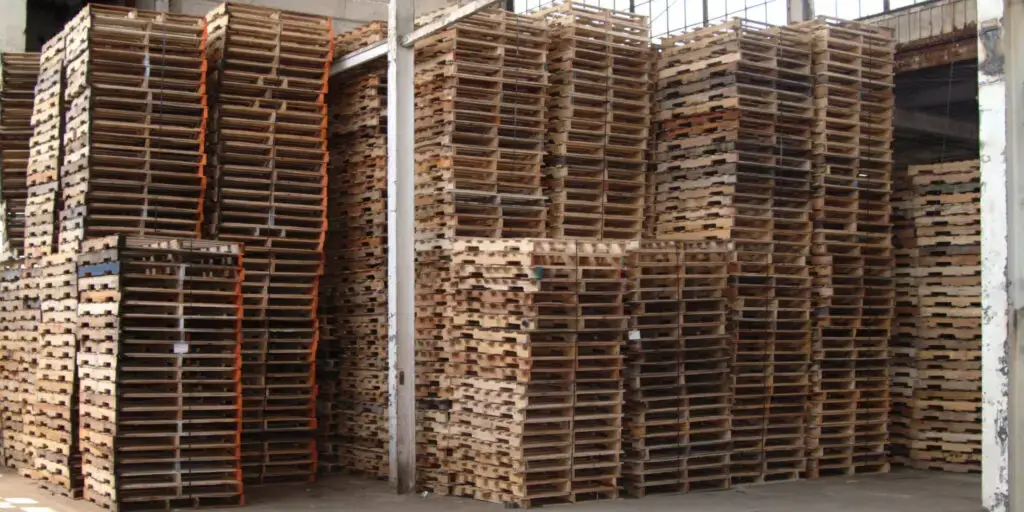
Pallets are at the heart of Millwood’s business. As a leading provider in the U.S., we process 200 million pallets annually and can support small and large national accounts. Equipped with national and regional sales teams, Millwood can provide total customer support.
As your preferred strategic partner, we assist you in moving your products safely, cost effectively and efficiently throughout the supply chain. Through our strategic manufacturing footprint and 250+ strategic partners across North America, we provide a comprehensive selection of high-quality, sustainable pallets delivered on time, every time.
With more than 40 years’ experience providing new and recycled pallets, Millwood understands that customers demand more from their suppliers. Our customers expect consistent quality, on-time delivery, competitive pricing, custom design options and a provider that operates safely and sustainably. Millwood delivers on each of those expectations.
We provide custom pallet design solutions tailored to your application, ensuring optimal protection, efficiency and cost savings. Our expert team designs pallets that streamline your operations and reduce product damage.
Our pallet recycling services help you reduce waste, cut costs and support sustainability by repairing, reusing or responsibly recycling old pallets. Keep your operations efficient while minimizing environmental impact.
Track the quantity and condition of various managed assets such as pallets, tier sheets, plastic dunnage and airbags with PalletView, our proprietary web-based application.
Download 5 Ways Strategic Sourcing Impacts Your Bottom Line to discover proven steps for reducing risk, eliminating hidden waste, and building long-term confidence in your pallet and packaging program.
At Millwood, our role is to make your supply chain stronger, simpler, and easier to manage. Whether you need pallet optimization, crating solutions, load securement systems, or a full packaging review, we work with you to understand your goals and build solutions that support your business. Our approach is rooted in the Millwood SURE Process — a clear, repeatable framework that keeps your priorities at the center of every decision we make.
Study your operations, product flow, challenges, and goals to see the full picture.
Understand / Engineer solutions built around your exact needs, supported by data and real-world performance insights.
Review / Verify with testing, field validation, and adjustments to ensure reliability and consistency.
Expand (Scale) successful results across sites, networks, or product lines for long-term efficiency and measurable value.
Millwood SURE helps teams gain clarity, reduce complexity, and build supply chains that perform with confidence.
The most common wood pallet size in North America is 48 inches by 40 inches (48” × 40”). This size, often called a GMA pallet, is widely used in grocery, retail, and general distribution supply chains. Other standard wood pallet dimensions include 42” × 42”, 48” × 48”, and 36” × 36”. Pallet height typically ranges from 5.5 to 6 inches, depending on construction style and load requirements.
While pallets can be built to custom specifications, the following sizes are commonly used in North America:
42” × 42” – Frequently used in beverage distribution
48” × 48” – Heavy-duty or export applications
36” × 36” – Light industrial or space-constrained environments
Standard wood pallets generally measure 5.5 to 6 inches tall, depending on:
Stringer vs. block construction
Deck board thickness
Load rating requirements
Selecting the correct pallet size affects more than footprint. Dimensions directly impact:
Warehouse rack compatibility
Trailer cube utilization
Forklift and conveyor clearance
Automated handling systems
Product stability and damage rates
Reuse and recycling efficiency
For high-volume distribution networks, pallet sizing should align with facility design, transportation strategy, and material handling equipment.
Certain industries rely on specific pallet footprints to match equipment and distribution models:
Grocery & retail – 48” × 40”
Export shipping – 48” × 48”
Automotive & manufacturing – Often custom-sized
Using standardized sizes can simplify reverse logistics and pallet recycling programs.
Custom pallet dimensions may be appropriate when:
Products overhang standard footprints
Automated systems require precise spacing
International shipping requirements differ
Closed-loop reuse systems are in place
In these cases, pallet configuration should be engineered to match the load profile and handling environment.
A pallet is a flat transport platform that allows products to be moved safely and efficiently by forklifts, pallet jacks or automated systems.
Pallets are the foundation of modern logistics. They protect products, standardize handling across industries and allow for faster, safer shipping. Without pallets, supply chains would be slower, less organized, and more costly.
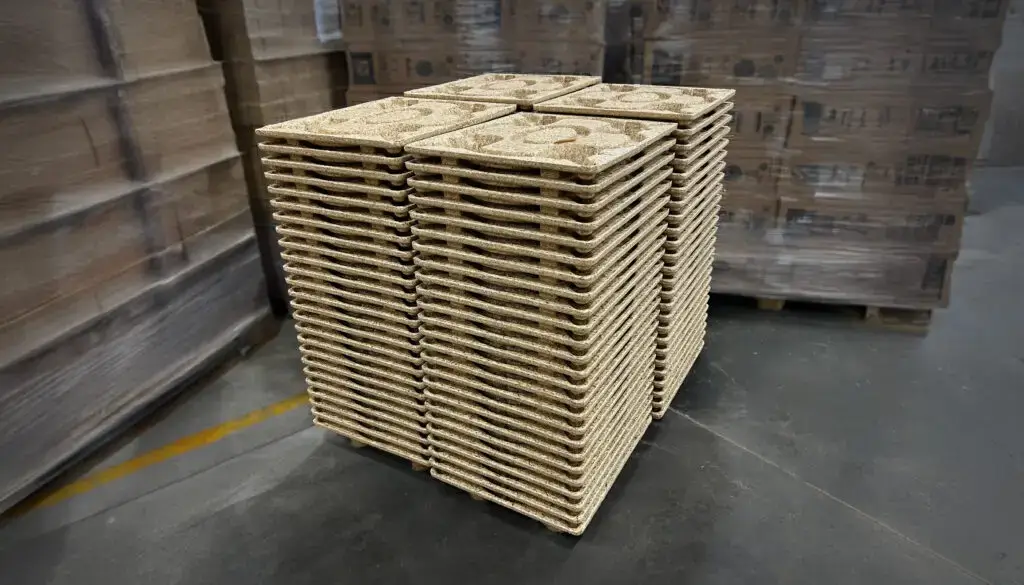
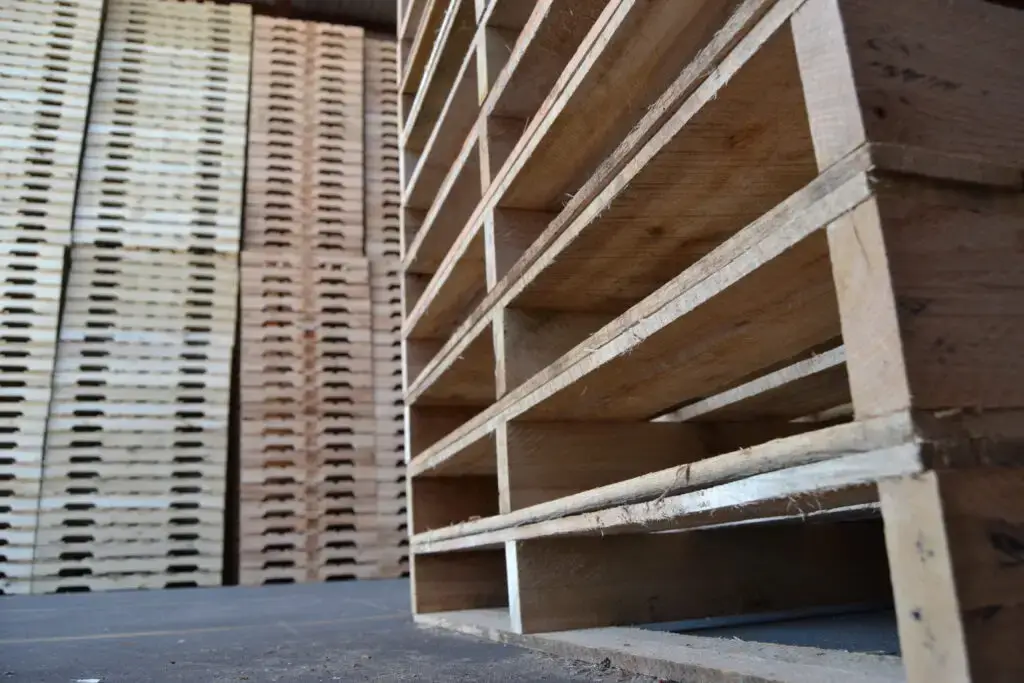
Millwood offers a complete range of pallet solutions, including wood, recycled, pressed-wood, corrugated, plastic and metal pallets.
Each type has unique benefits: wood pallets are durable and customizable, recycled pallets support sustainability goals, pressed-wood pallets are nestable and export-ready, corrugated pallets are lightweight and cost-saving, plastic pallets are reusable and hygienic and metal pallets handle extremely heavy loads. This variety ensures we can match the right pallet to your application.
Choosing the right pallet depends on your products, shipping requirements and budget.
Millwood makes this easy by offering custom design services, sustainability-focused recycling programs and tools like PalletView to track performance. Our team works with you to evaluate load capacity, industry regulations, handling methods and cost goals. Whether you need a standard 48×40 wood pallet or a custom-engineered solution, we’ll help you find the best fit.