
Myth versus Fact: Pallet Edition

This Friday the 13th, take care not to add to your bad luck! Be careful not to break any mirrors, step under ladders or let a black cat cross your path.

Of course, we don’t really believe that. Now, some people may believe that wearing their sports team’s jersey while eating ice cream can bring a team to victory, but for the most part, people recognize that most superstitions come from old wives tales rather than any legitimate science. 

And yet, we still struggle to shed those preconceived notions! 

So in honor of the “unluckiest” day of the year, we thought we’d share a few of our own old wives’ tales about the pallet industry.

  1. Softwood pallets aren’t as sturdy as hardwood pallets
    This is patently false.  Softwood isn’t labeled because it’s less strong, or less hard, than its counterpart; wood is given the label based on their density, not on how soft or hard the wood itself is.
  2. The Myth of the “Typical” GMA pallet
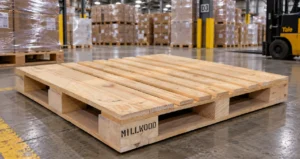
    The GMA pallet, or Grocery Manufacturer’s Association Pallet, does not have a standard version. Just as if you were to ask for a standard car, there are hundreds of customizable options. Standard transmission? Standard size?  Standard to you may mean something entirely different than to a friend. While there are certainly more popular pallet specs out there, there is no such thing as a one-size fits all GMA pallet.
  3. Heat Treating my Pallet will Remove Pests
    It’s easy to see why this old wives’ tale has persisted. While it’s true that heat treating a pallet can remove any live tree larvae that may have been infested in the wood, heat treatment does nothing for the day-to-day bugs in your warehouse that might find a home in your pallet. Ant problems cannot be solved with heat treatment, nor can any other insect infestation problem.
  4. Paper Pallets are Cheaper and More Sustainable
    While a popular myth, it doesn’t take much digging to recognize the falsehoods in this claim. Paper pallets require the lumber go through an extra processing (which uses up energy and raises cost). They also are less durable, requiring you to replace them more frequently. If you’re trying to save trees or money, paper pallets aren’t the way to do it.

What are some of the superstitions you grew up with? Were there any on our list of packaging myths you think we forgot? Tell us in the comments!
Share:

Join Our Newsletter

Related Articles

Millwood’s National Accounts Sourcing Manager Chad McConnell was named to the board of the Western Pallet Association (WPA), signifying Millwood’s active leadership and influence in advancing the pallet industry’s future.

Wood pallets supporting sustainable supply chain operations in a modern distribution environment.

The journey of a pallet doesn't end after delivery. Recovery, repair, and recycling programs help transform wood pallets into a renewable resource that supports both operational efficiency and sustainability.

Supply chain efficiency through strategic sourcing and vendor consolidation in a modern distribution center.

Discover how strategic sourcing increases supply chain efficiency through vendor consolidation, streamlined procurement, and scalable operations.

Warehouse engineers discussing sustainable packaging solutions.

Explore how collaboration across education, compliance, packaging science and industry leadership helps create more sustainable, reliable and efficient packaging systems.

Download The Strategic Sourcing Report