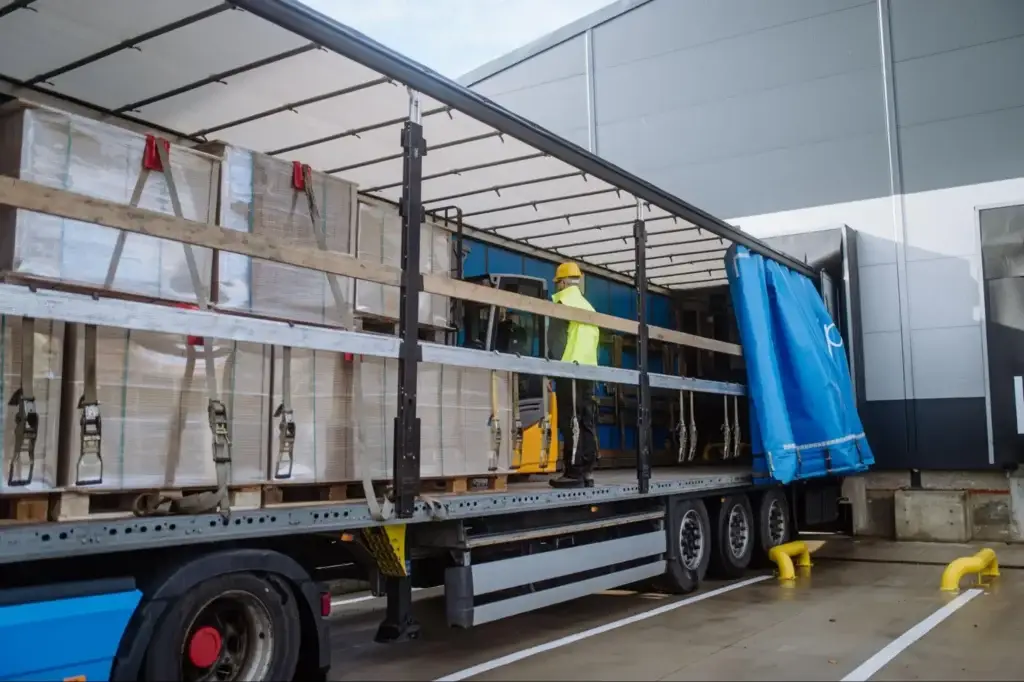
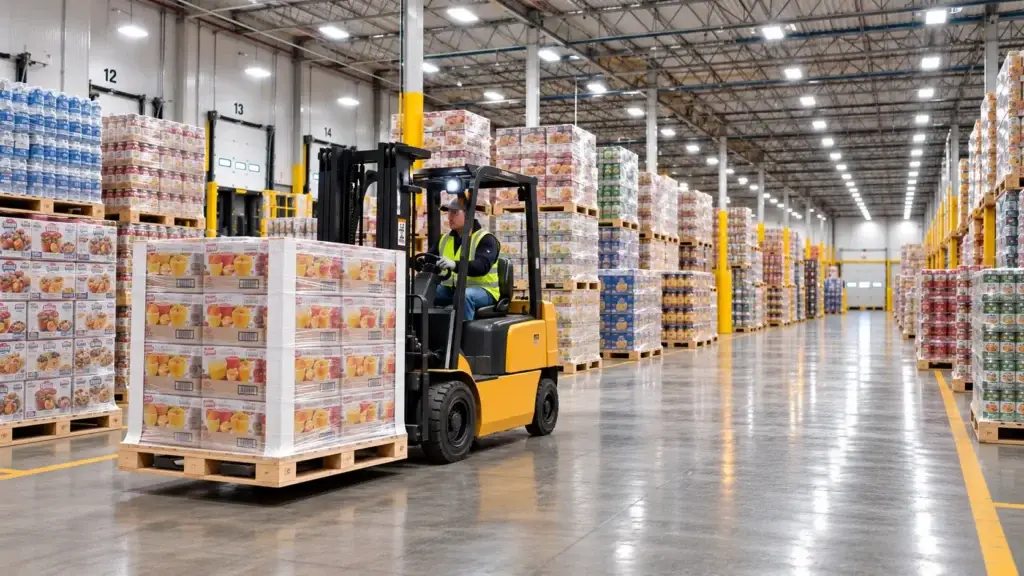
“Rising inflation, shipping delays, ingredient shortages and climate pressures are reshaping procurement priorities.”
Few industries face supply pressures as intense as Food and Beverage (“F&B”). Global disruptions, rising input and freight costs and stricter compliance standards have made F&B packaging and logistics more exposed than ever.
In the words of one industry commentator, “The food and beverage industry contains an extraordinarily complicated web of processes and standards that companies must navigate daily.”
In light of this complexity, traditional food and beverage procurement techniques — managing a fragmented supplier base, juggling multiple purchase orders or treating packaging and logistics as an afterthought — is no longer sustainable.
Instead, industry leaders are increasingly discovering how strong supply chains start with fewer, higher-performing vendor relationships with aligned Service Level Agreements (SLAs).
In other words, strategic sourcing is a smarter, more intentional approach to food and beverage procurement that goes beyond short-term cost-cutting and focuses instead on long-term resilience, efficiency and trust.
Below, we’ll look at five ways strategic sourcing can positively impact your bottom line, drawing on real-world examples from decades of experience serving companies of all sizes across the food and beverage industry.
1. Cost Savings: Eliminating Redundancy, Unlocking Value
Procurement teams in the food sector face unique challenges, including perishable goods management, volatile market prices, and complex regulatory compliance. Without robust procurement analytics and real-time market data, organizations risk inefficient inventory management, increased waste, and missed opportunities for cost optimization. This often leads to suboptimal contract terms and heightened supplier risk.
In business conversations around cutting costs, the focus can quickly shift to staff reductions, tightened budgets and cheaper materials. In our experience with F&B procurement, however, that means missing out on one of the most powerful cost-saving measures available: vendor consolidation.
Working with multiple vendors across a wide footprint can create unnecessary complexity – different contracts, different payment terms, duplicate SKUs, varying case packs and inconsistent packaging and pallet specs. Financially speaking, those inconsistencies can quickly add up.
Every additional vendor means another purchase order to issue and reconcile, another set of freight schedules to coordinate and another layer of administrative oversight. The result is a tangled web of processes that consume both your time and budget.
The financial leakage doesn’t stop there. When you spread purchases across too many vendors, you risk diluting your buying power, making it harder to negotiate favorable rates or volume discounts.
That’s where strategic sourcing comes in. Proponents point out how strategic sourcing can reduce the redundant licensing, integration and support costs that creep in when too many suppliers are involved. By consolidating your vendor pool, your business could streamline buying, align packaging specs and unlock tiered volume pricing.
For one leading national restaurant brand Millwood serves in a strategic sourcing relationship, this kind of standardization was the difference between the successful launch of an automated distribution center for their top SKU and a costly, multimillion-dollar hole in their budget.
Just weeks before opening, their Team discovered a serious packaging spec error provided by a third-party vendor. Unchecked, the miscalculated spec would have caused 136,000 case losses per cycle, but thanks to our responsive strategic partnership, Millwood was able to re-engineer and trial a corrected pallet spec just weeks before the launch of its multimillion dollar automated distribution center, saving the scheduled launch and opening up a new phase of growth.
Delivering when it matters most is exactly what strategic sourcing is about. Instead of the traditional, short-term focus on chasing spot savings, strategic sourcing gives you committed allies willing to work for mutually beneficial growth opportunities.
2. Food and Beverage Supply Chain Efficiency: Streamlining for Scalability
“When done correctly, strategic sourcing can help build more resilient supply chains that save money, improve quality and increase [F&B] procurement efficiency.”
Running a food and beverage supply chain with multiple vendors can feel like herding cats. Every additional supplier is another variable that requires time and energy to manage, from delivery windows and quality assurance holds to invoice cycles. When everything is running smoothly, you may be able to keep up. But during periods of rapid growth or widespread disruption, those extra moving pieces can quickly overwhelm your Team.
Strategic sourcing can eliminate those moving pieces. By consolidating your supply chain with a small pool of trusted sourcing partners with manufacturing and logistics reach like Millwood, you can reduce the number of variables and make your processes more predictable and dependable.
Simply put, procurement is easier with fewer POs and fewer phone calls. Forecasting becomes sharper when your supplier knows your DC network, SKU mix and seasonal run rates. Expanding to new locations is seamless when every facility uses the same packaging specifications and logistics processes.
This is where working with a strategic provider with extensive sourcing and manufacturing capabilities can make a real difference. At Millwood, for instance, our 40-plus Millwood-operated facilities, over 250 strategic partner locations and more than 2,000 Team Members across North America enable us to provide local service with national consistency.
Consider the customer example mentioned earlier. To get their new distribution center up and running, Millwood manufactured and supplied an initial 17,000 ASRS pallets to the corrected spec in a matter of weeks, with an ongoing commitment that continues today. Strategic sourcing makes that combination of operational agility and throughput reliability possible.

3. Consistency & Quality Control: Raising the Bar Across Your Food and Beverage Procurement Network
“If packaging is non-compliant, the item may be at risk of deletion or subject to a 2% chargeback reimbursing Costco’s operational and handling costs as a result of non-compliant packaging.”
For food and beverage companies, packaging performance is not just a cost factor; it’s a compliance trigger. When every supplier uses a different spec — whether for pallets, crates or other unit load handling and securement systems — you’re left with unreliable performance, unpredictable load performance and varying food safety standards. Over time, these inconsistencies translate into product loss, food safety risk and retail chargebacks.
Strategic sourcing through a consolidated network of trustworthy partners can help you address these issues through standardization, ensuring that every pallet, slip sheet and load securement asset performs consistently across all your operations.
This approach not only cuts down on transit failures and product loss but also simplifies quality control and compliance. Instead of auditing a dozen suppliers with different standards, you have just one or two partners accountable to your performance expectations, not to mention any retailers you partner with.
Costco, Kroger and other national chains increasingly require block-pallet designs compatible with automated storage and retrieval systems (ASRS), a trend that makes sense of the fact that block pallets now represent over 55% of global pallet revenue. Standardization through strategic sourcing makes adapting to these evolving mandates straightforward: one specification change applied consistently across every site.
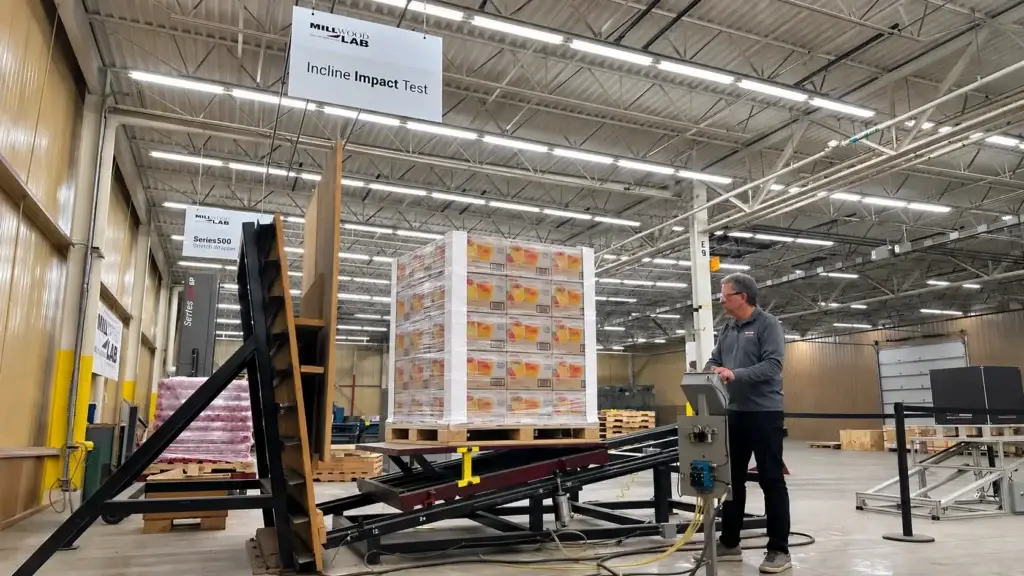
With the right testing in place, you can take standardization a step further. At Millwood’s ISTA-certified Packaging Science Lab, customer designs are validated through a barrage of temperature, humidity and pressure tests to replicate real-world freight and warehouse handling. This process produces a “just-right” spec tailored to each F&B customer’s needs, providing assurance that their packaging materials will meet both retailer and regulatory expectations.
In the example highlighted in the previous two sections, the Millwood Lab Team collaborated with our customer to develop three new ASRS pallet designs optimized for freezer conditions and automated handling. Each design underwent full compression and deflection testing, providing our customer with quantifiable proof that the resulting specs would meet their exacting ASRS requirements.
The successful launch of that distribution center secured both their trust and long-term quality control. With a standardized spec, they can now come straight to Millwood with any questions, confident that our testing facilities will identify any future issues or areas for improvement. All they have to do is call.
4. Risk Reduction: Building F&B Supply Chain Resilience Through Fewer, Stronger Partners
“More than three-quarters (77%) of operators said their restaurant experienced supply delays or shortages of key food or beverage items in 2023.
Recent years have proven how quickly risk can ripple through global supply chains. Port backlogs, lumber shortages and tight freight lanes have exposed vulnerabilities in even the most sophisticated food and beverage networks.
Strategic sourcing reduces this exposure by creating a direct relationship with a trusted solution provider who takes responsibility for your needs. With strategic procurement, you know exactly who to contact if something goes wrong. Instead of chasing down twenty different contacts across the country, you can rely on one Team to clear freight bottlenecks and restore fill rates fast.
Partnering with a vertically integrated supplier like Millwood also helps mitigate against raw material risk. Millwood’s robust supply chain facilitates delivery at scale by leveraging buying power, longstanding strategic partner relationships and extensive network of facilities. In this way, strategic sourcing can secure supply, manage volatility and ensure continuity of service, even in challenging markets.
Consider the case of the globally recognized fast food brand highlighted throughout this article. When their ASRS launch threatened to stall, Millwood was empowered to find a shared solution precisely because we are committed to a mutually beneficial growth partnership with them.
Millwood designed, tested and delivered this solution rapidly and at scale using our ISTA-certified testing capabilities and the high-volume manufacturing capacity afforded by over 40 Millwood-run operations across North America. For any food and beverage procurement leader, those capabilities demonstrate real-time risk mitigation and supply assurance in action.
There are examples from other customers in the F&B industry Millwood could point to but they all carry the same theme. Whenever customers have faced a procurement issue, our expansive strategic sourcing network has stepped in to protect their interests, absorbing the risks so they don’t have to.
5. Sustainability and Innovation in F&B Procurement: The Future of Strategic Sourcing
“Without transforming their supply chains, most companies won’t fulfil their sustainability commitments.”
In today’s F&B marketplace, sustainability has shifted from a corporate initiative to an operational imperative. Consumers, retailers and investors all want proof that companies are reducing waste, using resources responsibly and hitting ESG scorecards. In many cases, sustainability performance is directly tied to winning contracts and maintaining a strong reputation.
When packaging and F&B supply chain management are split across multiple vendors, it can be hard to stay on track with sustainability goals. One supplier may use recycled materials, while another relies on virgin resources. One may comfortably meet regulatory standards, while the other falls considerably short. Vendor variability can make ESG audits and scorecard reporting a nightmare and can easily weaken your overall green score.
Conversely, strategic sourcing can help customers consolidate packaging and logistics and drive sustainable innovation across their supply chains while ensuring consistent supplier standards. Working with Millwood, for instance, also means working with 250+ strategic partner mills aligned with our Supplier Code of Conduct.
This ESG-aligned assurance is true whether Millwood customers purchase reconditioned and recycled pallets, leverage Millwood’s pallet and lumber recycling capabilities or integrate on-site repair-and-return programs that contribute to a circular economy. Through a single vendor relationship, customers can secure multiple sustainability wins.
It doesn’t stop there: every time Millwood creates a scalable, custom-engineered solution in our ISTA-certified Packaging Sciences Lab, we help customers cut packaging waste, improve cube efficiency and lower total landed costs, further improving their environmental profile and demonstrating how sustainability and innovation can go hand-in-hand.
Want a closer look at how we’re putting these commitments into practice? Explore the full Millwood Sustainability Report 2026 for an in-depth look at Millwood’s sourcing, recycling and ESG progress.
Stronger Vendor Relationships = Stronger Food and Beverage Supply Chains
At the heart of strategic sourcing is a simple truth. When you reduce the number of outside suppliers, you free yourself to invest more deeply in the partnerships that matter most, just like the one cited all throughout this article. As that relationship has shown, fewer vendors means fewer points of failure, cleaner data flow, tighter forecasting and a stronger alignment over long-term sustainability and growth goals.
So no matter what size your company is, it’s invaluable to consider both how vendor consolidation could be the difference-maker across your food and beverage supply chain and who you will trust to partner with you in that journey.
Millwood has built its business on being a solution provider to companies across all industries, a partner you can trust regardless of your logistics needs. Time and again, Millwood has seen how working together through a strategic sourcing strategy has shifted customers from frustration to confidence and from chaos to clarity. And we’ve developed a proven, repeatable process to make it work: Millwood SURE.
Millwood SURE
The SURE Process optimizes your packaging and F&B procurement with custom design, integrated manufacturing, proven testing and sustainable impact over four clear stages:
- Study: We work with you to assess your operations, product flow, challenges and goals and gain a comprehensive picture.
- Understand: We engineer solutions built around your exact needs, supported by data and real-world performance insights.
- Review: We verify with testing, field validation and adjustments to ensure reliability and consistency.
- Expand: Your organization will be empowered to grow and scale with successful results across sites, networks or product lines for long-term efficiency and measurable value.
Our process and capabilities are built to deliver. With over 40 Millwood-operated facilities, 250+ strategic partner locations and more than 2,000 Millwood Team Members in North America, we are ready to design, test and deliver solutions that can be replicated across your network for maximum impact, saving you time & money, reducing complexity and building a food and beverage supply chain that will support your organization for years to come.
Connect With Us to discover how strategic sourcing with Millwood could solve some of your biggest challenges.
See How We’ve Helped Others and discover how vendor consolidation can drive long-term value, growth and sustainability.