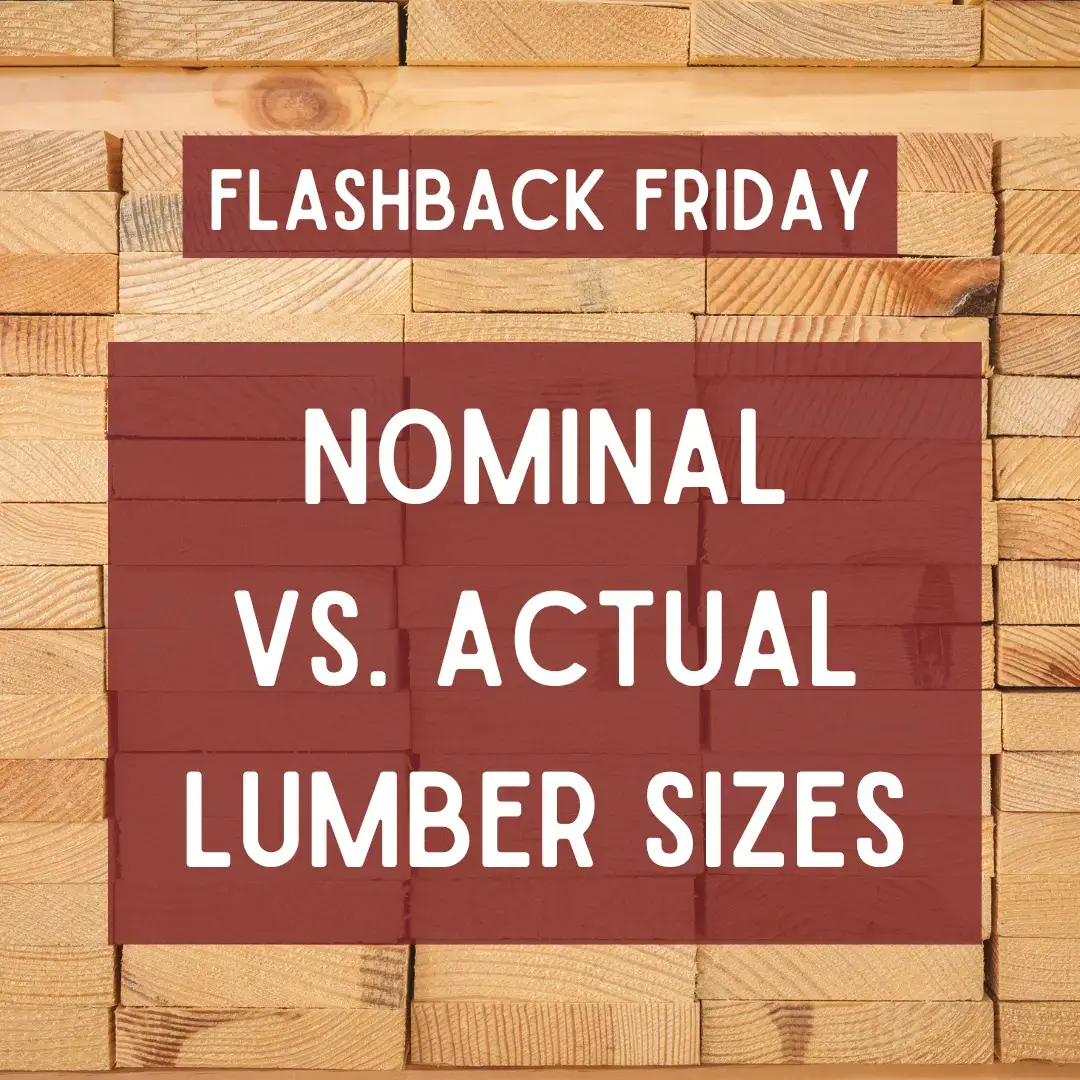
Years ago, home improvement stores were in hot wateras a result of customers insisting the lumber they purchased was falsely advertised. The stores, however, argued that the size of the lumber sold was properly marketed even if the wood was smaller than labeled. How can that be? The difference is in nominal vs actual lumber sizes.
Nominal Size vs. Actual Size
A standard 4×4 or 2×4 is not actually four inches by four inches or two inches by four inches. What most people think of as a 4×4 is really measured at three and a half inches by three and a half inches. These are the nominal measurements, which mean the numbers fit within a scale that will then be identified as part of a larger label. Nominal measurements are used in classifying data, or in this case, classifying lumber.
To simplify, think of a 4×4 as a name, rather than a measurement. It represents a label, the same way we know yellow popsicles to be banana or red popsicles to be cherry. Whether or not those fruits are actually in the treats is irrelevant; the label isn’t a literal description, but a way we identify one from another.
So in that case, home improvement stores have been lying to their customers, right? Not exactly.
The same way a grocery store isn’t expected to post disclaimers on every popsicle deception, lumber retailers aren’t usually required to give warnings for their lumber nominal size labels. Why? Because just like we assume most moms know better than to expect real fruit in their popsicles, most professional woodworkers know that lumber is described in nominal, rather than actual, measurements.
Millwood Explores Lumber Nominal Size vs. Actual Lumber Size
So what can palletized lumber providers do to make sure customers know what they’re getting? Millwood’s stance is one of openness and transparency. We use nominal sizes like anyone else in the wood industry, but communicating that information to new customers is high priority. That’s why we utilize programs like PDS(Pallet Design System) to help us better explain what customers are buying.
Are you someone that knew about nominal sizes, or are you shocked to discover the difference? Let us know in the comments!
Stay connected! Subscribe to our newsletter for new articles, in-depth case studies, and the latest updates on how Millwood is serving industries like yours.
Millwood’s National Accounts Sourcing Manager Chad McConnell was named to the board of the Western Pallet Association (WPA), signifying Millwood’s active leadership and influence in advancing the pallet industry’s future.
ASRS pallets require ±1/4" tolerances, block pallet construction and racking load performance. Learn how Millwood can partner with your operation to integrate them smoothly across the board.