If you’re searching for standard pallet sizes, you’re asking the right question. But it may not be the only question worth asking.
Pallet dimensions are one of the first details listed on a purchase order and one of the first topics raised in a procurement conversation. They’re visible, measurable and easy to compare across suppliers. But for procurement professionals, supply chain managers and packaging engineers working to improve operational performance, pallet dimensions are only the beginning of the conversation.
Understanding common pallet sizes is a helpful starting point. Understanding what makes a pallet actually perform in your operation is where the real value begins.
Standard Pallet Sizes Across Industries
The most widely used pallet size in the United States is the 48×40 stringer pallet. For decades, this footprint has served as a default across grocery, retail and general manufacturing. The second most common is the 42×42, frequently used in telecommunications and paint industries.
Beyond those, standard pallet dimensions begin to vary by industry and application:
- 44×56 is a standard in the glass industry (typically a block pallet)
- 56×44 is common for can pallets (same footprint, stringer oriented in the opposite direction)
- 36×36 appears in beverage operations
- 48×48 is used across chemical and drum shipping
These sizes exist because the products being shipped helped determine the footprint. Roofing materials, beverages, industrial components, automotive parts and consumer packaged goods all place unique demands on a pallet, and those demands often call for different dimensions.
Here, however, is where the conversation shifts.
Why the Same Size Does Not Mean the Same Pallet
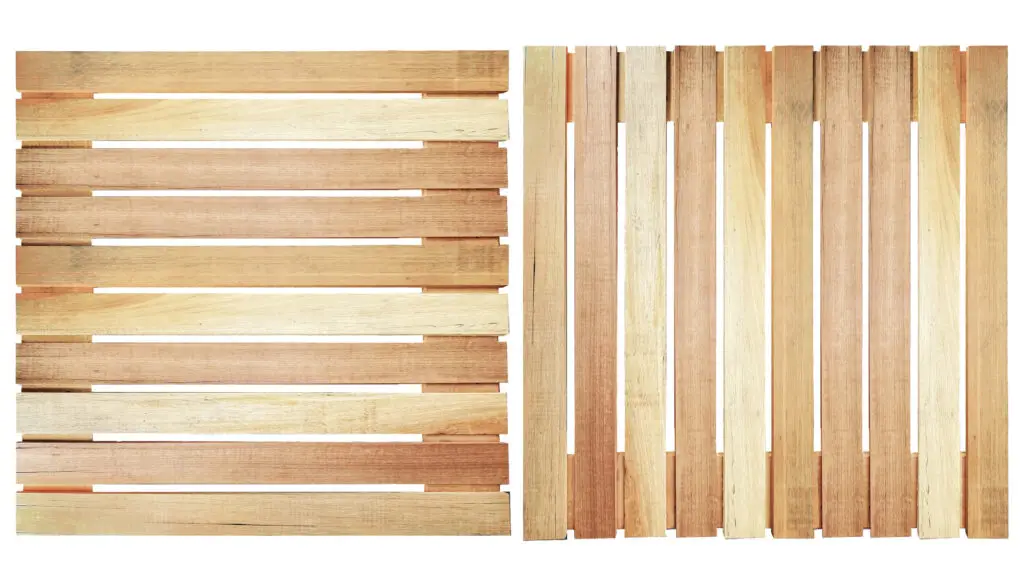
Two 48×40 pallets can look nearly identical from the outside and perform completely differently on the floor.
One customer may require eight boards across the deck. Another specifies two sixes and five fours. A third needs half-inch boards with softwood on top and hardwood on the bottom. Each configuration is built for a specific product, a specific handling environment and a specific set of operational requirements.
Deck configuration, lumber selection, board thickness, fastener type, entry style: these factors vary from one application to the next, even when the footprint stays the same. This is why experienced pallet professionals will tell you that pallet design starts with the application, not the dimensions.
As Millwood Co-President/Partner Chip Trebilcock puts it:
“Even though it’s a standard size, there’s no such thing as a standard pallet.”
What Your Role Demands From a Pallet Specification
For Procurement Professionals and Supply Chain Managers
If you’re sourcing pallets by size and price alone, you may be leaving performance (and money) on the table. A pallet that’s the right size but built with the wrong materials or the wrong deck pattern can break before it reaches its destination, generating disposal costs that dwarf any savings on unit price.
One Millwood customer learned this firsthand. Their pallets were the correct 48×40 footprint, yet tens of thousands of dollars in monthly disposal costs told a different story. The lumber was too thin, the wood species was wrong for the handling environment and the pallets were failing before they completed a single cycle. Once the specification was redesigned around the operation’s actual demands, disposal costs dropped dramatically, and the pallet recycling program that followed saved them an estimated $2 million annually.
For Warehouse Operations and Distribution Teams
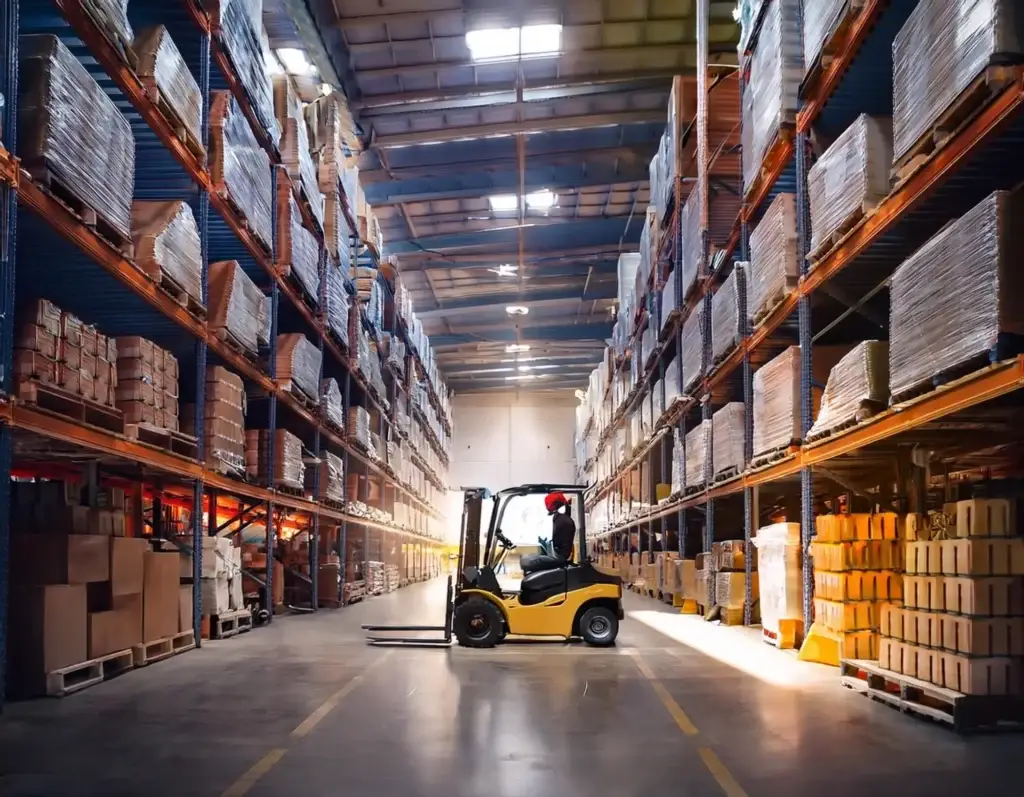
Your handling environment places demands on a pallet that a dimensions chart will never capture. Forklifts, pallet jacks, conveyor systems, automated storage and retrieval systems (ASRS), rack storage, stacking requirements: each of these factors influences how a pallet should be built.
A pallet moving through a fully automated distribution center faces precision tolerances that leave no room for error. When one global fast food leader discovered a specification discrepancy just weeks before launching a new automated facility, it was Millwood’s Packaging Science Lab that helped the Millwood Team redesign, test and validate three new pallet configurations in time to protect an on-schedule opening.
For Manufacturing Leadership and Packaging Engineers
If your operation ships across multiple facilities, you know that consistency matters as much as correctness. A pallet solution that works at one location but fails at another creates downstream headaches that ripple across the supply chain.
The goal isn’t to find a universally “standard” pallet. The goal is to develop a standardized solution: a specification designed around your product, your handling environment and your performance requirements that can then be replicated reliably across every facility in your network. That is scalability built on engineering rather than assumption.
Beyond the Chart: How Packaging Science Answers the Questions Standard Pallet Dimensions Cannot
A pallet dimensions chart can tell you how much floor space a pallet occupies. It cannot tell you:
- Whether the deck configuration supports your specific load
- Whether the lumber selection matches your handling demands
- Whether the pallet will survive your storage environment
- Whether the entry style fits your equipment
- Whether the pallet can be reused, recycled or is expendable by design
These are engineering questions. And they require more than best guesses or historical assumptions. They require validated, operationally grounded answers.
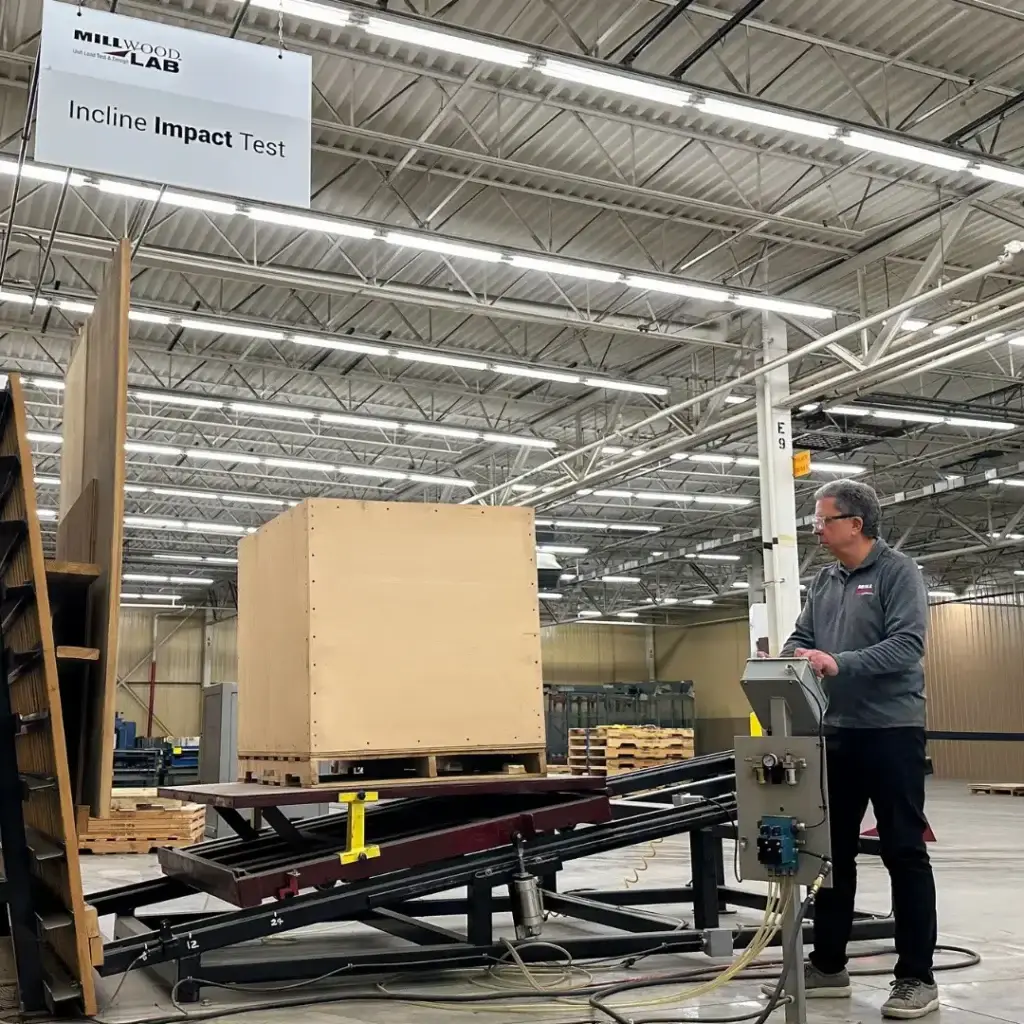
That’s where Millwood’s Packaging Science approach and ISTA-certified Lab change the conversation. Rather than relying on anecdotal experience or industry convention alone, Millwood subjects pallet configurations to real-world testing: compression, vibration, impact, deflection and cold-chain simulation. The Millwood Lab doesn’t just confirm that a pallet “should” work. It produces verified performance data proving that a pallet will work, under the specific conditions your operation creates.
Deck configuration and load support? The Lab tests how different board arrangements distribute weight across varying product geometries, ensuring support is placed where your application requires it rather than defaulting to a generic layout.
Lumber selection and handling demands? Packaging Science evaluates how different species, thicknesses and moisture levels perform under the stresses of your handling environment, whether that means repeated forklift impact, conveyor friction or rack deflection over time.
Storage and environmental durability? For pallets entering freezer environments, outdoor storage or high-humidity conditions, Lab testing simulates those realities so that material selection and treatment (heat treatment, mold prevention) can be validated before a single pallet enters the field.
Entry style and equipment compatibility? When automated systems, pallet jacks and forklifts all interact with the same pallet, configuration testing confirms that clearances, tolerances and structural integrity hold across every touchpoint.
Reuse, recycling and lifecycle planning? Lab data helps determine whether a pallet is best designed for a single trip, a multi-cycle captive program or a repair-and-return model, so that lifecycle economics are built into the specification from day one.
This operationally driven approach means that pallet selection becomes a process grounded in data rather than convention. Millwood’s Packaging Science process (Study, Understand, Review, Expand) integrates design, testing and production into a single workflow so that customers move from pallet questions to verified answers with confidence and speed.
When pallet engineering is informed by Lab-validated performance data, the result isn’t just a pallet that fits. It’s a pallet configured to perform, protect the product and deliver measurable value across the supply chain.
From “Standard Pallet Size” to Standardized Solution
The search for a standard pallet size often begins with a reasonable assumption: surely, there’s one pallet that works for most situations. And in many industries, common sizes do exist. But commonality of dimension does not equal interchangeability of design.
What sets high-performing pallet programs apart is the shift from selecting a commodity to engineering a solution. That means evaluating the complete unit load (pallet, product, packaging and stretch film together), understanding how the system performs throughout the supply chain and designing a pallet that’s both tailored to the application and scalable across locations.
One Fortune 500 building materials manufacturer experienced this transformation directly. For years, their facilities sourced pallets from different vendors using 14 different specifications. Inconsistency bred product damage, rising costs and limited visibility into quality. When they consolidated with Millwood and put those specifications through the Packaging Science Lab, the result was a single optimized spec, rigorously tested under real-world conditions, that now delivers over 3 million pallets annually at 99.9% on-time performance across their entire national network.
That’s what a standardized solution looks like in practice: not one generic pallet applied everywhere, but one engineered specification validated for performance and replicated at scale. It combines the precision of custom design with the predictability and cost efficiency of a repeatable program.
When pallet engineering aligns with operational reality, the results are measurable: fewer failures, lower disposal costs, improved load stability, better trailer utilization and greater confidence across the supply chain.
Ready to Move Beyond Standard Pallet Dimensions?
Whether you’re evaluating your current pallet specification or exploring how a more operationally driven approach could improve performance, Millwood can help. Our team works alongside procurement professionals, engineers and operations leaders to evaluate applications, test configurations and deliver pallet solutions designed for the way your supply chain actually works.
Connect with Millwood to discuss pallet sizing and configuration solutions designed around your operational requirements.