The best pallet lumber suppliers for volume buyers are often the ones with lumber ready and a person who answers when you call. Suppliers that cut on demand offer flexibility for custom work, while mills that carry stock can ship faster and often offer sharper bulk lumber pricing. Millwood’s Milltree West sawmill in Waverly, Ohio carries hardwood lumber and pallet cut stock for buyers across the region.
If you buy hardwood for a pallet shop or a mill, you know this moment all too well: an order comes in bigger than planned, the crew is ready at the nailer and the next step is a phone call. For anyone who relies on pallet lumber suppliers, what happens on that call shapes the rest of the week: who answers, what is ready to ship and how honestly the person on the other end talks you through it.
As you look around and find fewer sawmills and more rigid pricing, that call carries more weight. Selecting from the shrinking pool of wholesale lumber suppliers is really choosing a person on the other end of the line.
The strongest relationships tend to rest on three things:
- Lumber available when you need it.
- A direct line to the people who cut it.
- A supplier who knows your program well enough to plan with you.
Lumber Is a Commodity. The Relationship Doesn’t Have to Be.
Why Is Lumber So Expensive, the first article in this series, covered the forces behind 2026 hardwood prices: fewer sawmills, tighter log supply and higher costs. Those sit outside any one buyer’s control. However, the important takeaway is that the relationship does not.
Pallet grade oak from one mill is, in most respects, the same as pallet grade oak from another. What differs is everything around the board: when it ships, how it arrives, how it was counted and who picks up when an order changes. The person who walks you through the process of procuring the lumber panels you need is what makes all the difference.
The sections below follow that relationship from the buyer’s side: how to gauge whether pallet lumber suppliers are keeping lumber available, what shapes the price you are quoted, how inventory helps in a tight market and how to vet a supplier.
Cut on Demand vs Carrying Stock: Two Kinds of Wholesale Lumber Suppliers
Wholesale lumber suppliers generally serve buyers in one of two ways and both have their place in the industry.
- Cutting on demand means that the mill saws after an order arrives. It gives buyers real flexibility on species, dimensions and nonstandard specs, and it suits programs that plan well ahead.
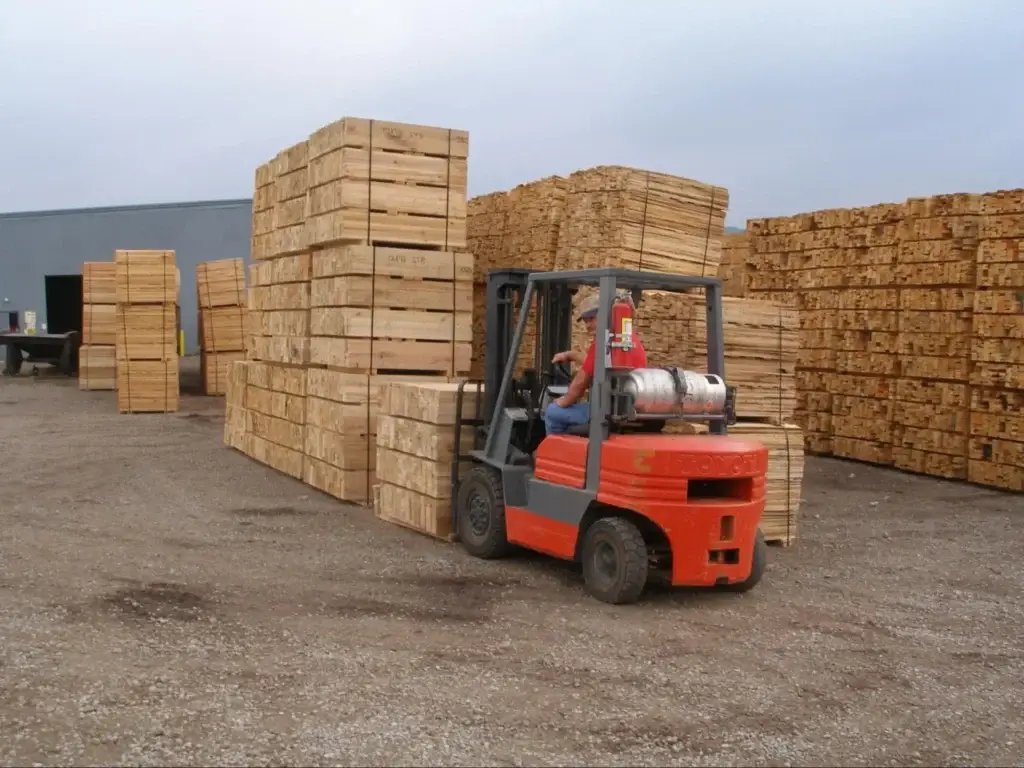
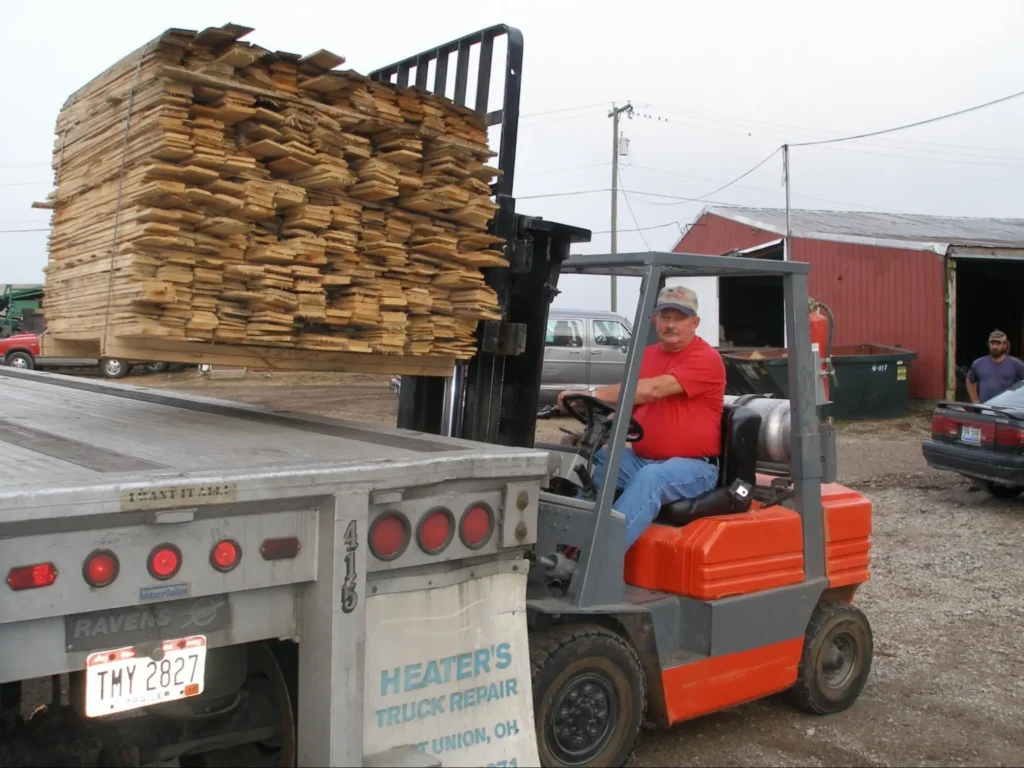
- Carrying stock means that the mill saws common sizes ahead of orders, treats them and keeps them on the yard, ready to ship. It suits recurring sizes, short notice orders and tight markets, because the work is done before the phone rings.
Many volume buyers use both procurement options. The useful question is which one fits the order in front of you.
How to Choose Between Cutting on Demand and Carry Stock Mills
| If Your Order Needs… | A Good Fit Is Often |
| Custom dimensions or an unusual species. | A supplier that cuts on demand. |
| Recurring sizes on a steady schedule. | A mill that carries stock. |
| A quick turnaround. | A mill with those sizes already on the yard. |
| Long lead planning. | Either, depending on price and distance. |
Cut Stock
Cut stock is lumber sawn to finished component sizes, such as deck boards and stringers, before it reaches the buyer. Gang sawn cut stock comes off a saw that makes several parallel cuts in one pass for consistent pieces.
Why the Best Wholesale Lumber Prices Often Come from Mills with Inventory to Move
Lumber on a yard costs the mill that owns it, in the form of logs, labor and treatment that has already been paid for, as well as storage space costs while that supply waits. That is why the best wholesale lumber prices often come from mills with inventory to move.
Think about it this way: a buyer who takes a full truckload of sizes already on hand helps the mill turn its stock, and that can show up in cost-efficient bulk lumber pricing. No supplier can promise a number in a challenging market, but this incentive can work in the buyer’s favor.
That’s especially true when you consider how the relationship could work both ways. A buyer who shares a forecast or flexes on a size helps the mill. A mill that knows what a buyer runs can call the moment that size comes off the saw. Price is set by the market. Priority is set by the relationship.
How Lumber Inventory Protects You When Supply Tightens
Supply pressure can start before a buyer places an order. In its October 30, 2026 Northern Comments, HMR reports that dwindling log supplies are limiting production at some mills, while pallet cants continue to move well at unchanged listed prices. For buyers, that makes what a supplier already has on the yard worth asking about.
When logs are hard to come by, a mill that cuts on demand has to find wood before it can fill a new order. A mill with lumber inventory has already turned some of those logs into boards. That head start is a benefit buyers reap benefits from when supply tightens.
For the buyer, the difference can be personal, too. It means a full shift instead of sending the crew home early. A buyer with a steady supplier relationship makes a call, adjusts a schedule and works through the squeeze one order at a time.
Lumber Inventory
Lumber inventory is sawn lumber a mill keeps on hand, sorted by species, size and grade, ready to ship without waiting on the saw.
What to Look for in a Lumber Supplier
Knowing how to choose a lumber supplier starts with looking past the quote. When volume buyers are comparing hardwood lumber suppliers, five features stand out:
- Who cuts the lumber. A sawmill processes lumber and a broker mediates the market. Both can serve buyers well, and it helps to know which one you are talking to when supply tightens.
- What is on the yard. Ask which sizes the supplier keeps in stock most weeks, not only what it can cut.
- How far it travels. Hardwood is heavy, so freight is part of the price. Packaging World’s guide to Supplier Selection links proximity to shorter transit and lower costs.
- How it is protected. Lumber treated for mold before it ships is one less problem on your yard.
- Who answers. A name and a direct number help most when an order needs to change.
Behind all five of these markers is experience that runs both ways. The mill knows species, seasons and markets. The buyer knows what the lumber has to do after it leaves. Good relationships put both to work.
Questions to Ask a Lumber Supplier
Questioning a current supplier or calling a new one can be the first step to gaining a stronger understanding between parties. You have every right to ask and know the answers to these questions:
- Do you saw your own logs or buy lumber from other mills?
- Which sizes and species do you usually keep in stock?
- What is your lead time for sizes on hand compared with custom cuts?
- Do you sell on actual or nominal count?
- Is your lumber treated for mold before it ships?
- How far will the load have to travel to reach my yard?
- How do you handle allocation when supply gets tight?
- Who do I call when an order needs to change?
A good supplier will welcome these questions. Clear answers on a first call are usually a sign of clear answers later, when an order changes or supply gets tight.
If the count question is new territory, Nominal vs Actual Lumber Sizes explains why it changes what a board foot costs.
Lumber Procurement Through a Relationship Lens
For procurement officers, lumber procurement shows up as lines on a risk register: supplier concentration, lead time variability and price exposure. Applying procurement risk management principles, strategic sourcing with vertically integrated partners can provide priority access during constrained markets. In the current pressurized hardwood market, that means a buyer with a steady, direct mill relationship is more likely to be served first when lumber is running short.
Underneath procurement risk concepts, the goal is simple. Your order arrives as planned, the plant runs and the week ends on time. With a trusted partner, you can pick up the phone, explain your need and rest assured. The suit stays at work. The relief goes home.
What Working with Milltree West Looks Like
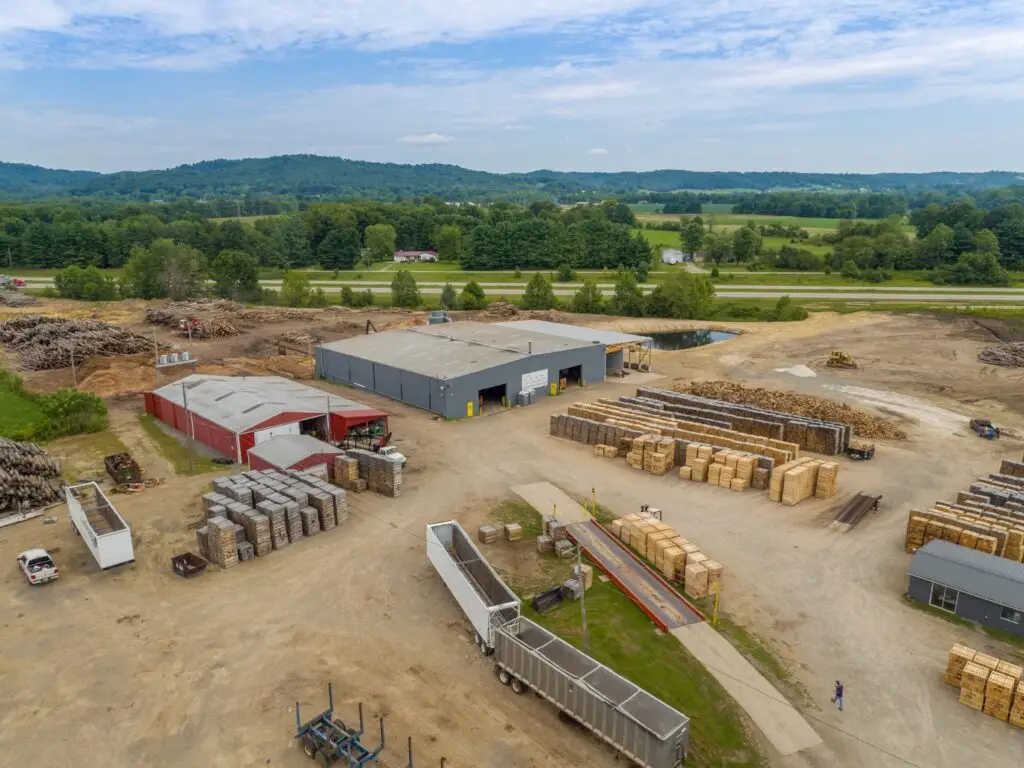
Milltree West, Millwood’s Waverly, Ohio location, is a sawmill, not a broker. The Team runs its own sawmill alongside a pallet manufacturing facility, so buyers talk directly with the people who cut their lumber. Among wholesale hardwood lumber suppliers, that direct line could look like the relationship described above.
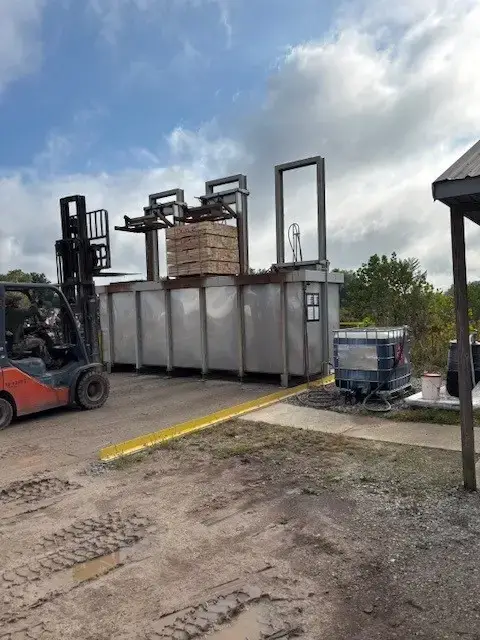
Millwood’s yard produces hardwood lumber, cut stock and gang sawn pallet cut stock. An on-site dip tank treats lumber and pallets with PalletGuard to inhibit mold, so lumber arrives protected. The site also houses one of Millwood’s three Air Burners, which eliminate wood waste while protecting the environment.
From Southern Ohio, the facility serves metro areas across Ohio, Indiana, West Virginia and beyond. It is one of more than 40 Millwood locations, so if a buyer later needs custom pallets, crates or load securement, the same relationship covers it. The Millwood Team Member to call is Richard Clark, Plant Manager at Milltree West, whose Team works by a line Millwood holds to everywhere: “Our business is serving others.”
Key Takeaways
- Pallet lumber suppliers generally cut on demand, carry stock or do both.
- Cutting on demand suits custom specs; carrying stock suits recurring sizes, short notice and tight markets.
- The best wholesale lumber prices often come from mills with inventory to move.
- Vet wholesale lumber suppliers on who cuts the lumber, stock, distance, mold protection and who answers when you call.
- A direct, trusted mill relationship can mean priority access when supply tightens.
The Relationship Built Before You Need It
Hardwood markets will keep shifting. What a buyer can do is choose a supplier with care, ask good questions early and build the relationship before the market tests it.
Think back to that phone call: the bigger order, the crew at the nailer, the week hanging on who picks up. The lumber on the yard was cut before you called. The relationship that gets it on your truck was built before you needed it.
Lumber is a commodity. The relationship behind it doesn’t have to be.
Milltree West in Waverly, Ohio keeps hardwood lumber and pallet cut stock on the yard for pallet manufacturers and mills across the region. Call Rich at 740-226-2090 to talk through pricing and availability, or explore Millwood’s Precut Pallet Lumber.